Unified leadership can better fight corruption







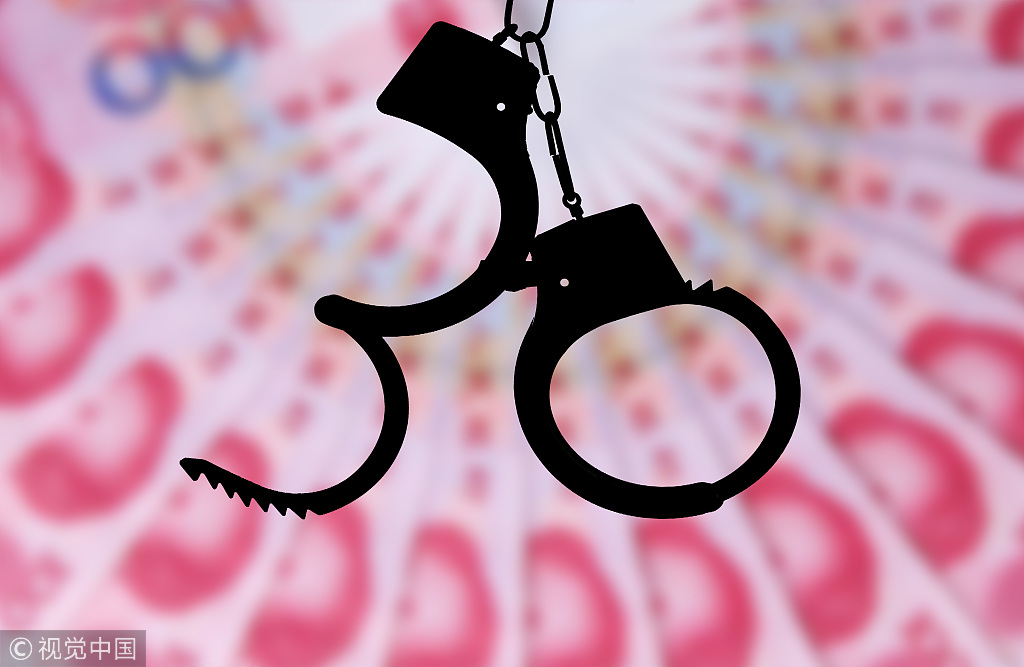
The reform of the national supervisory system, a major step toward promoting institutional restructuring that will have far-reaching social and political implications, is China's important top-level design for a new national supervisory system and important move to modernize its governance system and capacity.
At a collective study session of the members of the Political Bureau of the Communist Party of China Central Committee on Dec 13, CPC Central Committee General Secretary Xi Jinping highlighted the objectives and tasks of deepening the discipline inspection and supervision system reform, and re-emphasized that standardizing and correctly exercising supervisory power could propel the reform and promote the standardization of legislation of anti-corruption work.
The CPC has always attached great importance to fighting corruption, because it sees it as a major political task related to the future of the Party and the country. Since the 18th National Congress of the CPC in November 2012, the Party Central Committee with Xi as the core has adopted a zero-tolerance approach to corruption and launched a campaign to trap the "tigers" (high-ranking corrupt officials), slap the "flies" (lower-level corrupt officials) and pursue the "foxes" (corrupt officials on the run). The campaign has achieved great success in combating corruption, promoting clean governance, and wining public support and high endorsement from the international community.
Anti-graft fight fraught with complex challenges
Yet Xi has said the country's fight against corruption still faces complex challenges, and warned that there remain problems in China's supervision system and mechanism that need to be addressed through reforms.
First, the scope of Party supervision is too narrow. Before the national supervision system reform, the Party's anti-graft reach extended to only intra-Party supervision, according to the Party Constitution.
But according to the original provisions of the Administrative Supervision Law, the targets of administrative supervision are mainly administrative organs and their staff. Which means the supervisory system did not cover all the officials exercising public power. The new reform, however, can organically combine intra-Party supervision with State supervision and bring all the officials exercising public power under supervision, and thus fill the previous gap in the supervision mechanism.
Divided responsibility in fight against graft
Second, the anti-corruption organs under the previous supervision system were scattered. Before the national supervisory system reform, the Party's discipline inspection organ could launch investigations against Party members violating Party discipline in accordance with the Party Constitution, while administrative supervisory organs could do the same against administrative personnel for violating laws and regulations, and the procuratorial organs could conduct probes against State employees in accordance with the Criminal Procedure Law.
That meant different law enforcement agencies' functions overlapped as there was no unified law enforcement authority. The latest reform will enable the establishment of a unified graft-fighting system under the Party's leadership, in which supervisory commissions at all levels will integrate the work of administrative supervision departments, corruption prevention agencies and procuratorial organs in probes against and handling of corruption cases, and issues related to dereliction of duty and malfeasance.
Third, previously the investigations were not multi-dimensional. Compared with the widely applied shuanggui (suspects required by the Party's discipline watchdog to report their problems at a designated place and time) in the past, the leadership announced at the 19th CPC National Congress in October 2017 that henceforth a suspect would be placed under normal "detention" and the supervisory organs shall use multiple means approved by the top legislature to investigate the case against him or her. Such an arrangement, the authorities said, would help solve the long-standing law-related problem, and increase the chances of bringing the guilty to book.
Reform aims to bolster Party's leadership
The national supervisory system reform's fundamental goal is to strengthen the centralized and unified leadership of the Party in the fight against corruption, and to build a unified, authoritative and highly efficient supervision system. It is also aimed at establishing inclusive supervision over the use of public power, and strengthening self-supervision of the Party.
The CPC Central Committee with Xi as the core attaches great importance to this job. It has presided over six special meetings to devise a road map for the national supervisory system reform. In October 2016, it approved a pilot reform program for Beijing, and Shanxi and Zhejiang provinces, which would be extended to the rest of the country if proved effective. A year later, the 19th Party Congress made a strategic plan to deepen the national supervisory system reform, and extended the pilot plan nationwide.
In March 2018, the first session of the 13th National People's Congress passed the amendment to the Constitution and the Supervision Law, and decided to set up the National Supervisory Commission. That marked a major milestone in the national supervisory system reform and the building of a national governance system with Chinese characteristics. Since their establishment, the supervisory commissions at all levels have integrated the functions of previous discipline and supervision organs, and used various investigative measures to fight corruption.
Central role of Party in fighting corruption
During the process of national supervisory system reform, China has learned from other countries' experiences of how best to combat corruption. And it has used those experiences to bring all civil servants under supervision, and established the central role of the Party in fighting corruption.
With the overall framework of the national supervisory system being established, China's institutional advantages have been constantly translated into effective governance, and proved that the CPC Central Committee's decision to deepen the national supervisory system reform is correct.
The deepening of the national supervisory system reform is conducive to not only strengthening the Party's centralized and unified leadership and improving the Party's supervisory system, but also intensifying the fight against corruption and enhancing people's confidence and trust in the Party.
The move will also help enrich and develop the system of people's congresses, have a far-reaching impact on the development of socialist democracy, and help strengthen the belief of the people in the path, theory, system and culture of socialism with Chinese characteristics.
Using innovation to make governance more effective
Using innovative methods in supervision, and establishing self-supervision system for the Party are an important way to resolve the self-supervision issue. In accordance with the instruction of the December collective study session of the Political Bureau of the CPC Central Committee chaired by Xi, the third plenum of the 19th CPC Central Commission for Discipline Inspection charted the next steps for the reform of the discipline inspection and supervision system, and called for institutional innovation and advantages to make governance more effective.
Continuous efforts will be made to deepen the national supervisory system reform. And the Party's top discipline watchdog and the National Supervisory Commission will further strengthen the top-level design, integrate the laws and regulations on accountability, supervision and investigation, and promote the establishment of a unified decision-making, discipline and law-enforcement mechanism, so as to put power in the "cage of law", and provide institutional guarantees for meeting greater strategic targets to help the Party exercise strict self-governance.
The author is vice-president of China Academy of Discipline Inspection and Supervision. The views don't necessarily represent those of China Daily.