Belt and Road Initiative by no means a debt trap







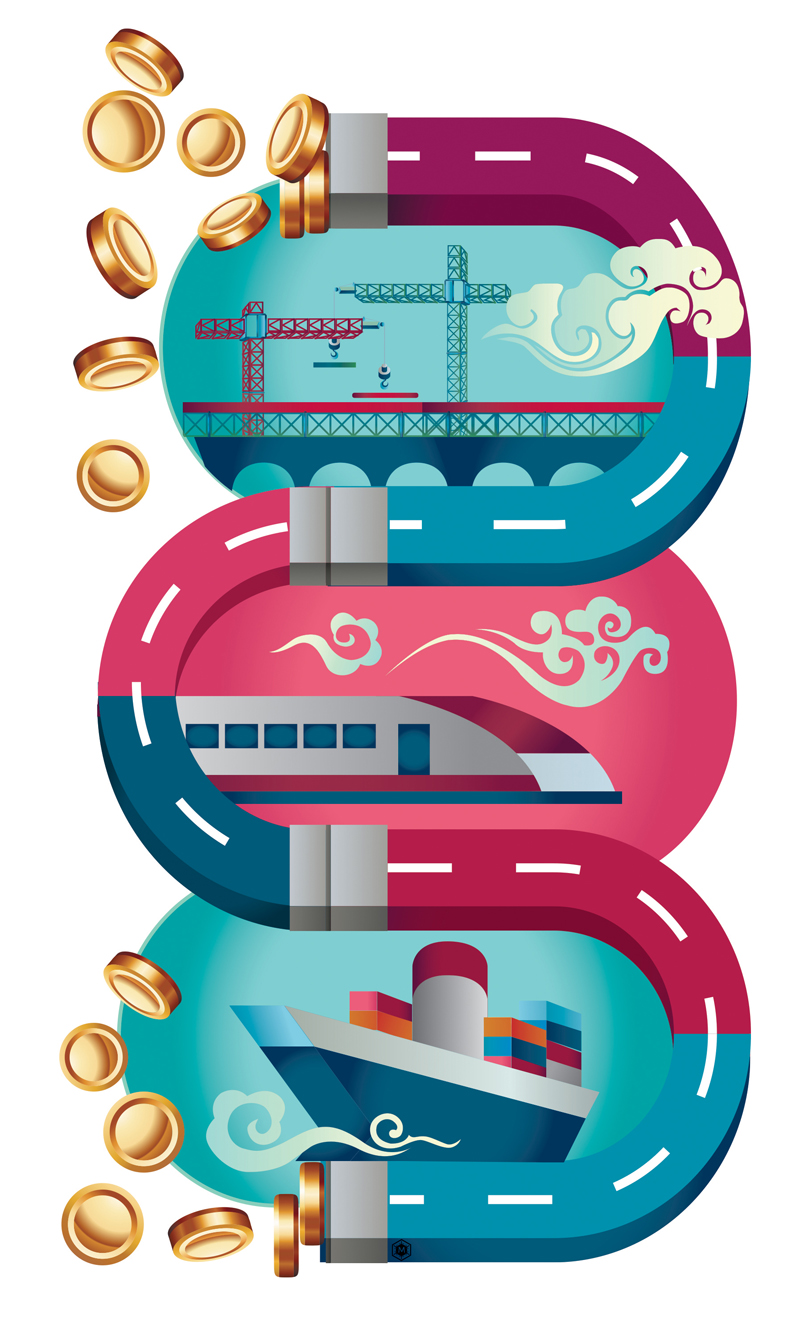
Proposed by President Xi Jinping in 2013, the Belt and Road Initiative has drawn extensive attention worldwide. After five years, the concept and vision of the initiative have been put into practice, with some already yielding fruits and promoting the building of a new pattern for the coordinated development of China and the world. Perhaps that's why many consider the initiative to be the most important public good provided by China for the world.
As a new platform for international development and cooperation, the initiative facilitates China's engagement with the rest of world while making it possible to establish a more just and reasonable world order that would highlight the importance of Chinese wisdom in building a prosperous future for humankind.
Thanks to the contributions the Belt and Road Initiative has already made to the world economy, the world is paying greater attention to and expects more from the initiative.
Deepening strategic trust among nations
The initiative, broadly speaking, aims to deepen strategic mutual trust among the countries along the Silk Road Economic Belt and the 21st Century Maritime Silk Road, and rally international consensus on global and regional issues.
In addition, since the launching of the initiative, the Chinese government has made great efforts to build a community with a shared future for humankind in order to achieve shared growth through cooperation, which has been praised by the international community. Also, with more countries accepting the concept of the initiative, it is gaining more and more partners and prompting some international organizations to laud its mission and aim.
The Belt and Road Initiative promotes win-win cooperation and common development. To this end, the first Belt and Road Forum for International Cooperation held in Beijing in May 2017 fostered the building of a more open and efficient international cooperation platform. And owing to the initiative, China's trade with and investment in the countries along the two routes have grown significantly.
Vital trade partner of many countries
Notably, China has become an important trade partner of many countries along the routes. For example, the trade volume of China with countries along the Belt and Road was close to $1.3 trillion in 2018, up 16.3 percent year-on-year, with exports increasing to $705 billion and imports rising to$563 billion.
Besides, according to a study conducted by Euler Hermes, a Paris-based credit insurance company, China's trade volume with other countries will increase by $117 billion this year, with exports increasing by$56 billion and$61 billion of commodities imported from about 80 countries being added to the total volume. The study also says the rise in foreign trade will raise the global trade volume and increase growth by 0.3 percent and 0.1 percent, respectively.
The investment environment in China has gradually improved and some Chinese companies with strong competitiveness are using resources on a wider range which in turn will enhance international competitiveness.
Last year, Chinese companies made non-financial direct investment of$15.64 billion in 56 countries along the Belt and Road, an increase of 8.9 percent, which accounted for 13 percent of China's total non-FDI. The recipient countries included Singapore, Laos, Vietnam, Indonesia, Pakistan, Malaysia, Russia, Cambodia, Thailand and the United Arab Emirates.
Protectionism makes funding more difficult
The rapid increase of Chinese investment along the two routes, to some extent, can offset the effects of the withdrawal of capital by the Western states from some of the above countries. But due to the limited scope for investment and economic development in the countries along the Belt and Road, some major economies are unwilling to invest in these areas. And with the rise of trade protectionism and unilateralism in some Western countries, it is becoming more difficult for developing countries to access funding.
Besides, Chinese investment along the Belt and Road is concentrated in the infrastructure sector because Western countries are reluctant to invest in infrastructure. Incidentally, investment in infrastructure is essential to push forward the industrialization of developing countries including Pakistan, Sri Lanka and the Philippines. In such countries infrastructure, resource development, and power engineering are crucial for technological progress, foreign exchange and employment growth.
Infrastructure construction helps modernize the industrial standards, which boosts local economic development and fosters sustainable development. No wonder it has gained popularity among the countries along the Belt and Road.
Different natures of investment
The investment of Chinese companies, State-owned enterprises in particular, are largely different from the investment of profit-driven Western multinational companies. In addition, the Chinese companies also put emphasis on social values and corporate social responsibility, and have the capability to deal with the local communities based on win-win cooperation.
The implementation of the Belt and Road Initiative has brought capital, technologies, market and information to countries along the two routes and advanced common development. Also, the initiative has helped developing countries to participate in economic globalization on an equal basis and realize inclusive growth- which has had a positive impact on the social progress of countries along the routes. Chinese investments have also created innumerable job opportunities and improved public welfare.
Moreover, the countries along the routes can optimize the industrial structure and accelerate the industrialization process so as to more actively participate in the initiative.
Developing nations need outside capital
Most of the countries along the routes are developing economies perhaps at the initial stage of industrialization and lack financial services and funding. Which means they are in need of outside capital to develop their economies.
As it is hard for the countries along the routes to acquire loans from Western countries due to financial difficulties and low sovereign credit rating, China has been providing loan assistance for them based on their real economic situation, in order to prevent a new debt crisis from developing.
For those countries seeking huge loans from global financial organizations China is not their largest creditor. For example, according to Central Bank of Sri Lanka's statistics, the loan from the Chinese side accounts for 9.22 percent of its entire volume of preferential foreign debt, whereas its loans from the Asian Development Bank and Japan account for 13.40 percent and 10.74 percent, respectively.
BRI and countries' debts not related
More important, the initiative was proposed just five years ago, but the debts of some of the countries along the routes have been piling up for many more years.
Therefore, there is no relation between the debt problems of some countries along the routes and the major BRI construction projects. On the contrary, China's investment in and promotion of the BRI have yielded tangible benefits to the countries along the routes.
Which means the initiative is anything but a debt trap. As to the speculation over a debt trap, vested interests with malicious intentions are spreading canards to drive a wedge between China and other countries.
The author is a research associate at the National Institute of International Strategy, Chinese Academy of Social Sciences. The views don't necessarily represent those of China Daily.