US-EU dispute over auto trade could get worse







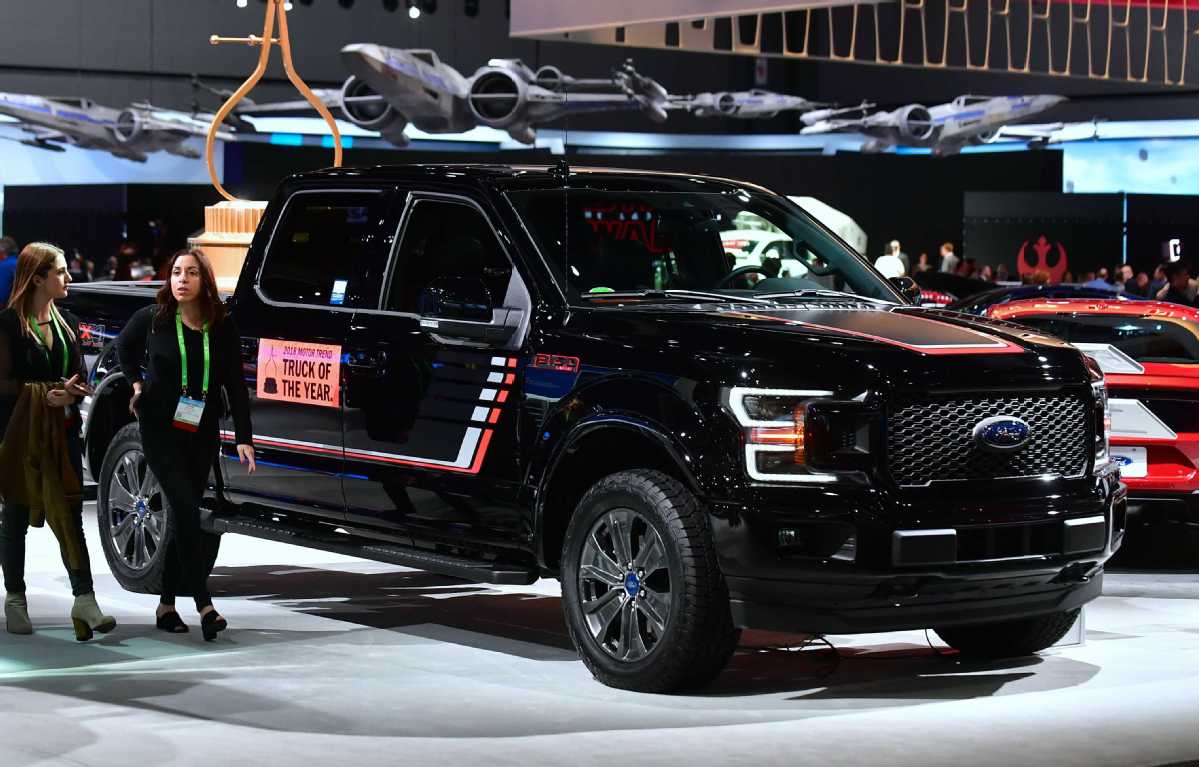
The dispute over auto trade between the United States and the European Union is becoming more heated and uncertain. US President Donald Trump has threatened to slap additional tariffs of 25 percent on autos imported from the EU if the bloc doesn't agree to a trade agreement favorable to the US.
Although Dutch Prime Minister Mark Rutte told CNBC on Monday that there's a lot happening behind the scenes to ensure the US and the EU reach a trade deal, Bloomberg, citing a senior EU official, reported on Friday that the EU is ready to target Caterpillar and Xerox if Trump hits cars.
The war of words over the auto dispute reflects the complicated trade relations between the US and the EU, with the US administration's penchant for issuing threats to gain the upper hand in trade talks.
Difficult to reach a pact overnight
The US and the EU have always had close trade ties. Their trade volume reached $1.1 trillion in 2017, among which the auto trade played a vital role, with EU exports accounting for more than one-third of the US' total car imports. Germany alone sold about 500,000 cars to the US in 2017. Which means both the US and the EU will bear the brunt of an auto tariff war.
According to the Association of German Chambers of Industry and Commerce, the EU's GDP growth would reduce by 0.1 percentage points in 2020 while Germany's GDP growth would suffer a 0.2 percentage points drop. And the value that the German auto industry creates would significantly slump with its overall car exports decreasing by a large extent.
Incidentally, the US auto industry does not fully support the idea of levying higher tariffs on European cars owing to the huge bilateral investment and close relationship in the value chain.
Ford set up its first plant in Europe in 1908, followed by European car brands including BMW and Mercedes-Benz establishing factories in the US. And plants owned by European companies in the US, for instance, South Carolina, Mississippi and Tennessee, have accounted for one-fourth of the US' total auto production and created many jobs for the local people.
Consumers to suffer the ultimate blow
Since the steep tariff on vehicles would be shifted to consumers, it would indirectly squeeze the business of automakers and car dealers and subsequently reduce investments in the auto industry resulting in job losses.
On the flip side, the US-EU disputes and negotiations on auto trade would intensify the competition in the industry, prompting auto companies to expedite innovation to cope with the new situation. And as the new round of technology revolution and industrial reforms roll out, smarter web-based electric cars would lead the development of the auto industry.
Holding trade talks among major economies is one of the key methods to establish systemic coordination in the fast-changing global economic landscape. The global trade pattern is undergoing major adjustments as the US resorts to trade protectionism in order to spoon-feed its domestic industries, leading to the shift from free trade to managed trade.
US attempts to rewrite trade rules
While implementing the "America First" policy, the Trump administration has added more factors, including national security and industry competition, to its trade policies and threatened to impose high tariffs on imports. And by raising the threshold to access the US market, the Trump administration is trying to coordinate and adjust the trade rules, and systemize its appeals by signing bilateral agreements favorable to Washington.
The US has chosen to negotiate with its trade partners one by one, in order to make its trade appeals more effective. For example, an upgraded version of a free trade agreement between the US and the Republic of Korea and the US-Mexico-Canada Agreement were signed last year.
Also, the Office of the US Trade Representative published the documents for negotiating objectives in the US-Japan and US-EU trade talks in December 2018 and January 2019, respectively. Both documents focus on merchandise trade, service trade, investment, state-owned enterprises, competition policy, digital trade, government procurement, trade remedies and small and medium-sized enterprises.
US-EU trade ties are complicated
Among other things, the US has emphasized that the trade deficits with the EU and Japan should be lowered, and asked the two economies to ensure US manufactured goods get zero-tariff entrance to their markets. Although the US and the EU have reached a consensus to work toward a zero-tariff and zero-subsidy deal, the raging dispute on auto tariffs reveals how complicated their trade relations are.
And given that heavyweights engaged in a conflict often adopt a tit-for-tat approach to achieve their goals, competition and countermeasures between the US and the EU are likely to get worse.
Dong Yan is a research fellow at the Institute of World Economics and Politics, Chinese Academy of Social Sciences, and Xu Tingting is a student at the University of Chinese Academy of Social Sciences. The views don't necessarily represent those of China Daily.