India unlikely to accede to US trade policy







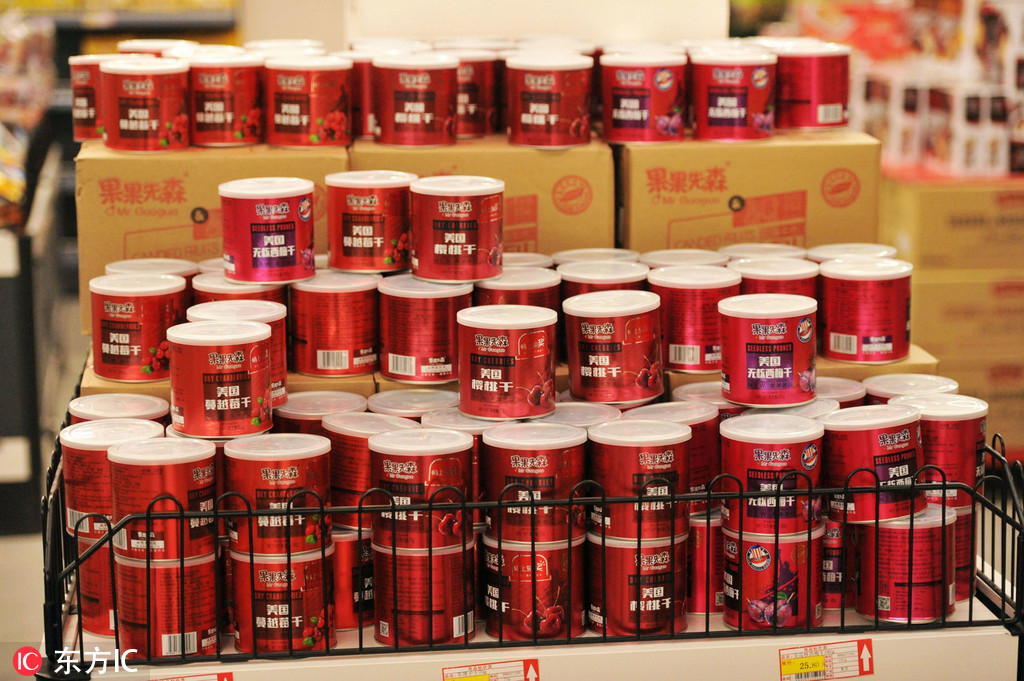
The Office of the US Trade Representative is reviewing India's status as a beneficiary of the Generalized System of Preferences, a US trade program aimed at promoting the economic growth of developing countries by providing duty-free entry for up to 4,800 products from 129 designated countries and regions, and considering cancelling the zero-tariff arrangement for $5.6 billion of Indian imports, according to Reuters. Among the developing countries, India has benefitted the most from the US program with about 3,500 Indian products getting zero-or low-tariff entry into the US market.
If the United States does cancel the zero-tariff arrangement, India will suffer the most severe punishment imposed by the US administration. Given the US' trade policies over the past two years, the trade differences between Washington and New Delhi will further widen.
Although both countries are yet to officially respond to the Reuters report, it is obvious that their trade relations are strained despite their seeming political closeness.
Building closer political relations
Washington and New Delhi have continuously strengthened strategic cooperation, with special focus on security and defense cooperation. The US administration expects to get India's support on multiple issues including maritime security, the Afghanistan issue and relations with China. Washington is striving to strengthen US-India relations with an eye on the next century and has provided New Delhi with special privileges on multiple issues, including security collaboration, the Nuclear Suppliers Group and Iran.
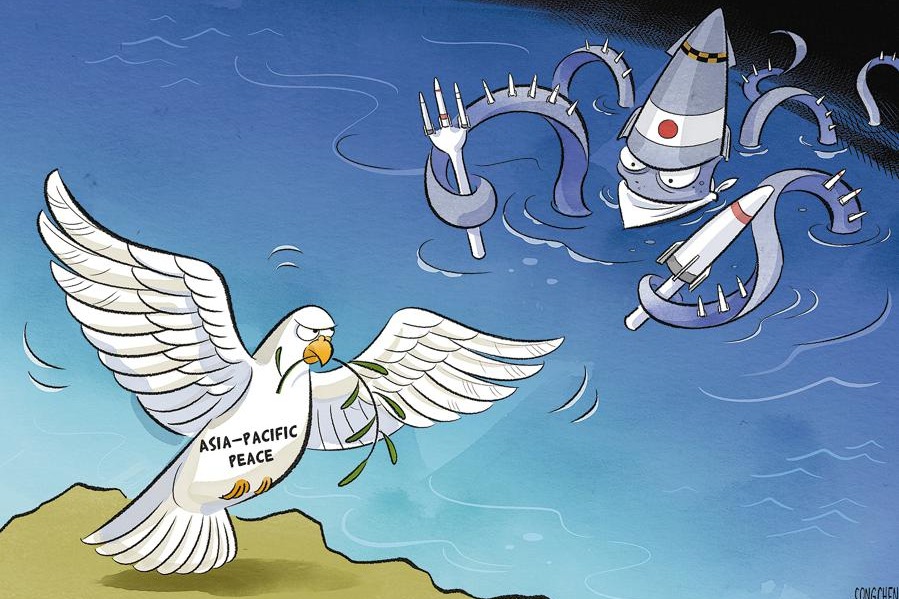
Aimed at building an alliance among the US, Japan, India and Australia, the so-called Quad, and promoting a free and open "Indo-Pacific" order, Washington's Indo-Pacific strategy spans the geographies of India and the Pacific, rather than the Indian and Pacific oceans. New Delhi, on its part, intends to champion its own interest and increase its presence in the Indo-Pacific and develop from a South Asian power to an Indo-Pacific, even global, heavyweight, by deepening its strategic cooperation with Washington.
But the US trade policy has not only increased trade frictions between the US and India and widened their differences, but also harmed the global trading system and the trade interests of a number of countries, including India.
In fact, the US administration has criticized India's high tariffs, even labeled India as the "tariff king". While the two countries are also locked in a dispute in the World Trade Organization, India's GSP status has become a key issue in Washington's trade negotiations with New Delhi.
'America First' policy behind the trade divide
A number of factors are responsible for the "hot political and cold economic" relations between the US and India. The US administration, which is obsessed with its "America First" policy, wants to shirk its responsibilities in terms of regional and global security, yet it seeks maximum profits in trade. No wonder it has expanded security cooperation with India. But if India insists on strategic independence and refrains from toeing the US line, the bilateral trade differences could intensify.
Just as Srinath Raghavan, a scholar with Carnegie India, said, throughout the past decades the US has rarely viewed its disagreements with India on trade, investment and other economic issues as acute, nor has it sought reciprocal treatment from India because it is more concerned about wider geopolitical interests. But, the US administration, which lacks a long-term strategic view, may not tolerate India acting contrary to the US' economic policy.
Yet, unlike Japan, India will not become a US ally, as strategic independence remains its diplomatic cornerstone. More important, upholding the multilateral trade system and providing necessary policy support for domestic enterprises conform to India's interests. Also, any compromise in trade policy risks shrinking Indian Prime Minister Narendra Modi's vote bank just before the 2019 general election.
Moreover, India's e-commerce regulations introduced in late 2018, which put checks on the operations of Amazon and Walmart in India, supposedly prompted the US to review India's GSP status. However, India is unlikely to make concessions before the general election as it would spark discontent among small retailers and mom-and-dad store owners, who have borne the brunt of the expanding operations of e-commerce giants.
Therefore, the "hot political and cold economic" relations between the US and India is likely to continue. As for China, it should not be worried about the political closeness between the US and India, nor should it feel happy about the strained trade relations between India and the US. Instead, it should remain strategically focused, avoiding conflicts with the US while gradually strengthening its trade partnership with India.
The author is the deputy director of Institute of South Asian Studies of China Institutes of Contemporary International Relations.