Cooperation is the legacy Kim leaves in World Bank







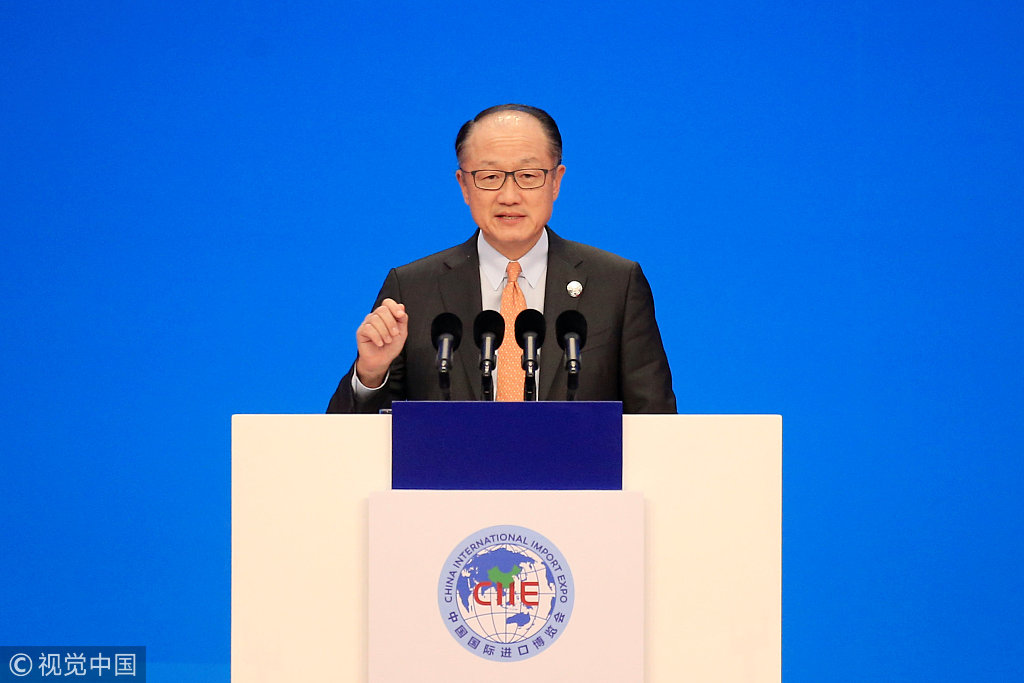
Before becoming the president of the World Bank in 2012, Jim Yong Kim was a reputed global health leader and had served as the department chair of Harvard Medical School and president of Dartmouth College. Among his many distinguished services, however, he will be most remembered for his leadership at the World Bank.
The World Bank was established thanks to the collective work of the international community, even though the process was initiated by the United States to help developing countries after the end of World War II. At its peak in 1945, the US was both enthusiastic and capable of helping build a rule-based world order. In fact, it helped establish the United Nations, World Bank and the International Monetary Fund to foster global peace and prosperity. However, the US can be accused of having such a vision today.
The rise of Kim illustrated the so-called American Dream, as until recently the US used to be proud of its multicultural society and welcomed immigrants. As a Korea-born American, Kim is the first Asian American to serve as the World Bank president. His tenure was extended to a second five-year term in 2017.
Kim has made remarkable contributions to the World Bank by promoting development and helping eradicate poverty around the world. He has led the World Bank to finance those projects that help fight climate change, and sought partnerships between the World Bank and regional development financing institutions, in order to build or improve infrastructure in developing countries.
Although Kim was nominated by the US president, he positioned himself as a global servant, and honored the principle of assisting developing countries through collaboration. In this regard, he has not only sought those developed countries’ support for the World Bank, but also learned from emerging new economies’ experiences and outsourced their expertise.
China, therefore, has been one of Kim’s key references for work. Over the past 40 years, China has transformed itself from a low-end developing country to a high middle-income country. The fact that China has risen from being a recipient of World Bank loans to become the world’s second-largest economy and a major contributor to the World Bank demonstrates the success of the World Bank.
Kim is known to have cited China’s success story as an example to inspire less-developed countries to implement reform. In addition, he launched a new round of capital raising, which allowed emerging economies such as China to contribute more and therefore play a bigger role in the global financial system. And over the past few years, the World Bank has been working with the Asian Development Bank and Asian Infrastructure Investment Bank to co-finance projects in developing countries in the region.
But there is no room for the US idea of leading through partnerships in the White House today. The US has pulled out of the 2015 Paris climate accord so that American industries can use more coal and pollute the environment further despite the threat of climate change. As an American leading the World Bank, Kim had to question the US administration’s climate change agenda and other development assistance issues. His stance of partnering with other emerging economies in the World Bank ran counter to the US administration’s “America First” policy.
In this regard, Kim’s sudden resignation is similar to that of former US secretary of defense James Mattis. It is a tragedy that those who advocate regional stability and global development have to quit their posts. But Kim leaves a legacy of adhering to the principle of a building a fairer world through cooperation.
The author is a professor at and former executive dean of Institute of International Studies, Fudan University, Shanghai.