Reconciling growth and national security







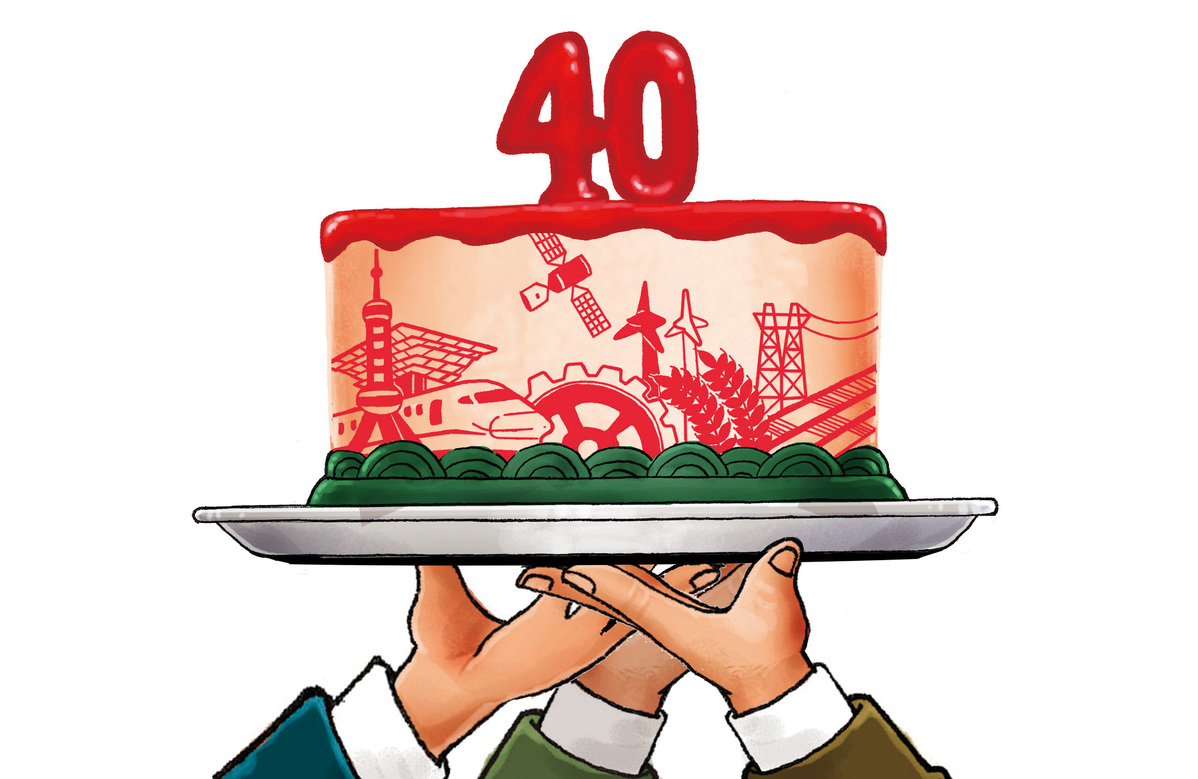
At a conference last month to commemorate the 40th anniversary of reform and opening-up, President Xi Jinping underscored the tension between the continuation of that process and the imperative of protecting national security. Xi recognized that "China cannot develop itself in isolation from the world, and the world needs China for global prosperity." Yet he also emphasized that "no one is in a position to dictate to the Chinese people" what should or should not be done.
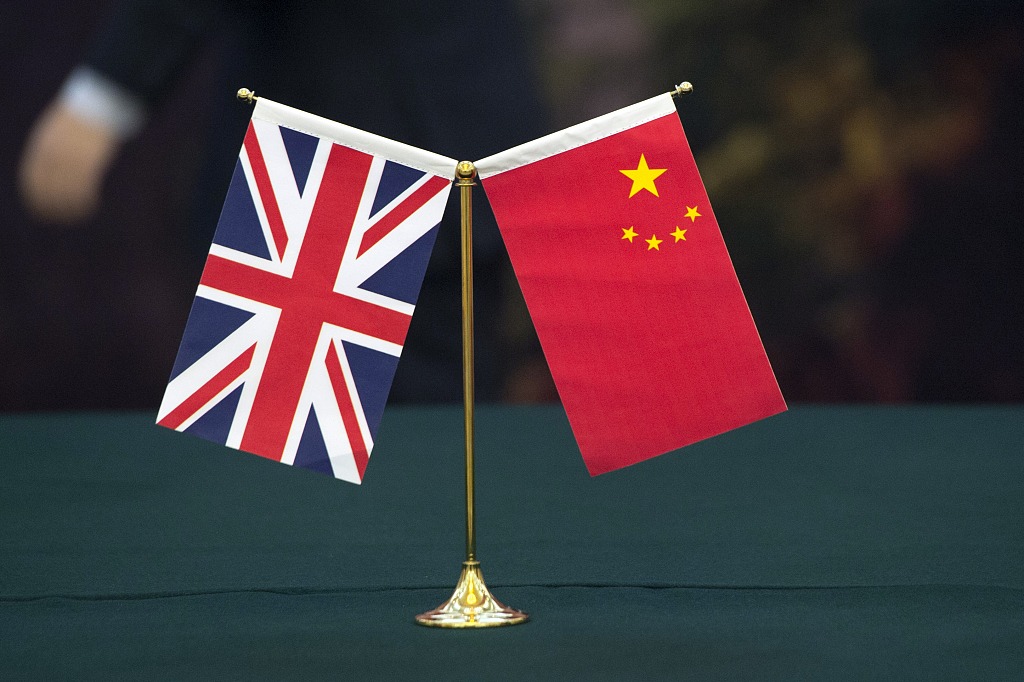
There is no doubt the world-especially the United States-has lately been trying hard to pressure China to make changes. The White House triggering the trade conflict and justifying it in national security terms is the most potent example. Worse, on Dec 1, the same day that Xi and US President Donald Trump struck a 90-day trade truce, Meng Wanzhou, chief financial officer of Chinese tech giant Huawei, was detained in Canada at the behest of the US.
While the US Justice Department has not clarified the reason for asking the Canadian authorities to detain Meng, it appears to relate to US suspicions that Huawei has violated US sanctions against Iran. But it also likely reflects the technological dimension of the escalating economic and geopolitical competition between the US and China.
Chilling US signal to financial markets
In any case, the possibility of unexpected restrictions or sanctions on businesses or individuals, imposed in the name of national security, sharply increases the risks faced by Chinese, American, and other businesses. This sends a chilling signal to financial markets.
There is good reason to hope that China can weather the challenges ahead. After all, it has endured serious internal and external shocks including the high domestic inflation in the 1980s, the Asian financial crisis of the 1990s, and the 2008 global financial crisis.
In fact, China turned these crises into opportunities. The result has been an average annual GDP growth of 9.5 percent (compared to a 2.9 percent global average) since 1978, which raised China's share of global GDP from 1.8 percent to 18.2 percent and lifted more than 740 million people in China out of poverty.
As Xi emphasized in his speech, this success reflects the hard work of the Chinese people, the innovative practices of Chinese businesses, and the leadership of the Communist Party of China.
The risk today is that the US' increasingly hardline "America First" approach will strengthen China's own hardliners, leading to a chain reaction that would be bad for all.
Fear of downward trend increasing
Such a chain reaction would include a negative downward spiral in global trade and investment dynamics. Rising trade tensions are already increasing the chances of a synchronized global recession, with slower growth in the US, China, and Europe in 2019. Besides, resistance to China's Belt and Road Initiative-which has also been demonized by some US national security hawks-could choke off one of the world's few sources of finance for much-needed infrastructure and public goods, particularly in developing countries.
China now faces a dilemma. To minimize China's vulnerability to external hostility, the authorities may need to rethink some elements of their domestic reform agenda. From a national security (and public goods) perspective, maintaining a strong State sector, emphasizing debt financing and strengthening the CPC's leadership make more sense. But, to ensure quality growth, China must continue working to boost private businesses, expand equity financing and advance decentralization, thereby spurring competition, innovation and job creation.
Xi hopes to balance these imperatives by doubling down on China's growth model with Chinese characteristics, incorporating lessons from Chinese philosophy and history. This means consolidating the Party's leadership, contrary to the US' wish, in order to maintain a pragmatic, flexible and strategic approach to manage systemic risks, and address internal concerns and external threats.
Domestically, the Chinese government will aim to support development that emphasizes boosting productivity and thus delivering innovative, coordinated, green, open and inclusive growth. On the international front, Xi plans to maintain a responsible foreign policy aimed at inclusive global development and resisting hegemony by any single actor.
In short, Xi will uphold China's tried-and-tested, deeply pragmatic approach to modernization. Like so many of his predecessors, but unlike many in the West, Xi understands that there is no simple, onetime solution to the challenges ahead. As he put it at the 40th anniversary conference, "We must resolutely reform what should and can be changed, we must resolutely not reform what shouldn't and can't be changed."
China seems ready for realistic reforms. Is the US ready for a pragmatic deal?
Andrew Sheng is a distinguished fellow at the Asia Global Institute at the University of Hong Kong and a member of the UNEP Advisory Council on Sustainable Finance. And Xiao Geng, president of the Hong Kong Institution for International Finance, is a professor at Peking University HSBC Business School and at the University of Hong Kong's Faculty of Business and Economics.
Project Syndicate