Housing system should cover all residents







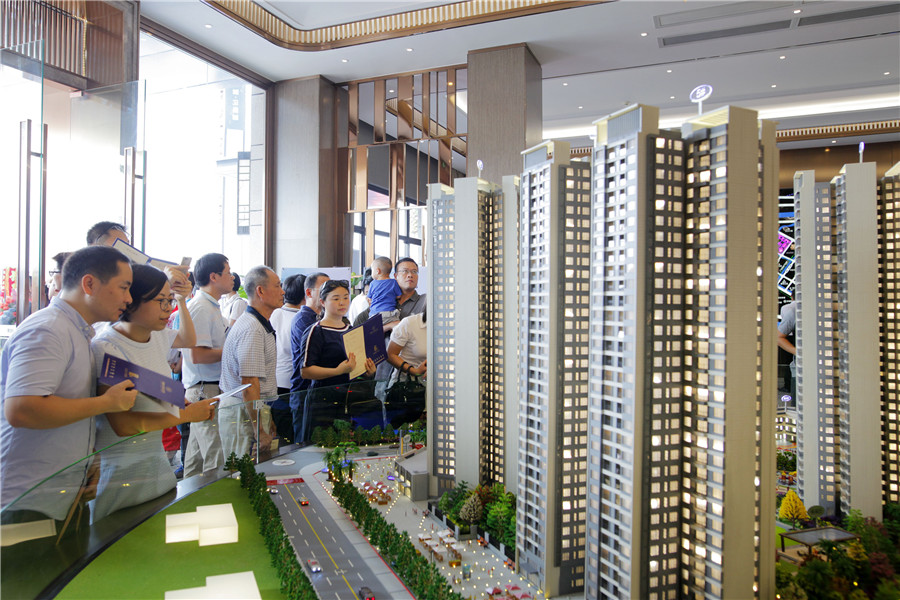
China is observing the 40th anniversary of reform and opening-up, but its real estate reform is just two decades old, as the housing reform started only in 1998.
Since the launching of reform and opening-up, China's average urban residential area has increased from 6.7 square meters in 1978 to more than 38 square meters in 2018, and average rural housing area has increased from 8.1 square meters in 1978 to 45 square meters in 2016. In 1978, the real estate sector's contribution to China's GDP was essentially nil, but by 2017 it had grown to 6.5 percent of GDP-the figure had reached 6.8 percent by the end of October 2018. This was made possible by overall reform and opening-up, especially the housing system reform.
The real estate sector, however, is also facing many problems, which means reform should be further deepened to ensure the steady and sustainable development of the real estate market.
The real estate market was over-heated before August this year. It began to cool down in September, as the housing sales volume has shown negative growth from August to October and the new construction rate has remarkably declined since August.
Besides, the gap among regional real estate markets is gradually narrowing and the realty market in some hotspot cities is cooling down. But the realty markets in some cities, particularly those in the central and western regions, seem to be warming up. And housing prices in city clusters are remarkably higher than in single cities.
The changes in macroeconomic and control policies have led to these market changes. And the pessimistic sentiment in the market can be attributed to China's continuing economic downturn, the negative influence of the Sino-US trade conflict and private enterprises' concern for the future.
Since September last year both the central and local governments have maintained strict real estate control policies. In fact, 405 real estate control policies have been introduced this year, 80 percent more than 2017.
The real estate market is expected to cool down next year because there are strong downturn factors including the strict real estate control policies, uncertainty over the Sino-US trade conflict and bubbles in some cities' property markets.
Among the problems and risks facing the real estate sector are structural bubbles, rapid increase of property financing leverage ratio, and the macroeconomy's excessive dependence on the realty sector.
The housing system reform has made slower than expected progress because some local authorities and departments have shown laxity in promoting reform when it appears to undermine their interests.
In the next phase, we suggest market expectations be better managed, control policies are improved and reform accelerated. First, market confidence should be rebuilt by deepening reform to ensure the healthy and stable development of the national economy. Bubbles created by speculation are one of the most important factors for real estate bubbles. So measures should be taken to control serious fluctuations in the property market, and market expectations should be channeled through the macroeconomic system reform and policy adjustment, depending on the actual local conditions.
Second, the real estate control policies need to be improved to avoid fluctuations in the real estate market. Macroeconomic challenges, including the Sino-US trade frictions, should be better dealt with and high quality economic development made the top priority, which means a certain degree of slowdown in economic growth should be tolerated. In addition, the relationship between the real estate sector and the macro-economy should be better adjusted to avoid over-dependence on the property sector during any economic downturn.
And third, the real estate control policies should be stabilized. In the past, the aim of the real estate control policies was to curb the rapid increase in housing prices. But now the aim of the policies should be to stabilize the entire real estate market.
Moreover, we should stick to the principles of a "house is for living in, not speculation" and introducing "control policies according to the local actual situations". The control policies should be changed from temporary administrative measures to sustained economic and market measures such as tax and interest on loans. The control policies should also be aimed at adjusting local government supervision-not just adjusting market demand-with the focus more on financial institutions. And there should be proper planning to reduce the real estate market's fluctuations.
More important, the real estate sector should undergo fundamental reform in order to establish a new housing system that covers all the residents.
The author is assistant president of the National Academy of Economics Strategy, Chinese Academy of Social Sciences.