JFK's clue for US-China relations: Building a world safe for diversity







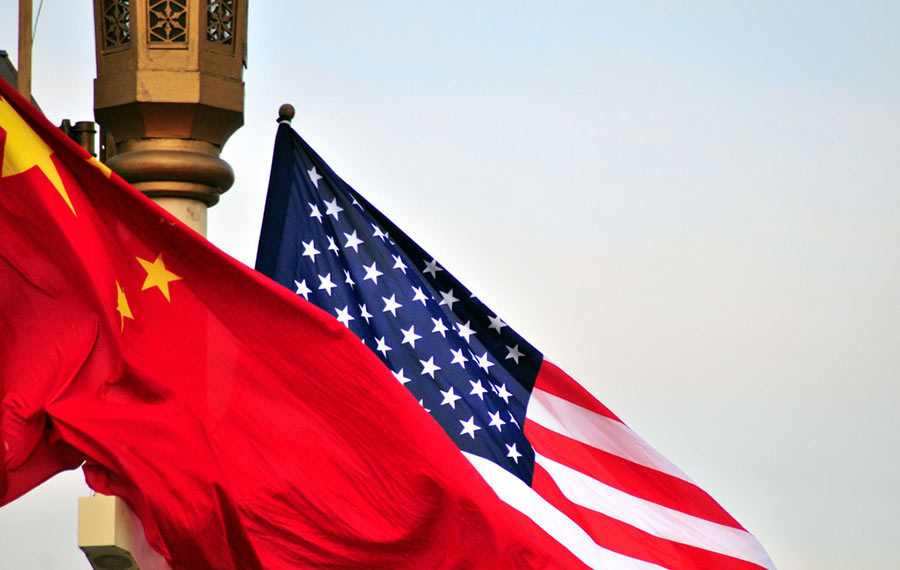
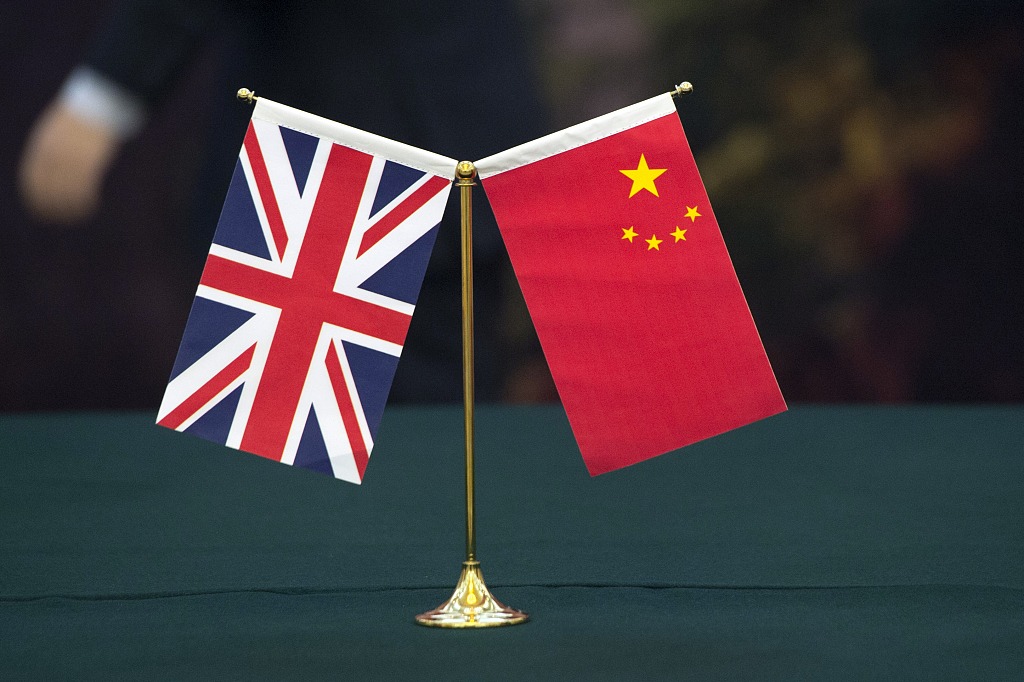
The 90-day ceasefire since Dec 1 in the "tariff war" between the United States and China provides a welcome opportunity to pause-and to think. Trade negotiators are focused on the search for a deal that will prevent a full-blown trade war. But the rest of us should be thinking about two larger questions: Where is the overall relationship between the two great nations heading? And what can the two sides do to avoid an outcome no one wants?
At this point, even the rosiest optimists have awakened to the fact that this is not just a tiff about tariffs. Owing to last week's detention of Huawei's chief financial officer Meng Wanzhou, some claim the US and China are now sliding rapidly toward what could soon become "Cold War 2.0".
In the original Cold War, the US and the Soviet Union engaged in war by all means short of bombs and bullets. This conflict included unlimited economic, political, and ideological assaults on each other, and even "hot" proxy wars.
But before the Cold War ended, it featured several serious crises in which the two rivals came to the brink of a nuclear war. The most dangerous moment, historians agree, was the Cuban Missile Crisis of 1962-when former US president John F. Kennedy and Soviet leader Nikita Khrushchev stood eyeball to eyeball contemplating a confrontation Kennedy believed had a one-in-three chance of ending in a nuclear war that would have killed hundreds of millions of people.
Sobered by that experience, JFK began a serious search for a better way forward. Eight months later, just before he was assassinated, in one of the most significant speeches about international affairs of his career, he proposed that hereafter, the US goal in relations with the Soviet Union should be to build "a world safe for diversity".
That would mean, he understood, transforming American thinking about what the US required of its "deadliest" adversary. In a feat of rhetorical jujitsu, he stood former US president Woodrow Wilson's call for a "world safe for democracy" on its head. More importantly, he rejected its Cold War analogue of which he had been a leading advocate. Rather than demanding that the US bury the Soviet Union, the US should now live and let live-in a world of diverse political systems with diametrically opposed values and ideologies. In that future, the two rivals could compete vigorously-but only peacefully-to demonstrate whose values and system of governance could best meet the needs of its citizens.
What led this hardened, emotionally committed Cold War warrior to such a dramatic change of mind? The existential experience of nuclear danger. To prevent Khrushchev from placing nuclear-tipped missiles 150 kilometers off the US coast in Cuba, Kennedy played a version of Russian roulette.
To reduce this risk, the Kennedy administration undertook a surge of initiatives that began with the establishment of a hotline between the White House and the Kremlin to allow direct, immediate communication. It stretched a unilateral moratorium on atmospheric tests of nuclear weapons to the beginning of negotiations that concluded with the Nuclear Nonproliferation Treaty-which limits the number of new nuclear-weapon states.
To be clear, Kennedy never wavered on America's containment strategy that sought to prevent Soviet expansion by the use of military force. But he opened his mind to the possibility that the US could nonetheless find some way to live with a committed adversary. As he stated clearly in his 1963 American University speech, his main takeaway from the missile crisis was a categorical imperative: "above all, while defending our vital interests, nuclear powers must avert confrontations that bring an adversary to a choice of either humiliating retreat or nuclear war."
How were such confrontations to be averted? Not, he answered, by a "Pax Americana enforced by American weapons of war". Not by insisting that "the leaders of the Soviet Union adopt a more enlightened attitude".
Instead, he argued that we recognize that "in the final analysis, we all inhabit this small planet. We all breathe the same air. We all cherish our children's future. And we are all mortal." And thus, he concluded, while never "being blind to our differences, let us also direct attention to our common interests and to the means by which those differences can be resolved. And if we cannot end now our differences, at least we can help make the world safe for diversity."
It was a profound thought. It required, in effect, embracing simultaneously two almost contradictory propositions. But over the decades that followed, the two countries with fundamentally incompatible political philosophies found ways to avoid military confrontations as they engaged in fierce but peaceful competition.
It is instructive to consider the similarities between Kennedy's idea and former premier Zhou Enlai's "Five Principles of Peaceful Coexistence" enshrined in China's Constitution: mutual respect for each other's territorial integrity and sovereignty; mutual non-aggression; mutual noninterference in each other's internal affairs; equality and cooperation for mutual benefit; and peaceful coexistence. President Xi Jinping has affirmed that these bedrock principles "constitute the cornerstone of China's foreign policy".
Taken together, these two streams of thought could inform a joint effort by US and Chinese leaders to develop a new strategic concept. One that channels the "Thucydidean" rivalry toward a new form of peaceful competition that preserves both countries' vital national interests and prevents them from falling into a war that could destroy what they value most.
The author is former director of the Belfer Center for Science and International Affairs and Douglas Dillon professor of government at the Harvard Kennedy School of Government, where he served as founding dean.