China wants to be relevant, not dominant








Beijing and the West won't agree on everything, but they have enough in common to recognize that dialogue is the tool to reduce their divergence and move toward greater convergence
In 1978, Deng Xiaoping not only changed the destiny of his own country but his vision also modified the course of world history. Over the past four decades, the success of China has changed the life of the Chinese people for the better and created a global geopolitical situation in which the country has clearly regained centrality.
In this context, one way to mark the 40th anniversary of Deng's reform and opening-up is to try to answer the major question of our time: will the re-emergence of an ancient non-Western civilization be a disruptive force, or can China and the West design in a genuinely cooperative relationship a new international order?
A third trajectory is in fact more probable than these two scenarios. An essentially peaceful coexistence characterized by a mix of disputes, tensions but also negotiated agreements and varying levels of understanding could be the backdrop of Sino-Western relations.
Confrontation scenario should not be ignored
Despite its low probability, the extreme scenario of a Sino-Western confrontation should not be totally ignored. The West as much as China, albeit for different reasons, could be at the origin of such a sad course of events.
In reaction to the ongoing redistribution of power, conservative forces in the West could push for the containment of China with the objective of preserving Western dominance in global affairs. Such a posture caused by the fear of a loss in a zero-sum game representation of the world would create an unnecessarily divided global village and increase the risk of escalation of what would become a US-China strategic rivalry.
In the event of China suffering severe and long-lasting economic difficulties, some in China could make use of the nationalistic card to maintain social stability and domestic cohesiveness. But, despite the challenges it faces, the Chinese economy is still growing at more than 6.5 percent a year, while mass entrepreneurship, an innovative spirit and the globalization of Chinese companies indicate that the world's most populous nation has entered a transition from quantitative growth to more qualitative and sustainable development.
Moreover, a more nationalistic tone in China would not necessarily mean an aggressive China, for history illustrates that neither militarism nor expansionism has been defining features of the country.
If one takes long-term history as a reference, China has never really collapsed; it merely closed itself from its surroundings. In Deng's reform and opening-up, there is the implicit understanding of the risk of isolation.
In another possible turn of events, it is China's resurgence which could also be hypothetically at the source of Sino-Western antagonism. However, after what the country remembers as the 100 years of humiliation in the aftermath of the Opium Wars there is no alarming sign of a revengeful political narrative targeting the West or Japan.
China did not attribute to others the responsibility for its painful marginalization following the Industrial Revolution; it re-emerged not by putting the blame on external factors but by reforming itself. Deng's emphasis on the notion of reform illustrates this feature.
China aware of risks in changing world order
In any discussion on the determinants of a logic of Sino-Western opposition, one has to take into consideration the fact that China keeps reaffirming its strategy of peaceful rise. By doing so, Beijing recognizes the risks inherent to any significant rearrangement of power while it displays confidence in its capacity to wisely manage a process of change.
China aims to be relevant but not dominant; its quest for centrality should not be mistaken for a martial mobilization for global hegemony or even leadership.
If an antagonistic scenario is highly improbable, does it mean that cooperation will define the future of Sino-Western relations?
Dealing with a series of crises, the West and China have indeed shown that they can have productive collaboration (UN peacekeeping missions, the fight against nuclear proliferation, the Iran nuclear deal, counter-terrorism, and the Paris climate accord). But while the two sides know how to cooperate when they have identified a common threat, they also differ on the interpretation of a number of security and political issues.
NATO and China evolve on separate courses, and even if exchanges are taking place between the two, a cooperative articulation between the Western military alliance and the People's Liberation Army won't materialize in the foreseeable future.
While China and Russia are rapidly enriching their strategic partnership, the West has imposed sanctions on Moscow following the Ukraine crisis.
A trust deficit already affects Sino-Western interactions in the security domain (neither the United States nor the European Union can sell weapons to China, and the territorial claims in the South China Sea are a source of disagreement) but, in cyberspace, it is strategic mistrust which complicates Sino-US relations.
Since 1949 the Chinese and the Western political systems have been operating on different understandings of legitimacy, and while China has been evolving over the past 40 years into governance in which the rule of law is becoming increasingly central, one should not expect the two systems to coincide.
Sovereign entity with traits of a unique civilization
Fundamentally, China behaves as a sovereign entity which has inherited the characteristics of a unique civilization. The Chinese renaissance of the present is not about an absolute rupture with the past but a balance between new forms of governance and ancient socio-political practices.
In a sense, one of the major real-life counter-arguments to Francis Fukuyama's narrative on "the end of history" is the Chinese renaissance and its effects on the world system. Modernization, from a Chinese perspective, cannot be synonymous with Westernization. On the spectrum ranging from confrontation to cooperation, from the Huntingtonian "clash of civilizations" to "the end of history", the nuances and complexities of geopolitical coexistence will most probably mark Sino-Western relations.
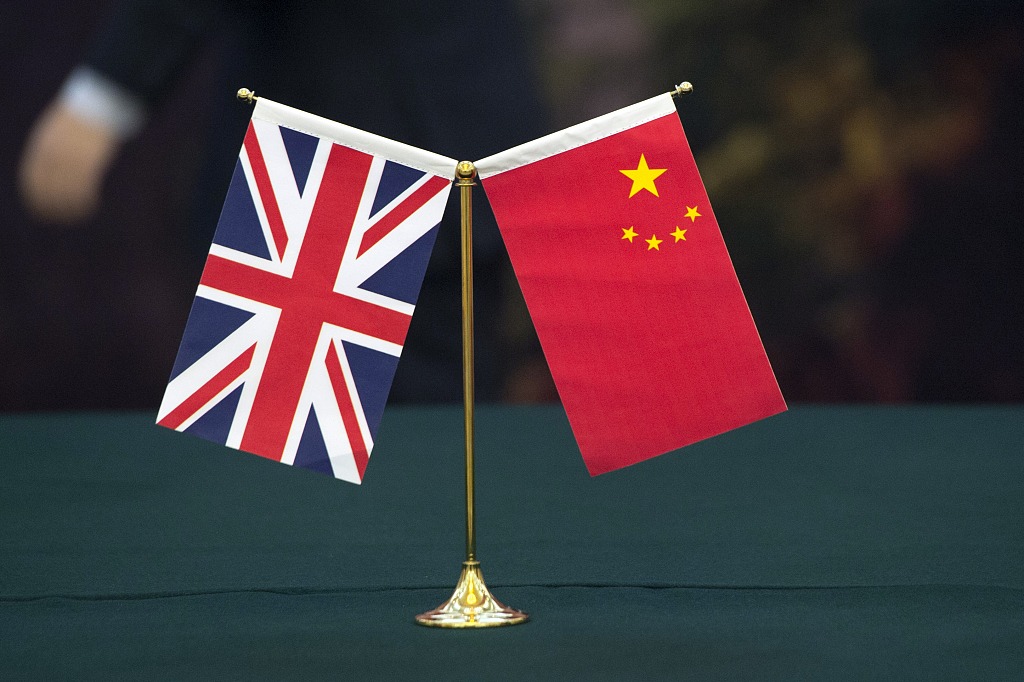
The West and China won't agree on everything but they have enough in common to recognize that dialogue and negotiation are the instruments to reduce their divergence and enlarge their convergence.
In its strategic approach to China, the West has to take into account the fact that through its long history the Middle Kingdom has been through periods of openness to the world-the Tang (618-907) and Song (960-1279) dynasties or the Ming Dynasty (1368-1644) of the Yongle Emperor-and periods of isolation.
The world benefits from an open China (the size of its market, the Chinese creation of economic value across continents, Sino-Western agreements to tackle threatening global issues), but China's periods of greatness were also periods of openness.
For the West, but also for Chinese forces of progress, the real danger to avoid is a Chinese return to a solitary course since it would initiate an era of de-globalization as well as abort the promises of the Chinese renaissance.
It is in this context that Western political and economic leaders have to act as catalysts for China's opening-up. There are evident interactions between gaige (reform) and kaifang (opening-up), the two main themes of Deng's policy, but it is the level of opening-up which determines the nature and intensity of the reforms.
China far removed from complacent isolationism
With the new Silk Road initiative, an unprecedented outward looking vision in the Chinese historical context, President Xi Jinping undermined the conservative forces which would prosper in proportion with China's disconnect from the world, and elevated Deng's policy of opening-up while leading the country even further away from complacent isolationism.
By suspecting the motives of the Asian Infrastructure Investment Bank, one of the Belt and Road Initiative's international financial support mechanisms, the US misses an opportunity to accompany China in its opening-up. Although it has been more responsive to Xi's diplomatic initiative, the European Union could certainly be more pro-active in the creation of synergies along the Afro-Eurasian axis.
In the 1950s, then premier Zhou Enlai put forward the notion of peaceful coexistence. In the 21st century, coexistence between the West and China has not only to be peaceful but can also be mutually transformative.
The forms that a mutually transformative coexistence can take are many but the EU is certainly positioned to be an effective catalyst of China's opening-up, while China is potentially a powerful catalyst for more European cohesiveness.
EU must enter digital age with renewed ambition
The digital revolution is having a big impact on the dynamics of Chinese society, but digital China invites Europe to enter the digital age with a renewed ambition. The potential creation of value of the digital or artificial intelligence technologies is unlimited and, as such, stands as an invitation to go behind zero-sum game approaches and embrace dynamic interdependence.
China is at the dawn of a great entrepreneurship revolution. In 2015, about eight private companies were established every minute in the country-12,000 per day. The connection between Western and Chinese private entrepreneurs, which has to be supported and encouraged, guarantees the continuation of China's opening-up and creates new global economic but also social values.
Western modernity has positively contributed to the transformation of China, but a metamorphosed and global China can take the world to another level of prosperity and human development.
If the notion of peaceful coexistence prevents us from falling into a logic of confrontation, the dynamic concept of a mutually transformative coexistence takes us even closer to a logic of cooperation.
The author is the founder of the Europe-China Forum (2002) and the New Silk Road Initiative (2015). This article is an excerpt from the upcoming book The Sleeping Giant Awakes, edited by China Watch, a think tank powered by China Daily.