Developed countries have their own climate change commitments







With emission reduction and support commitments yet to be fulfilled, developed countries are not in a just position to make new requirements for developing countries and demand they increase transparency in fulfilling their reduction pledges, a senior Chinese climate change official said.
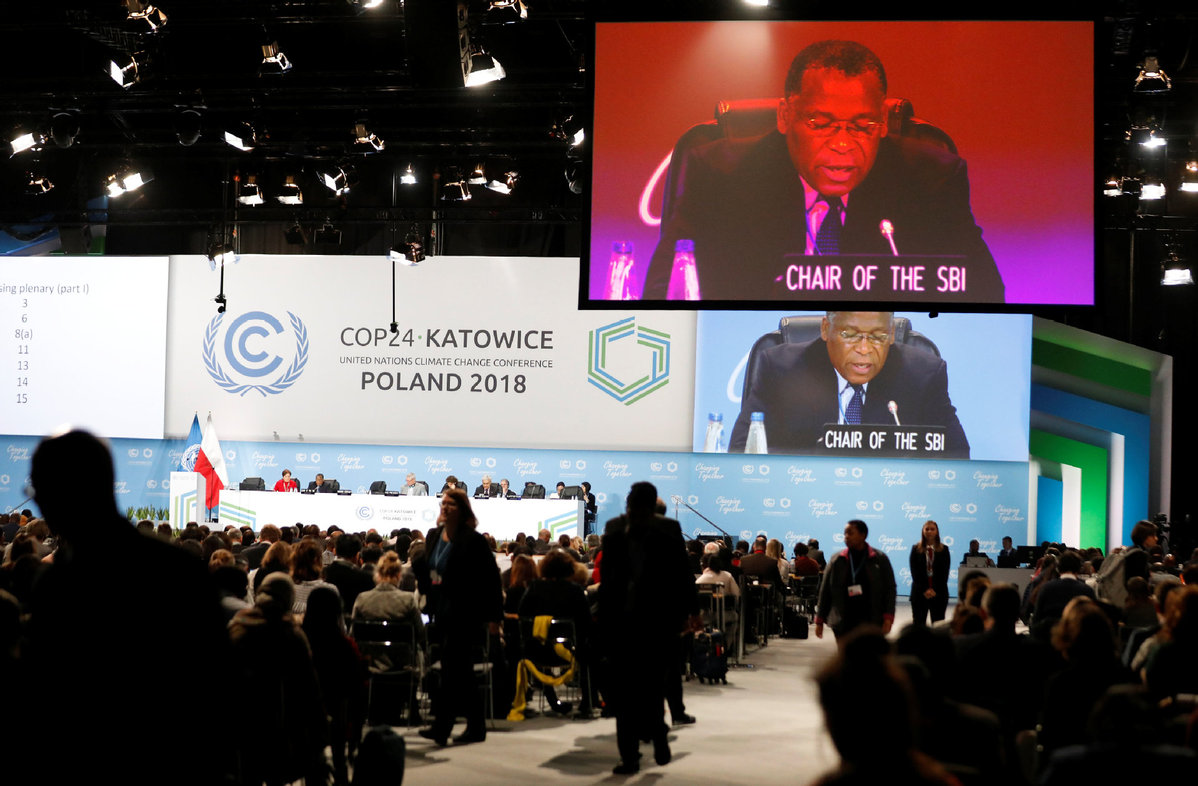
Xie Zhenhua, China's special representative on climate change affairs, made the comment at a news conference in Katowice, Poland on Thursday, one day ahead of the scheduled conclusion of the annual UN climate change conference.
The key task of the gathering of delegates from almost 200 countries in Katowice this year is to finalize implementation guidelines for the 2015 Paris climate change agreement.
"The negotiations have met with many difficulties," Xie said. "And the developing countries don't feel comfortable in the heart."
It's clearly stated both in the Kyoto Protocol and Paris agreement that developed countries should dramatically reduce their carbon emissions before 2020 and also offer financial and technological support for developing countries to help them tackle global warming issues.
While failing to meet targets as suggested by the UN Intergovernmental Panel on Climate Change, many developed countries have also yet to fully materialize their financial commitment, Xie said.
At the 2009 UN conference, developed countries pledged a $30 billion "Fast Start" fund to be distributed from 2010 to 2012, and a scale-up of the aid to $100 billion per year by 2020.
"Some of the developed countries have reached their reduction targets as suggested and also contributed financial support. But many have neither fulfilled their targets nor offered the funds, or given out enough," Xie said.
Without completing what they should have done or honoring their commitments, these countries put out new requirements and demand developing countries to increase transparency in tracking and reporting the progress of fulfilling their Nationally Determined Contributions. This is what has made developing countries "dissatisfied", Xie said.
"On this point, the developing countries have exercise flexibility. Under these circumstances, we're still willing to continue negotiations with them to finalize the implementation guideline for the Paris agreement," he added.
The Paris agreement rests on the basis of NDCs, or pledges each country made for post-2020 emission reductions to meet the universal goal of keeping global temperature increases to well below 2℃ above pre-industrial levels.
Submitted by parties to the United Nations Framework Convention on Climate Change at the 2015 UN climate change conference in Paris, the NDCs were formally adopted on Nov 4, 2016, as the Paris agreement entered into force.
The agreement also includes the establishment of an enhanced transparency framework for tracking and reporting the progress of existing and future country commitments, with built-in flexibility included for developing countries.
The voluntary principle is one of the major innovations of the Paris agreement. As to flexibility, each country is very clear about their capability and when they will be capable enough to put into place a universal transparency framework in their countries, Xie said.
"As a Chinese saying goes, people who wear shoes know if the shoes suit them," he added.
China holds that transparency is a key measure to implement the Paris agreement, and also a foundation for the establishment of political mutual trust, Xie said.
"We all should make efforts to do it well. But countries have different capabilities," he said, adding developing countries should make decisions of their own accord to define flexibility for themselves.
It needs financial support to empower them so they can gain the capability to place a world universal transparency framework in their country as soon as possible, Xie said.
Xie also said it could help establish mutual political trust if developed countries reduced emissions as required and materialized their financial commitment.