Back and forth on trade can be expected in months ahead







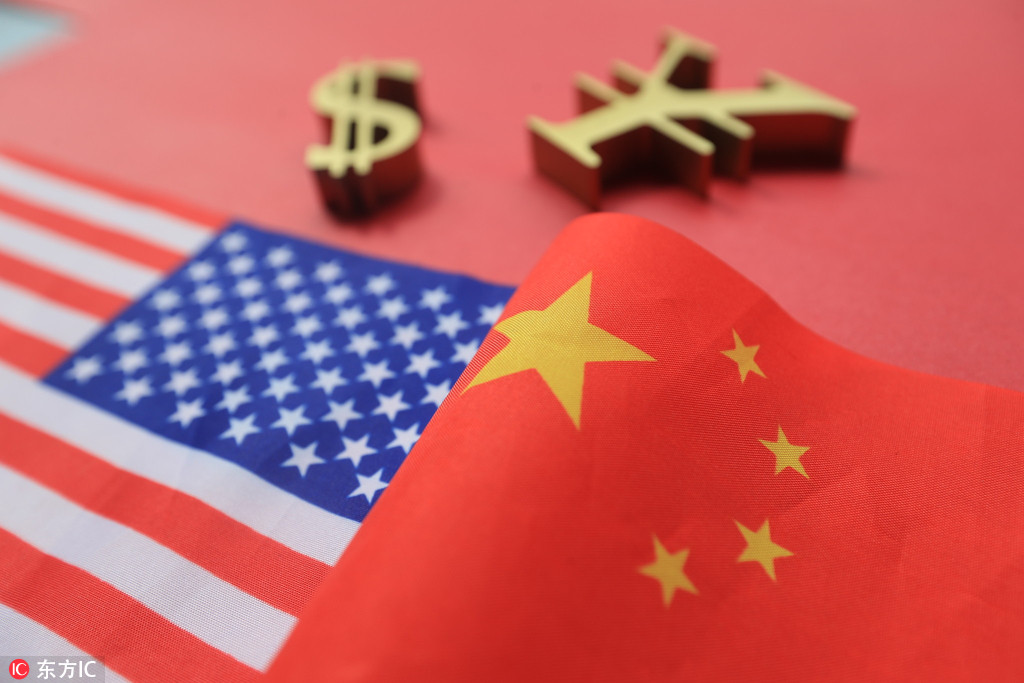
China and the United States agreed to suspend tariff hikes and restart trade talks at the meeting between President Xi Jinping and his US counterpart Donald Trump in Argentina on Dec 1.
In the context of the escalating trade frictions between the two countries, the meeting between the two heads of state drew worldwide attention, given that it was not only related to China-US economic and trade relations, but the future development of the world economy and global trade to a large extent.
From the information released, we can seemingly conclude that an agreement was reached with the US attaching some strings, such as "immediately start purchasing agricultural products from US farmers" and the setting of a 90-day deadline for the two sides to reach a negotiated solution.
The other day, I got a chance to ask a Mexican professor about how Mexicans view the newly concluded US-Mexico-Canada Agreement. He replied that Mexico had two basic principles for the negotiations, namely, Mexico had to strive to make the talks succeed, because failure would hurt it more, and it had to try to safeguard its interests on the basis of successful talks. "Now that our talks succeeded, we think we have done the best we can to protect our interests", he said.
What the Mexican professor said does not necessarily represent the real logic of the Mexican government, nor does it necessarily meet the technical requirements of the negotiations. However, his words can prompt us to think who would be hurt the most if China and the US had failed to reach a consensus they did in Buenos Aires.
Many believe China and the US cannot reach a final agreement because their dispute involves a structural conflict between the two countries. Conservatives in Washington not only want China to buy more US goods and solve the trade imbalance with China, but more importantly want to change China's economic and trade system. Therefore, under an overhanging Section 301 probe into China, there is still possibility that the US may yet impose 25 percent tariffs on $220 billion worth of Chinese imports after March and even extend the tariffs to all Chinese imports.
Ely Ratner, a scholar from the Center for a New American Security, previously wrote in the Foreign Affairs magazine that any deal reached in Buenos Aires would be at best tactical and would provide only comfort to jittery stock markets and beleaguered US farmers but it would have no substantial or long-term impact on the geopolitical competition between China and the US.
Thus the so-called 90-day deadline is only expediency and China should not relax its vigilance.
However, the temporary tariff "ceasefire" is still significant, especially for China's efforts to stabilize its current export expectations. At a recent forum on international banking, Yi Gang, governor of China's central bank, said that the downside risks to China's economy are mainly due to the "negative expectations and uncertainties "brought by Sino-US trade frictions, which cause tensions in the market.
According to the customs data, China's exports grew by 15.6 percent by November, but the main reason for such a hefty growth was a "rush" to buy Chinese goods before the 25 percent tariffs that would fall on Jan 1, 2019. Such accelerated exports are not conducive to China's sustainable export growth in the coming months. Under this situation, a pause in the Sino-US trade conflict will help China stabilize the situation.
In the truce agreed in Buenos Aires, China made a commitment that it will take further measures to deepen reform and open wider to the outside world as required by the 19th National Congress of the Communist Party of China, and in the process address some economic and trade issues over which the US is concerned. It can be seen that the requirements of the US are largely in line with the direction and objectives of China's reform, and the two sides share huge common interests and space for cooperation, with their differences mainly focused on how their common goals are advanced and how fast. Even if the US does want to break its economic ties with China, it is not in its interests to do so abruptly. In an era of high interdependence, any economic "hard decoupling" between China and the US would do unbearable harm to both economies.
Therefore, the economic and trade relations between China and the US are likely to be "on and off" in the time ahead, and they may make "two steps backward and three steps forward".
China has demonstrated sufficient sincerity and determination to resolve its trade disputes with the US. It has repeatedly stressed its hope that both sides can work in the same direction to push bilateral economic and trade relations back onto a healthy track as soon as possible for their mutual benefit. Indeed, reaching a concrete agreement which is mutually beneficial and win-win is the basis and premise for China actively responding to the US' appeals.
The author is a senior research fellow with the Pangoal think tank.