Concerns follow good economic signs







This time a year ago, the world economy seemed to be getting on a better plane. A number of cyclical indicators suggested the world economy would grow about 4 percent in the latter half of 2017, raising hopes that it would allow a multi-year end to the decade of 4 percent growth. These indicators included the Republic of Korea's exports, the first country to report trade every month, which for the whole year reported the fastest rise it has ever had in exports.
Many countries were reporting accelerating monthly business confidence surveys, as shown for example, by the Purchasing Managers Index, while some particularly troubled economies from earlier in the decade, such as the eurozone, were showing especially encouraging signs. And at its annual meeting last year, the International Monetary Fund revised up its world GDP estimate, something that continued in its spring meeting this year.
A familiar trend makes come back
Now one year later, an only too familiar trend of this decade has returned and at its recent meetings, the IMF has revised down its forecasts for 2018 and 2019. Those same cyclical indicators I referred to, with the slight exception of the United States, are all turning lower. The monthly German IFO index for example, a very useful barometer of both German and the eurozone business activity, has turned lower for a number of months, as have most eurozone PMI surveys.
The ROK export data have generally trended softer as the year has progressed, and a number of countries have exhibited worrying signs, ranging from Argentina to Turkey. China, too, has shown plenty of cyclical weakness-even without the trade spat with the US. The US has been enjoying a cyclically strong 2018 so far, but I share the views of many that much of this has been purely due to the large fiscal stimulus that US President Donald Trump introduced and it will fade into 2019.
There are also some specific policy issues that have grown.
In Europe, we have some very peculiar political developments breaking out, the latest being the apparent decline of the two major centrist political parties in Germany, the Christian Democratic Union and Socialist Democratic Party of Germany. Which led to the news that German Chancellor Angela Merkel would step down in 2021-but it turned out she is stepping down as head of the CDU. This has potentially important implications given how stable the German political scene has been for years.
A worrying sign hangs over Europe
Besides, a standoff has developed between the Italian populist government and the European Union over Italy's unconventional fiscal plans. Italy does need policies to help it achieve stronger nominal GDP growth, not least because there is no way it can reduce its debt ratio without stronger nominal growth. But it cannot openly flout agreed EU rules, as that would destroy the central premise of the EU economic policy. Of course, given the country's debt, neither Italy nor the EU can afford anything close to the crisis that Greece endured. This is a worrying sign that hangs over the EU on top of the cyclical weakness.
We also have the usual consequences of a tightening US monetary policy and the usual dilemmas this always seems to bring for global financial markets, especially those massively dependent on the role of the dollar. Countries with large external current account deficits such as Turkey, and a number of others, often requiring to refinance dollar-denominated debt at a time of rising US interest rates and weakening local currencies, will face considerable uncertainties.
An oddity of this situation is that this repeatedly occurs even though the US economy is not as important to the rest of the world as it is to global financial markets. This is a structural weakness of the global financial system and, in the ultimate analysis, not helpful for the US economy. The US exports more to many of these countries than it once did, and any weakness overseas will feed back into the US, which means-in my view-2019 doesn't look great for the US economy.
US has compounded world's problems
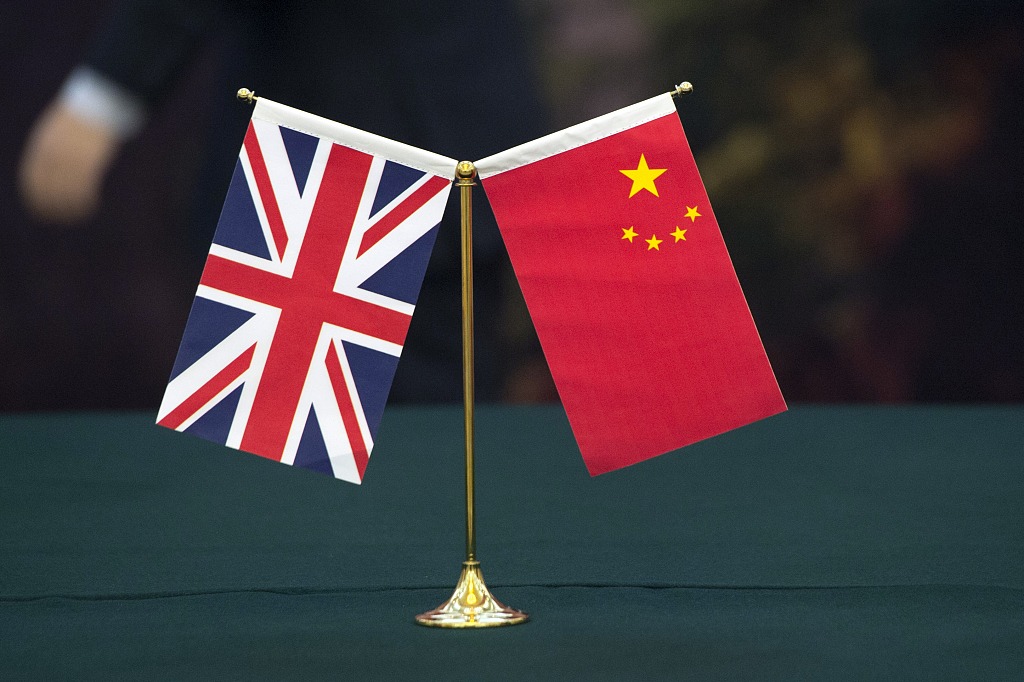
This is compounded by the style of the US trade dispute that Trump has chosen to take to China. Nearly 85 percent of all global nominal GDP this decade has come from the two countries, so a genuine persistent trade dispute between them, almost by definition, would be negative for both in particular, and the world in general. One can only hope Trump will agree a deal with China, rather than take even more extreme steps. After all, the iconic US company Apple, just as one example, sells as many expensive iPhones to Chinese consumers as it does to US consumers.
But even without this trade problem, China was facing some serious fresh challenges. It appeared to deliberately accept a lower path of economic growth in order to conquer some of the domestic corporate and local regional debt burden, but it hadn't bargained for this trade challenge from the US, compounded by the rising dollar-with many other countries facing the same challenges of dollar-denominated debt. China will need to consider more domestic fiscal stimulus, especially for its consumers, and give some concessions on trade, especially those that may have some justification.
Therefore, the G20 Summit in Buenos Aires this weekend may turn out to be more important than many of us conceived it to be even a few months ago. I hope the spirit of 2008 cooperation can be pursued 10 years later.
The author is chair of Chatham House. The author contributed this article to China Watch, a think tank powered by China Daily.