Asia and Europe work together to meet challenges







Editor's note: Xie Fuzhan, president of the Chinese Academy of Social Sciences, delivered a speech at the Asia-Europe Economic Forum, which was held in Brussels, Belgium, on Oct 17-18. Excerpts follow:
The world economy is now in the best period since the international financial crisis, but the potential risks are accumulating: economic growth is not balanced, and the growth of some major economies is not robust; the international economic order is facing grave threats; and the problems in the economic field are extending to social, political and security areas, and so endangering world peace, development and stability.
At present, the challenges facing the world economy mainly include four aspects:
First, the factors supporting long-term economic growth are not stable.
Global economic growth has picked up due to the long-term implementation of easy monetary policies in major countries to a large extent, but the short-term effects of these policies are decreasing and they cannot improve long-term economic growth rates.
The decline in the long-term economic growth rate is mainly due to the decline in the growth rate of total factor productivity. For advanced economies, the growth of total factor productivity is mainly due to technological advances in R&D. However, the highest level of R&D expenditure in history is accompanied by the lowest long-term economic growth rate since World War II. The problem is not that R&D has not produced technological advances, but that rapid technological advances have not led to rapid economic growth. Technological progress has been both creative and destructive. Developed economies have reduced R&D input proportion in general-purpose technology advancements while increasing the proportion of R&D input in the proprietary technology advancements of enterprises, which has reduced the creative effects brought about by the use of technological progress in a wider range, and has amplified its destructive impacts on existing industries as well.
Second, the risks facing global economic stability are rising.
In 2018, the US economy grew relatively strongly, but major economies such as Europe, Japan, and China, suffered downward economic pressure. The rise of the US economic growth rate and the increase of interest rates by the Fed, together with the downward growth rate and monetary easing of other countries led to capital reflows to the United States, appreciation of the US dollar, as well as currency depreciation in other countries, and monetary crises in some emerging markets. This kind of international financial market turmoil is the inherent defect of the US dollar-based international monetary system.
In 2019, the US economy is highly likely to see a downward trend and the world economy as a whole will see a slowdown in growth. This is very unfavorable for the eurozone and Japan, which have not yet withdrawn from their quantitative easing policies.
The United States has also adopted a beggar-thy-neighbor trade policy. Increased tariffs and the resultant trade retaliation, as well as restrictions on investment, have adversely affected international trade and investment, and have become significant negative factors affecting global economic stability in the future.
Third, the problem of income inequality has not been effectively resolved.
The World Inequality Report 2018 pointed out that global income inequality is still very serious. Populism triggered by income inequality has caused great difficulties in the health and stability of the world economy and politics.
The income inequality is partly due to the fact that wealth is increasingly concentrated in a few hands, causing the rich to become richer. Besides, it is also a result of the widening wage gap. Globalization and technological advancements do benefit some people but also hurt some others. Globalization and technological advancements should benefit as many people as possible. Using anti-globalization policies to correct the widening income gap is obviously wrong and does not help solve income inequality.
Fourth, the multilateral system and international economic rules have been undermined.
Providing a safe and predictable trading environment for the business community is an important function of the World Trade Organization, while the unilateralist actions of the United States are destroying such a trading environment, which is favorable to the world as a whole. On the one hand, the US has blocked the selection of judges for the WTO Appellate Body, making the WTO dispute settlement mechanism ineffective; on the other hand, unilateral tariff imposition by the US has in fact undermined WTO rules and prevented countries from handling trade frictions with the US through the WTO. Countries have no choice but to resort to trade retaliation, thus bringing more and more trade barriers to the world.
The US is abusing national security to implement trade and investment protection for domestic industries and intervene in some international trade and investment activities based on its domestic laws.
In violation of its own commitments, the US has also withdrawn from the multilateral agreements reached through arduous efforts by the international community, such as the convention on climate change and diplomatic conventions. The world has made great efforts to establish rules in order to constrain the law of the jungle and to achieve peaceful development, prosperity and stability in the world. However, the achievements that have been made in this regard are now facing grave threats.
The economic prosperity and stability of Asia and Europe are the cornerstone of the prosperity and stability of the world economy. Asian and European countries are also important forces for maintaining world peace and development. In order to meet the above challenges, Asian and European countries should work together. At present, special attention should be paid to cooperation in the following three aspects.
First, we need to strengthen technical cooperation and explore a more inclusive innovation system.
Technological progress is not only related to long-term economic growth, but also to reducing income inequality. Asian and European countries have broad prospects for cooperation in technology since they have good foundations for technological progress, huge market scale, and make significant investments in R&D.
Asian and European countries should work together to explore a more inclusive innovation system. This system should not only provide sufficient incentives for pursuing innovation, but also bring the benefits of innovations to more people.
A more inclusive innovation system should encourage general-purpose technological advancement. Eurasian countries can promote R&D investment in general-purpose scientific and technological activities through intergovernmental cooperation, and also explore new incentive systems to encourage enterprises and research institutions to increase R&D investment.
A more inclusive innovation system should also seek a better balance between intellectual property protection and the diffusion of new technology, prevent excessive monopoly of technology, and expand the beneficiaries of technological advancement.
Second, we need to strengthen policy dialogues and establish a more effective coordination mechanism.
Regular macroeconomic policy coordination mechanisms should be established between Asian and European countries to cope with economic and financial fluctuations and risks. The scope of macroeconomic policy coordination can include fiscal policy, monetary policy, financial supervision and financial stability policy, sovereign debt policy and bailout policy, as well as defense mechanisms against another financial crisis.
Asian and European countries should coordinate international trade and investment policies to prevent populism and external factors from becoming obstacles to Asia-Europe cooperation, and continuously promote trade and investment facilitation and liberalization.
Third, we need to adhere to the multilateral framework and improve and maintain more authoritative international economic rules.
Asian and European countries should work together to uphold and maintain the multilateral framework, push for WTO reforms, oppose US unilateralist policies, and resist US discriminatory provisions against other countries in bilateral and regional agreements.
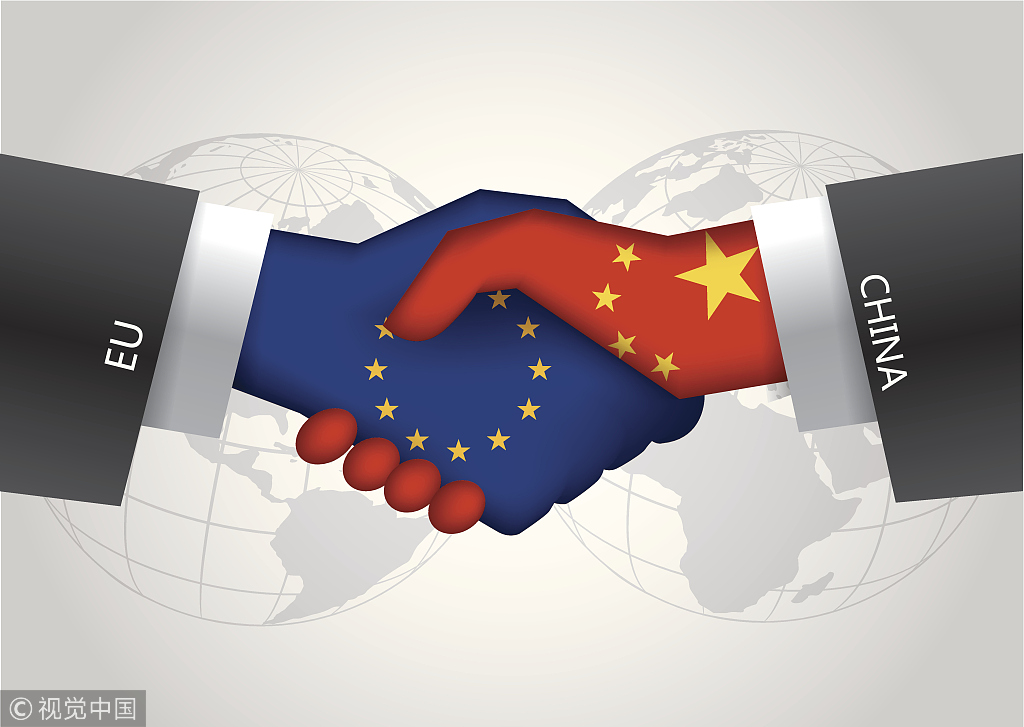
China and the European Union have established a joint working group to promote WTO reform. Other economies in Asia and Europe can also participate in the WTO reform agenda. Asian and European countries should adapt to the development of international trade and investment practices, and support the WTO in establishing international rules for digital trade, trade in services and international investment. They should also support the more effective operation of the WTO dispute settlement mechanism and enable it to cover a wide range of trade disputes and support the WTO to establish an effective mechanism to contain unilateralism.
Asian and European countries should continue to support multilateral institutions such as the International Monetary Fund, World Bank, Asian Infrastructure Investment Bank and Asian Development Bank, and support multilateral agreements and conventions such as the Paris Agreement on climate change, so as to maintain and improve the existing multilateral frameworks, and support the multilateral mechanism to play an important role in addressing global issues.
Finally, I would like to take this opportunity to talk about my views on the Belt and Road Initiative and the EU strategy of Connecting Europe and Asia.
President Xi Jinping proposed the Belt and Road Initiative five years ago. Guided by the principle of extensive consultations, joint contributions and shared benefits and based on connectivity, the Belt and Road Initiative is committed to promoting the alignment of development strategies and complementary advantages of countries along the routes, thus creating a platform for multidimensional cooperation to achieve win-win and shared development.
The European Union recently issued Connecting Europe and Asia: The EU Strategy which proposes a comprehensive and systematic policy approach to the Eurasian connectivity. The EU document positively evaluates the significance of Eurasian connectivity and its role in promoting economic growth in Europe and Asia, and advocates "comprehensive, sustainable and rule-based connectivity".
The EU's vision of connecting Europe and Asia is highly consistent with China's Belt and Road Initiative, and the two can fully achieve strategic docking.
In terms of infrastructure investment, China has established a development financing system to provide funds for infrastructure construction, and has accumulated rich experience and capabilities in infrastructure construction; Europe has developed financial markets and mature infrastructure construction rules. China-EU cooperation has great potential for realizing the shared vision of connecting Europe and Asia. As long as we promote open and inclusive cooperation for win-win outcomes, the strategy of Connecting Europe and Asia and the Belt and Road Initiative will achieve effective alignment and become an important platform for Asia-Europe cooperation to meet global challenges.