
<tt id="6hsgl"><pre id="6hsgl"><pre id="6hsgl"></pre></pre></tt>
          <nav id="6hsgl"><th id="6hsgl"></th></nav>
          国产免费网站看v片元遮挡,一亚洲一区二区中文字幕,波多野结衣一区二区免费视频,天天色综网,久久综合给合久久狠狠狠,男人的天堂av一二三区,午夜福利看片在线观看,亚洲中文字幕在线无码一区二区
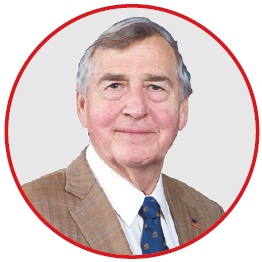
          Graham Allison
          Author of Destined for War: Can America and China Escape Thucydides's Trap?
          EDUCATION

          1958-1962: BA, magna cum laude, in history, Harvard University

          1962-64: BA and MA, first class honors in philosophy, politics and economics, University of Oxford

          1964-68: PhD in political science, Harvard University

          AWARDS

          US Department of Defense's highest civilian award

          Distinguished Public Service Medal

          2009: NAS Award for Behavior Research Relevant to the Prevention of Nuclear War (National Academy of Sciences)

          CAREER

          1968-present: Professor at Harvard University

          1974-1984: Member of the Trilateral Commission

          1977-1989: Dean of the John F. Kennedy School of Government

          1985-87: Special adviser to the Secretary of Defense under US President Ronald Reagan

          1993-94: Assistant secretary of defense for policy and plans

          1995-2017: Director of Harvard's Belfer Center for Science and International Affairs

          1996 and 2000: Organizer of the Commission on America's National Interests

          Present: Advisory boards of the secretary of state, secretary of defense and the CIA director

          FAMOUS WORKS

          Destined for War: Can America and China Escape Thucydides's Trap? (2017)

          Lee Kuan Yew: The Grand Master's Insights on China, the United States and the World (2013, with Robert Blackwill)

          Nuclear Terrorism: The Ultimate Preventable Catastrophe (2004)

          Essence of Decision: Explaining the Cuban Missile Crisis (1971)

          Author who shone light on the thucydides trap
          US academic hails speed of China's development, urges Beijing and Washington to avoid conflict
          Zhang Ruinan in Boston, US
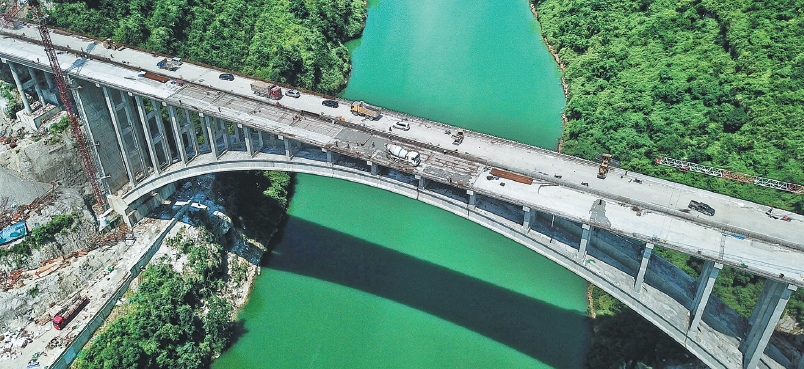
          Yelanghu Bridge, part of the Zhipu Expressway, under construction in Guizhou province in July. Spanning 391 meters, China's longest single-arch concrete bridge was finished in the summer after two years of construction, a prime example of the country's infrastructure push.[Photo/Xinhua]

          Risk of miscalculations

          China's railway development has also impressed Allison. He said the only high-speed rail project in the US has been under construction for more than 10 years - the 804-kilometer link between Los Angeles and San Francisco - and is slated for completion in 2029.

          In China, over the same amount of time, maybe about 25,000 km of high-speed rail could be built, he said.

          In his book Destined for War, Allison paraphrases former Czech Republic president Vaclav Havel as saying the rise of China has happened so quickly that we have not yet had time to be astonished.

          "For many Americans, being No 1 is a core part of our identity," said the Harvard professor, who explained that having to cope with a nation on par with the US - and in some areas has even surpassed it - is a difficult proposition for people to wrap their heads around.

          "For a ruling power that has become accustomed to its position and prerogatives at the top of every pecking order, the very fact that a rising power threatens to match or even overtake it is understandably uncomfortable," he said.

          "So it was for Sparta, which had been the dominant power in Greece for 100 years, and for Britain at the beginning of the 20th century after 100 years in which it had 'ruled the waves' and maintained an 'empire on which the sun never set'. So it is for the USA after an 'American century'.

          "In this dynamic, beyond the facts, perceptions tend to become exaggerated misperceptions, calculations often become miscalculations."

          Americans who are certain that China is determined to displace the US as the global superpower interpret every action China takes as confirmation of this conviction, even when the country seeks to be conciliatory, Allison said.

          Similarly, he added, Chinese who are certain that the US is determined to contain China's rise interpret every American action through that lens, even when the US is trying to be helpful.

          He warned that a tariff war between the world's two largest economies could do serious damage to both sides. But economic damage from a trade war is not the most significant risk.

          "When a rising power threatens to displace a ruling power, this creates a dangerous dynamic in which both the rising and ruling powers are vulnerable to third-party provocations that would, in normal conditions, be inconsequential or easily managed but that can trigger a spiral to a result neither of the primary competitors wanted," Allison said.

          "If Thucydides were watching, he would say both nations are on script heading toward a catastrophic collision."

          The Thucydides Trap - a phrase coined by Allison to describe the likelihood of conflict between a rising power and a dominant power - has been often used regarding Sino-US relations in recent years.

          To avoid the trap, the two nations should first recognize how dangerous the outcome might be and then find a new form of greatpower relations to avoid it, Allison said.

          He noted that in the past 500 years, there have been 16 cases in which a rising power threatened to topple a ruling power from its predominant position. Twelve of those cases led to war.

          "In this process of tit-for-tat, (a trade conflict) could escalate into more and more dangerous territory," he said, adding that in the lens of this dynamic, misperceptions are magnified, miscalculations multiplied, and risks of escalation amplified.

          "If we study history, the case of Japan, which was rising in the 1930s, rivaling the US, which was the predominant power in the western Pacific and maintained an open-door policy.

          "As Japan grew stronger, the US said 'No, you have to stop this expansion.' So initially, the US imposed economic tariffs, and then an embargo on exports of high-grade scrap iron and aviation fuel to Japan. And finally, in 1940, an embargo on oil, which the Japanese believed would strangle them slowly. Under those conditions, they concluded that it was better to attack America."

          Speaking of the current China-US trade dispute, Allison said, "Even worse than the economic impact would be if it should become part of the fuel that produces fire."

          Over the past four decades, the US has viewed China as a strategic partner, he said. But the Trump administration now publicly calls China a "strategic rival" or "adversary", which shows a fundamental shift in the way Washington thinks about China and how the US should relate to it.

          "That (shift) in this Thucydides dynamic makes it even more dangerous," he said. "In this dynamic, we should ask the question President Xi (Jinping) asked, which is how to escape the Thucydides Trap. That's the right question to ask."

          During the Chinese president's state visit to the US in 2015, Xi and former US president Barack Obama discussed the Thucydides Trap at the White House. Xi said China and the US should prevent relations from falling into the trap.

          In a speech delivered to local governments and friendly groups in Seattle during the same trip, Xi said: "There is no such thing as the so-called Thucydides Trap in the world. But should major countries time and again make the mistakes of strategic miscalculation, they might create such traps for themselves."

          Allison said that the first step to escaping the Thucydides Trap is to recognize the trap and how dangerous it is. The second step is finding a way to escape it.

          "President Xi's idea is we should have a new form of great-power relations. I think this is a great idea. Now we have to construct all the elements of the new form," the professor said, indicating that the process would require the two nations to cooperate.

          "So far, the response by both governments and thought leaders in both societies has been underwhelming. There is no monopoly of wisdom on these topics in Washington or Beijing, or in university towns like Cambridge, Massachusetts," he said.

          "So this is an opportunity for all thinking people to stretch their minds."

          |<< Previous 1 2   
          Graham Allison
          Author of Destined for War: Can America and China Escape Thucydides's Trap?
          EDUCATION

          1958-1962: BA, magna cum laude, in history, Harvard University

          1962-64: BA and MA, first class honors in philosophy, politics and economics, University of Oxford

          1964-68: PhD in political science, Harvard University

          AWARDS

          US Department of Defense's highest civilian award

          Distinguished Public Service Medal

          2009: NAS Award for Behavior Research Relevant to the Prevention of Nuclear War (National Academy of Sciences)

          CAREER

          1968-present: Professor at Harvard University

          1974-1984: Member of the Trilateral Commission

          1977-1989: Dean of the John F. Kennedy School of Government

          1985-87: Special adviser to the Secretary of Defense under US President Ronald Reagan

          1993-94: Assistant secretary of defense for policy and plans

          1995-2017: Director of Harvard's Belfer Center for Science and International Affairs

          1996 and 2000: Organizer of the Commission on America's National Interests

          Present: Advisory boards of the secretary of state, secretary of defense and the CIA director

          FAMOUS WORKS

          Destined for War: Can America and China Escape Thucydides's Trap? (2017)

          Lee Kuan Yew: The Grand Master's Insights on China, the United States and the World (2013, with Robert Blackwill)

          Nuclear Terrorism: The Ultimate Preventable Catastrophe (2004)

          Essence of Decision: Explaining the Cuban Missile Crisis (1971)

          Author who shone light on the thucydides trap

          US academic hails speed of China's development, urges Beijing and Washington to avoid conflict
          Zhang Ruinan in Boston, US
          Yelanghu Bridge, part of the Zhipu Expressway, under construction in Guizhou province in July. Spanning 391 meters, China's longest single-arch concrete bridge was finished in the summer after two years of construction, a prime example of the country's infrastructure push.[Photo/Xinhua]

          Risk of miscalculations

          China's railway development has also impressed Allison. He said the only high-speed rail project in the US has been under construction for more than 10 years - the 804-kilometer link between Los Angeles and San Francisco - and is slated for completion in 2029.

          In China, over the same amount of time, maybe about 25,000 km of high-speed rail could be built, he said.

          In his book Destined for War, Allison paraphrases former Czech Republic president Vaclav Havel as saying the rise of China has happened so quickly that we have not yet had time to be astonished.

          "For many Americans, being No 1 is a core part of our identity," said the Harvard professor, who explained that having to cope with a nation on par with the US - and in some areas has even surpassed it - is a difficult proposition for people to wrap their heads around.

          "For a ruling power that has become accustomed to its position and prerogatives at the top of every pecking order, the very fact that a rising power threatens to match or even overtake it is understandably uncomfortable," he said.

          "So it was for Sparta, which had been the dominant power in Greece for 100 years, and for Britain at the beginning of the 20th century after 100 years in which it had 'ruled the waves' and maintained an 'empire on which the sun never set'. So it is for the USA after an 'American century'.

          "In this dynamic, beyond the facts, perceptions tend to become exaggerated misperceptions, calculations often become miscalculations."

          Americans who are certain that China is determined to displace the US as the global superpower interpret every action China takes as confirmation of this conviction, even when the country seeks to be conciliatory, Allison said.

          Similarly, he added, Chinese who are certain that the US is determined to contain China's rise interpret every American action through that lens, even when the US is trying to be helpful.

          He warned that a tariff war between the world's two largest economies could do serious damage to both sides. But economic damage from a trade war is not the most significant risk.

          "When a rising power threatens to displace a ruling power, this creates a dangerous dynamic in which both the rising and ruling powers are vulnerable to third-party provocations that would, in normal conditions, be inconsequential or easily managed but that can trigger a spiral to a result neither of the primary competitors wanted," Allison said.

          "If Thucydides were watching, he would say both nations are on script heading toward a catastrophic collision."

          The Thucydides Trap - a phrase coined by Allison to describe the likelihood of conflict between a rising power and a dominant power - has been often used regarding Sino-US relations in recent years.

          To avoid the trap, the two nations should first recognize how dangerous the outcome might be and then find a new form of greatpower relations to avoid it, Allison said.

          He noted that in the past 500 years, there have been 16 cases in which a rising power threatened to topple a ruling power from its predominant position. Twelve of those cases led to war.

          "In this process of tit-for-tat, (a trade conflict) could escalate into more and more dangerous territory," he said, adding that in the lens of this dynamic, misperceptions are magnified, miscalculations multiplied, and risks of escalation amplified.

          "If we study history, the case of Japan, which was rising in the 1930s, rivaling the US, which was the predominant power in the western Pacific and maintained an open-door policy.

          "As Japan grew stronger, the US said 'No, you have to stop this expansion.' So initially, the US imposed economic tariffs, and then an embargo on exports of high-grade scrap iron and aviation fuel to Japan. And finally, in 1940, an embargo on oil, which the Japanese believed would strangle them slowly. Under those conditions, they concluded that it was better to attack America."

          Speaking of the current China-US trade dispute, Allison said, "Even worse than the economic impact would be if it should become part of the fuel that produces fire."

          Over the past four decades, the US has viewed China as a strategic partner, he said. But the Trump administration now publicly calls China a "strategic rival" or "adversary", which shows a fundamental shift in the way Washington thinks about China and how the US should relate to it.

          "That (shift) in this Thucydides dynamic makes it even more dangerous," he said. "In this dynamic, we should ask the question President Xi (Jinping) asked, which is how to escape the Thucydides Trap. That's the right question to ask."

          During the Chinese president's state visit to the US in 2015, Xi and former US president Barack Obama discussed the Thucydides Trap at the White House. Xi said China and the US should prevent relations from falling into the trap.

          In a speech delivered to local governments and friendly groups in Seattle during the same trip, Xi said: "There is no such thing as the so-called Thucydides Trap in the world. But should major countries time and again make the mistakes of strategic miscalculation, they might create such traps for themselves."

          Allison said that the first step to escaping the Thucydides Trap is to recognize the trap and how dangerous it is. The second step is finding a way to escape it.

          "President Xi's idea is we should have a new form of great-power relations. I think this is a great idea. Now we have to construct all the elements of the new form," the professor said, indicating that the process would require the two nations to cooperate.

          "So far, the response by both governments and thought leaders in both societies has been underwhelming. There is no monopoly of wisdom on these topics in Washington or Beijing, or in university towns like Cambridge, Massachusetts," he said.

          "So this is an opportunity for all thinking people to stretch their minds."

          主站蜘蛛池模板: 久久精品国产熟女亚洲av| 成人免费xxxxx在线观看| 精品亚洲精品日韩精品| 久久精品aⅴ无码中文字幕| 美欧日韩一区二区三区视频| 女人腿张开让男人桶爽| 亚洲一区二区三区丝袜| 精品国产福利久久久| 亚洲男女羞羞无遮挡久久丫| 久久五月丁香合缴情网| 亚州av第二区国产精品| 午夜福利片1000无码免费| 天天综合网色中文字幕| 精品天堂色吊丝一区二区| 无码精品人妻一区二区三区中| 四虎影视库国产精品一区| 亚洲国产成人久久精品APP | 一区二区三区四区黄色网| 麻豆一区二区中文字幕| 神马久久亚洲一区 二区| 一区二区三区精品偷拍| 这里只有精品在线播放| 日本欧美一区二区免费视频| 国产免费AV片在线看| 久久精品国产亚洲AV瑜伽| 成人精品视频在线观看播放| 亚洲成在人线AV品善网好看| 国产高清精品自拍av| av在线播放国产一区| 国产成人综合亚洲AV第一页| 久久精品国产中文字幕| 久久综合偷拍视频五月天| 九九热在线视频只有精品| 最新亚洲春色AV无码专区| 亚洲av色在线观看国产| 18禁国产一区二区三区| 久久88香港三级台湾三级播放| 人妻夜夜爽天天爽三区丁香花| 在线观看中文字幕国产码| 日本亚洲中文字幕不卡| 国产人妻人伦精品婷婷|