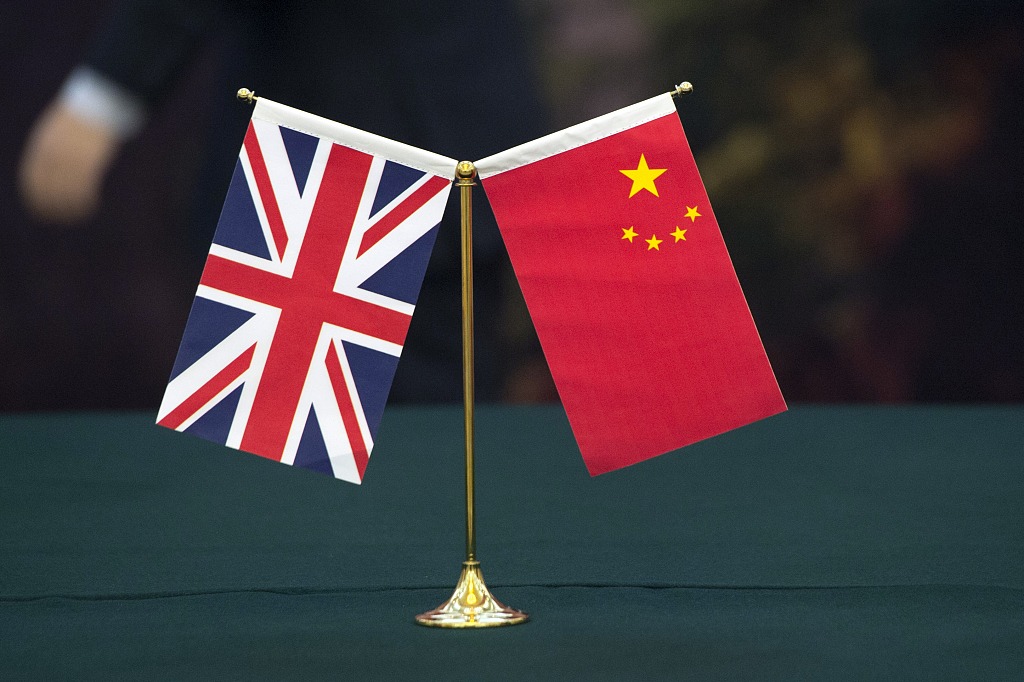
New anti-China theory a travesty of truth








Editor's note: Some Western media outlets have been hyping up the "Chinese tourists as weapons" theory to claim that China has used the increasing number of Chinese outbound tourists as an economic weapon to intimidate other countries to realize its diplomatic goals. What is the relationship between bilateral ties and tourism development? Has China influenced other countries with its newly attained economic power? Three experts share their views on the issue with China Daily's Liu Jianna. Excerpts follow:
Western criticism reflects bias against China
Thanks to a relatively resilient economy and a notable increase in Chinese households' disposable incomes, the number of Chinese outbound tourists has shown a remarkable increase over the past years. According to the UN World Tourism Organization, Chinese tourists accounted for almost one-fifth of the world's total tourist spending in 2017. A large tourist population such as China's, combined with their purchasing power, is certain to have a huge impact on a destination country's tourism economy.
While the development of a country's tourism economy is closely related to multiple factors, including international relations, geopolitical climate, citizens' security and corporate behavior, it is irresponsible to lay the blame on its government for a decline in certain countries' tourism growth.
The people of a country are bound to undergo a change of emotions, they can even oppose the states with which their country has a strained relationship-and a war of words between the media outlets of the countries at loggerheads will heighten people's aversion for the countries they oppose. Under such circumstance, people's choice of destination countries will obviously change.
To safeguard its people's safety and interests, which are part of national security, China is obliged to issue travel alerts for the countries with which it does not have good relations. As a matter of fact, the practice of issuing travel alerts originated in Europe and the United States, and China is simply following the international norm.
Moreover, the travel agencies will take into account the tourists' personal safety and security, and potential loss of property in the destination countries hostile to their home country, and thus choose to reduce or suspend travels to those countries. Which means, behind the tourists' decisions, basic economic principles are at play.
Politicizing the economic and commercial issues by ignoring the economic laws reflects the prejudice of the Western media against China and the double-standard they tend to use in issues concerning China.
The massive size of and sharp increase in Chinese tourists' outbound travels have turned out to be a huge boon to the destination countries' tourism economy, as they have boosted their employment and household income growth. This in turn has helped develop the global green economy and helped strengthen sustainable development. The fact that countries with highly developed tourism infrastructure and environment, including the ROK, Japan, Italy and the United Kingdom, yearn for the continuous flow of Chinese tourists and that many of them have made it a priority to attract, retain and serve Chinese tourists speaks volumes about the increasing importance of Chinese consumers in the global tourism market.
In general, tourism markets in any two countries will maintain a sound momentum when bilateral ties are strong, and suffer losses if bilateral relations deteriorate. Therefore, the stable and healthy development of bilateral ties is an essential precondition for the prosperity of any country's tourism economy.
Ma Xiaolin, a professor at Beijing Foreign Studies University
People-first policy in outbound tourism
Overall, the changes in relations between two countries will have an impact on their tourism economies. Any country will discourage its people from traveling to those countries with which it has a strained relationship, as they can become victims of verbal or physical attacks. True, China has been playing a guiding role in its people's choice of destination countries, but it is doing so to ensure their safety and the country's national security.
Also, changes in bilateral ties will have a major impact on people's emotions and their choice of destination countries, as the people will naturally opt for the countries with which their home country has friendly relations. Since the growth of a country's tourism economy is subject to the sway of bilateral ties, it is important that countries maintain sound bilateral relations if they want to help their tourism economies grow.
That some Chinese outbound tourists are often derided for improper behavior by the people of some countries is not only a matter of personal likes and dislikes, but also shows their vastly different ways of thinking, different consumption patterns and economic conditions. Thanks to China's continued economic development and further integration with the international community, along with Chinese people's growing travel experience, Chinese tourists, in the near future, will more easily adjust to foreign laws and customs leaving little room for complaints.
As a matter of fact, there is already a notable improvement in Chinese tourists' manners compared with a couple of decades ago when China first opened outbound tourism for individuals.
Chen Fengying, a researcher at the China Institutes of Contemporary International Relations
China must strengthen its theoretical base
The "tourists as economic weapon" theory is a Western concoction, which does not conform to China's real conditions. It could turn out to be another theoretical trap set by some Western countries to suit their own needs and interests. China can fall victim to these countries' ploy if it rushes to explain its position without a systemic analysis of the situation and adequate preparations.
China should make clear its position and refute the baseless accusations with hard facts, but refrain from overreacting to avoid creating the impression that it indeed is battling with such a problem.
China has many a time fallen into the thought-trap laid by some Western media outlets, scholars, even governments, which to a certain extent reflects its lack of say in the global public opinion field. So it is important that China builds a complete and scientific theoretical system and gains the initiative in the competition for global discourse.
Speaking of developing tourism, China indeed has a lot to learn from the countries that are highly developed in terms of tourism, as it has a problem with the unsustainable development of tourism. The rapid growth of outbound tourists should prompt domestic tourism agencies to catch up with the developed countries and provide premium travel products, services and experiences.
In other words, China should not only step out, but also appropriate the best global practices and expertise to develop domestic tourism.
Wang Xuebin, an associate professor at and the deputy director of the Researching Office of Chinese History, Party School of the CPC Central Committee