CPEC: Building job opportunities







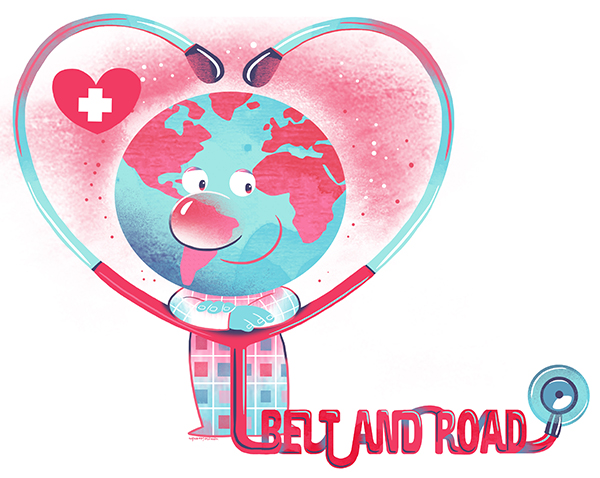
China-Pakistan Economic Corridor (CPEC) is a pilot project under the Belt and Road Initiative (BRI). BRI involves almost 80 countries and 6 planned economic corridors. CPEC is the first one, and may serve as "role model". Under this initiative, infrastructure, power generation, development of Gwadar Port and industrialization will take place. It will boost economic activities and create jobs. It is expected that around 2 million new jobs will be generated through CPEC till 2030.
As at this stage, most of the projects are categorized as infrastructure development. It will require civil engineers, mechanical, electrical and other related disciplines of engineering. It will also need technicians: masons, welders, carpenters, surveyors, steel fixer, machine operators, etc. In addition to technical workforce, it will also need economists, finance, accounting, management HR and interpreters of Chinese language etc.
Among the on-going projects, most of them are in the power sector, either hydro-power, coal power, nuclear power or renewable energy projects..
The rest of the projects are development of Gwadar port, airports, railway, pipelines, optical fiber-link.
There will be more jobs for engineers and technicians in the future with some available to other disciplines as well. Pakistan needs to introduce reforms in its educational sector, where it needs to identify the requirements under CPEC and then produce requisite human resource.
Currently, Chinese companies have created around 70,000 jobs for Pakistanis, but in near future, the number will increase exponentially. However, at the initial stage, Chinese companies may bring their own workforce for the time being. But bringing Chinese workforce is not a viable solution for long run, it may solve immediate issue for short-term only. As the Chinese wages are higher, against one Chinese worker, they can hire 4 local workers. When they bring workforce from China, additional cost of air ticket, medical facilities, accommodation, food and other costs turn out to be economically less viable. Bringing Chinese workforce may shoot up the cost of project or reduce the profit margin for investors, in either case it is not desired option. On the other hand, China is also facing shortage of labor in its own labor market. Especially, in developed cities in southern part of China, there exists an acute shortage of labor. Due to economic growth in China, the standard of life has improved, and many young people are not willing to opt for labor intensive job. Most of the youth is well-off economically and depend on their parent’s money. They may not work on job below their standards. Some of them may be getting more money from parents, than earning by job. Parents having only one child, but abundance of money, may also not allow them to go for job below then their prestige. It is a common social issue too. China may not be in a position to spare workforce for overseas projects.
Although Pakistani workforce is not well trained, not enough skilled, not so efficient, etc. But, in the longer run, there is a need to train workforce up to mark, where they can be utilized efficiently. We need to improve their productivity. It is all possible, but requires hard work and government support. It might be up-hill task in the beginning, but once initiated, it will go on and on perpetually.
Providing jobs to locals will create a lot of good will and improve the life standard of poverty-hit areas too. Under social responsibility, companies may extend cooperation in training and developing required human resource. If master trainers are produced locally, it will help to multiply the local workforce.
Chinese experience of development may be replicated in Pakistan. Pakistan has already institutions and basic facilities, need to strengthen them and streamlining them. Appropriate policies and programs may be launched to address such issues. The day is not so far away, when Pakistan can depend on its own domestic workforce. It will bring prosperity to Pakistan. Job creation strengthens economy as well as ensures social welfare and advancement on society.
The author is Sinologist (former diplomat), Non-Resident Fellow of CCG (Center for China and Globalization), National University of Sciences and Technology, Islamabad, Pakistan.