Time to accept BRI for brighter India-China ties







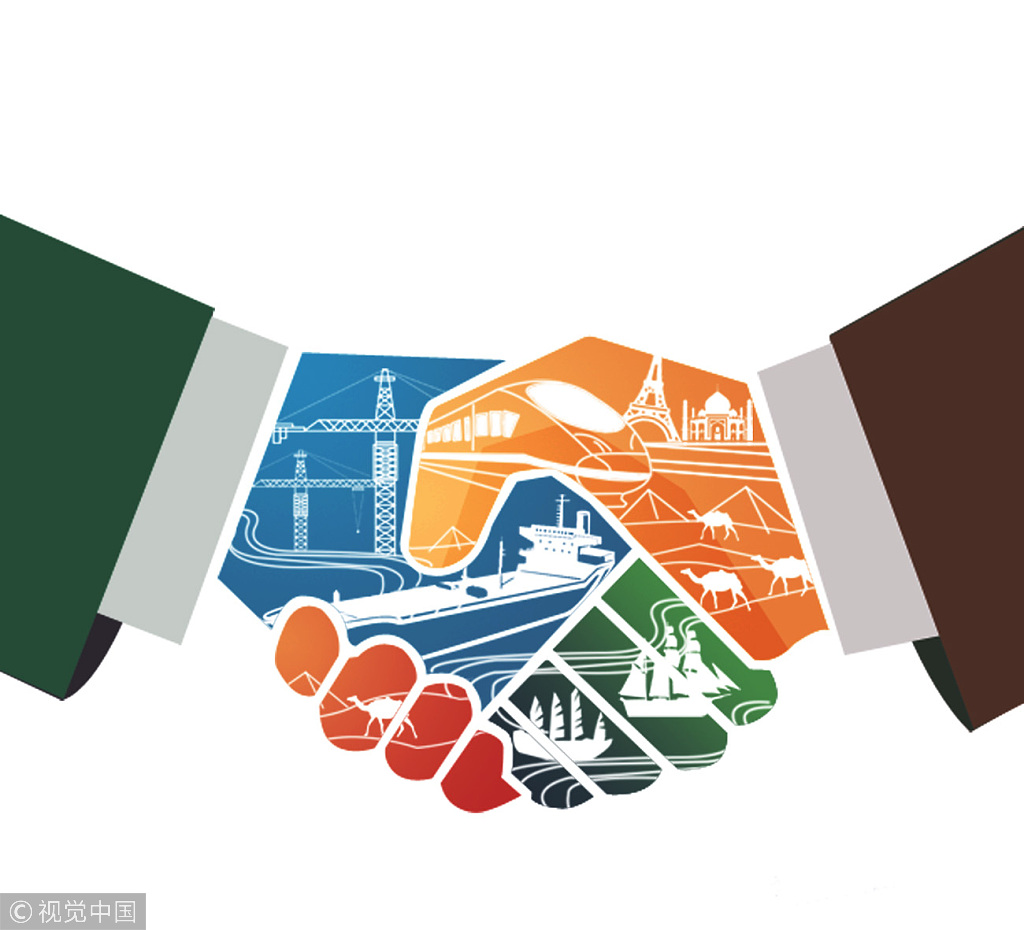
This year marks the 5th anniversary of China-promoted Belt and Road initiative (BRI). There is no doubt that in the past five years China has been actively promoting international cooperation through the BRI and increasing assistance to other developing countries, especially the least developed countries, and doing its part in reducing development gap between the South and the North. Certainly, the BRI is an answer to a variety of crises across the world, ranging from infrastructure bottlenecks and funding shortages to protectionism and unilateralism.
President Xi Jinping rightly pointed out at the 2018 Boao Forum for Asia (BFA) that the BRI is not an intrigue of China, as alleged by someone overseas, but aimed at benefiting more countries and people. He also said that China will continue to pursue BRI to create new opportunities of social and economic development and in doing so help participating countries to implement the United Nations 2030 Agenda for Sustainable Development. Surely, Xi’s remark has provided a beacon of hope to all small, weak and vulnerable countries around the world, which are enthusiastic for partnering with China on economic, political, and infrastructural development.
The BRI, which has two main prongs - the Silk Road Economic Belt and the 21st Century Maritime Silk Road, was first put forward by President Xi in the autumn of 2013. The BRI has since become a popular initiative and the best platform for international cooperation with the brightest prospects in the world. Some describe Xi’s signature approach to promoting economic development as the biggest development push in history. China’s Foreign Minister Wang Yi has described the initiative as a “symphony of all relevant parties”. Undoubtedly, the initiative has had a huge impact, especially in the developing world, reinforcing China's links to Asia, Europe, and Africa through networks of roads, ports, railways, power plants, and other infrastructure projects with gross investment of $1.2 trillion (net $880 billion) over the period 2015-2030.
Sometimes, numbers can speak for themselves. Sixty-five countries and regions are involved in the BRI with a population of 4.4 billion people and a total GDP of $23 trillion. These numbers represent 63 percent of the world population, 75 percent of energy resources, and 29 percent of the world GDP. The total trade volume between China and other BRI countries in the period from 2014 to 2016 was around $3 trillion. So far, the initiative has won support from more than 100 countries and international organizations, over 40 of which have signed cooperation agreements with China. According to China's Ministry of Commerce, Chinese enterprises have made $14.36 billion of non-financial direct investment in 59 countries along the Belt and Road in 2017. According to the Asian Competitiveness Annual Report 2018, “The BRI is closely related to economic globalization and will enhance the competitiveness of Asia.” Undoubtedly, facts indicate that BRI is China’s gift for next phase of globalization.
The BRI is a historic endeavor, “a plan in the sunshine”, which has been figured in a UN resolution. However, some western countries are raising concerns about the transparency, debt sustainability and usefulness of BRI projects. Questioning China's underlying strategic aims, some analysts in the West and Asia believe the BRI is a geopolitical gambit to boost China’s regional clout at a time when Donald Trump’s US looks to be stepping back from Asia, ushering in an era of "China stepping up". On October 3, US Defense Secretary James Mattis said that: "In a globalized world, there are many belts and many roads, and no one nation should put itself into a position of dictating 'One Belt, One Road’.”
Surely, the BRI has added fresh impetus to China and the rest of the world to promote globalization and build a "community of shared destiny of humankind." As one of the signatories to the Panchsheel agreement or the Five Principles of Peaceful Coexistence, China also seeks “Prosperity Thy Neighbour” under the template of building a “Community of Shared Future for Mankind” through BRI. It’s fact that, if Trump is talking about "America First", Xi's language is "Mankind First".
Since the launch of the BRI, China is winning over the hearts and minds of the population of the extended Euro-Asiatic region, Africa and Latin America. Without a doubt, this “project of the century” has the potential to facilitate a number of developing countries on its way by potentially alleviating them out of poverty.
China has conceptualized six major corridors as the basis of BRI. Out of the six major corridors, the China Pakistan Economic Corridor (CPEC) and the Bangladesh-China-India-Myanmar (BCIM) belong to South Asia, showing the importance of South Asian countries to China.
But unfortunately, while all of India’s neighboring countries, including Pakistan, Bangladesh, Nepal, Sri Lanka, Maldives and Myanmar, have been whole-heartedly supporting BRI, India, from its geopolitical perspective, has been critical of the geo-economic initiative as the $50 billion CPEC, which is flagship project of the BRI, passes through the disputed territory of Kashmir. India says it cannot accept a project that ignores its core concern on sovereignty and territorial integrity.
On the other hand, the proposed Bangladesh-China-India-Myanmar Corridor is aimed at increasing trade and investment between the four countries. India, however, has become skeptical of the BCIM due to its concerns about the CPEC. While India views BRI as an affront to its sovereignty, as well as a challenge to its own economic aspirations, the initiative presents India's neighboring countries with significant opportunities.
It is unwise for Indian current foreign policy makers, media and academia to portray Chinese investments under BRI as “debt trap" in India's neighboring countries. It’s prejudiced thinking that the BRI is China's new super weapon to “ring fence” India. It is hoped that Indian media should not see the BRI's mutually beneficial objectives through a clouded lens, as it is not deceptive. China is sincere in its intention to cooperate with India on the BRI, as it benefits both countries. China repeatedly called on India to join the BRI project and assured the Indian government that the CPEC would not impinge on anyone’s sovereign rights.
There is enormous space for India to cooperate with China and other BRI countries to integrate with the international market. China plans to invest up to $4 trillion in BRI-related infrastructure projects in the next couple of decades. Surely, with aligning China’s BRI, India can attract a large chunk of that investment. If India joins BRI, this can not only boost economic cooperation of the two countries but of the whole world.
India and China are not just neighbors but also world's two largest developing countries with global influences. It can be hoped that the two South Asian neighbors should pay more attention to cooperation and go ahead with each other as partners, so as to instill more momentum into each other's development and contribute to world peace, stability and common development. India and China must join hands in a durable friendship to rejuvenate an “Asian Century.”
Rabi Sankar Bosu is secretary of New Horizon Radio Listeners' Club in West Bengal, India.
The opinions expressed here are those of the writer and do not represent the views of China Daily and China Daily website.