Belt and Road positive force for Middle East







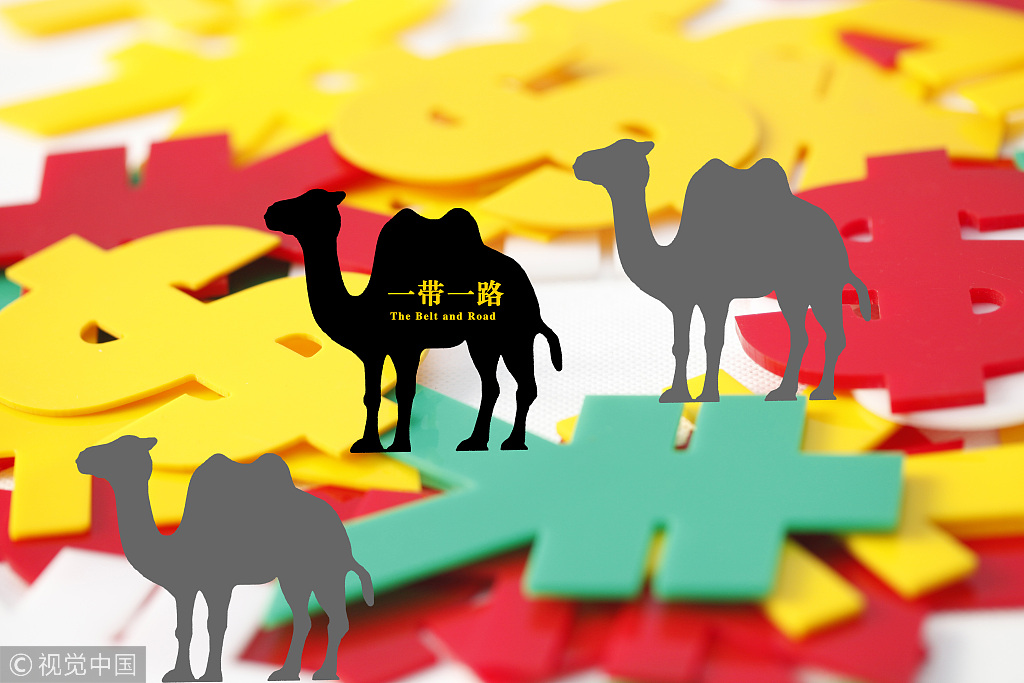
The Silk Road Economic Belt and the 21st Century Maritime Silk Road, commonly known as the Belt and Road Initiative, is a grand vision for China's engagement with roughly 70 countries that are home to two-thirds of the world's population. The Belt and Road Initiative, launched in 2013, has taken on a central role in China's foreign and trade policies and has had a positive impact on developing countries, including those in the Middle East.
However, the initiative has attracted some criticism globally. It has been described as a program to promote China's strategic objectives at the expense of other countries, or a "debt trap" leading to Chinese ownership of key foreign assets, financed by Chinese funds and built by Chinese companies using their labor, equipment and technology. These claims are questionable.
First, China does seek to promote its interests by accessing major trade routes and commercial hubs, and by selling its goods globally. That is what a large economy does-it works to expand its spheres of influence and economic interests. In fact, every country acts according to what it believes to be in its self-interest.
The Belt and Road Initiative is an invitation to dozens of countries in Asia, Europe and Africa to engage with China. In any given project, the onus is on each party to voluntarily agree to terms in any deals that protect its own interests. This principle applies to the initiative's projects, such as railways, highways, ports, power plants and industrial facilities. What many countries will find is that under the right terms, increased engagement with a rising power will promote their economic development.
Second, Chinese financiers have lent huge sums of money to countries that otherwise have had no comparable access to financing. These loans have consequences in case of default. However, the idea that default and asset takeovers are the objectives of the Belt and Road Initiative projects is wrong. The Chinese government-backed lenders are entitled to security packages that adequately protect them as they underwrite large risks. China has lent to projects that have suffered due to host countries' economic difficulties or a change in government.
Third, as with any country investing abroad, China does promote its human and capital resources in undertaking a new initiative. Besides its obvious economic incentive to do so, supporting projects with involvement by leading Chinese players is a lower risk approach compared to working exclusively with local entities in emerging markets, where information asymmetry can be acute.
Notwithstanding China's promotion of its own objectives and resources in the projects, the Belt and Road Initiative benefits local economies through capital and technology flows, better connectivity and increased demand for local goods and services.
In the Middle East, the initiative has been playing a very constructive role. President Xi Jinping's recent visit to the United Arab Emirates highlighted the massive investments in the port, energy and power sectors, among other successes, in a country that is a trading and energy hub, and a magnet for regional and global businesses.
But there remain many untapped opportunities for the Belt and Road Initiative in the region. For example, attractive investments can be found in Saudi Arabia, a rapidly modernizing economy and member of the G20 that already has mutually beneficial dealings with China. The kingdom is promoting its own role as a trade center for Asia, Africa and Europe; increasing its annual capacity to welcome Umrah pilgrims from 8 million to 30 million; planning new exciting city and port developments on the Red Sea (a major trade artery); evaluating new rail routes that can complement the Silk Road; and creating new power plants to meet rising electricity needs. There is also an opportunity to develop new manufacturing facilities and warehouses that act as home to Chinese industries in the region's largest economy.
Private sector participants from both China and the region should also undertake investments that benefit from the doors that the Belt and Road Initiative opens, especially at a time when Gulf oil exporters are encouraging greater private sector contribution to their economies.
China used to rely on its role as the "factory of the world" for its economic development. But the future will see a greater global role for China based on its connectivity, as well as its leadership in advanced industries and technology. It is up to the Middle East and the rest of the Belt and Road Initiative touch-point regions to come up with ways to harness Chinese involvement in their local economies.
Fawzi Jumean is chairman and partner and Talal L. Abu-Ghazaleh a senior associate at Badwa Capital, a leading investment banking company regulated by the Dubai Financial Services Authority.