Historical opportunity to be a cyber power







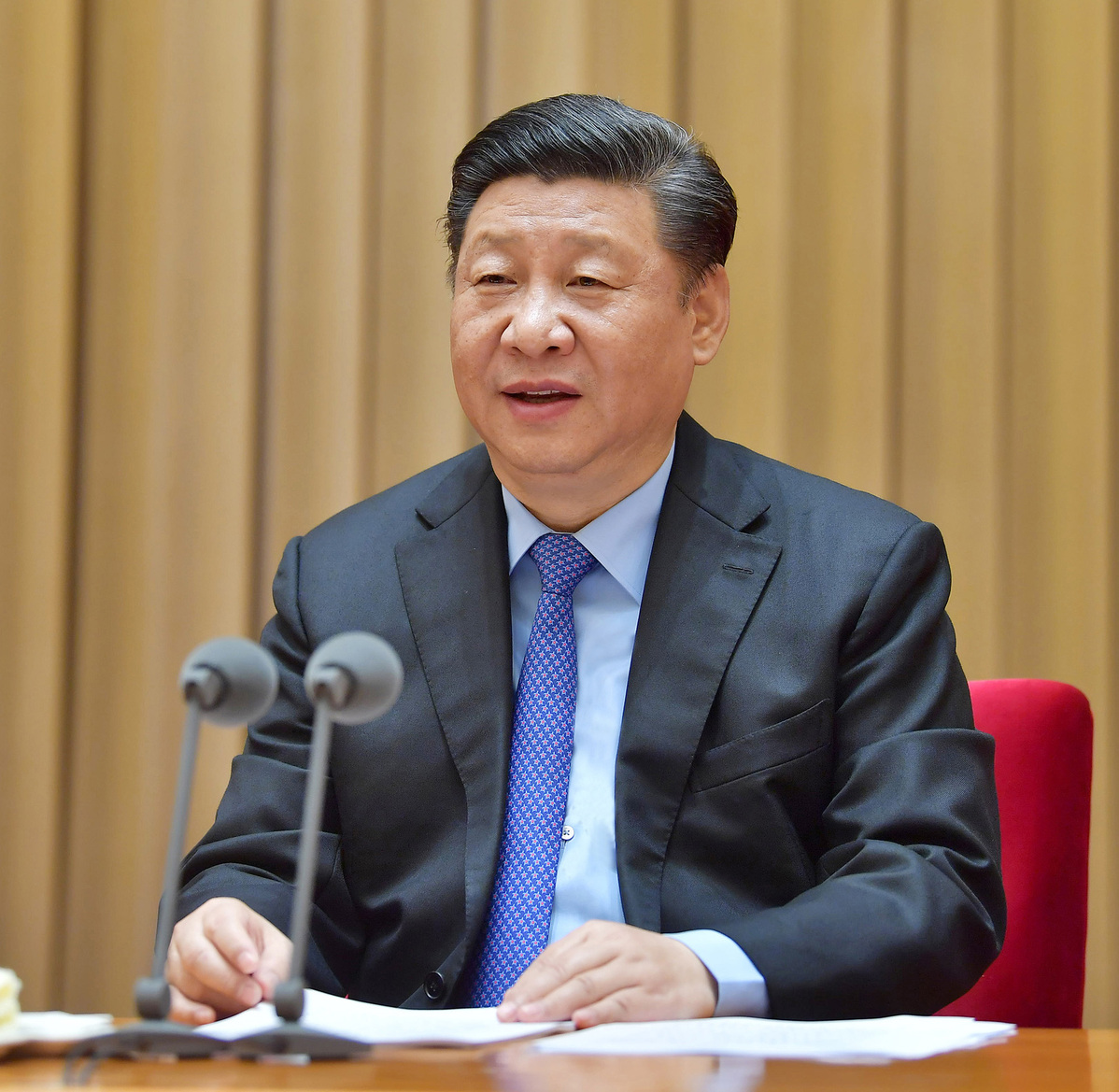
Editor's note: At a national conference on cybersecurity and informatization on Friday and Saturday, President Xi Jinping called for "keenly" grasping the historic opportunity informatization has offered, in order to build the country into a strong cyber power. Three experts share their views with China Daily's Zhang Zhouxiang on the issue. Excerpts follow:
In-depth R&D will boost cyber sector
Two principles need to be followed to make China a strong cyber power. First, China must develop core technologies so it can chart its own destiny. The case of Chinese telecommunications equipment maker ZTE Corp-which Washington has barred from buying US technology or product for seven years-shows that without having access to core technology, Chinese companies, no mater how big or successful they are, will suffer when a foreign power blocks the export of key technologies or equipment parts.
And second, developing China's own core technologies does not mean closing our doors to outside players. Some developed countries already own mature technologies to develop cyber devices.
If China could learn from and make proper commercial use of those technologies, it would be a win-win outcome. But that in no way means Chinese enterprises should not improve their research and development sector to develop or improve on advanced technologies, as a major power cannot rely on exports for high-tech development.
Yan Hanbing, a researcher in cybersecurity at the National Computer Network Emergency Response Technical Team/Coordination Center of China
Interests of all parties should be served
Thanks to the internet and mobile phone technology, cyberspace has become a new engine for social and economic development. The majority of the economies, including China, have benefited from information and communications technology.
However, with the continuous development of the internet, problems such as a lack of fair rules and inequality have emerged.
The three key challenges to the global cyberspace order. First, according to United Nations data, by the end of last year, 52 percent of the global population did not have access to the internet and, more importantly, only 17.5 percent of the people in the least-developed countries had access to the internet.
Second, cybercrimes are still rampant, and many hackers launch cyberattacks against innocent civilians to obtain information or profit.
And third, some Western powers are using cyberspace as a new frontier for geopolitics, and by taking unilateral actions such as sanctions, they are creating problems for cybersecurity.
Currently, there is no international regulation that can effectively cope with these challenges, and distrust among countries, enterprises, even individuals is deepening.
It is time therefore to reform cyberspace governance and make it fairer. Only by serving the interests of all parties, instead of just one or a few, can cyberspace governance be stable in the long run.
Tang Lan, a senior researcher in information technology and social development at the China Institutes of Contemporary International Relations
Clear path to becoming a major cyber player
President Xi Jinping has on many occasions stressed the importance of China having its own core internet technology so as to prevent any foreign power from building barriers in its development path. Over the weekend, he said China has worked out a strategy to enhance its strength in cyberspace, which means he attaches great importance to core internet technology at the strategic level.
Core internet technology, which will play a vital role in China's development, is comparable to a powerful weapon that can deter external powers from attempting to block a country's progress toward self-sufficiency. But China lags behind the United States, as the ZTE case shows the Chinese enterprises rely heavily on the US for integrated circuit chips. This happened primarily because many Chinese enterprises wrongly assumed they could pursue short-term profit without investing in the basic sciences, especially R&D.
Since a majority of the Chinese enterprises import existing tech products from the West and incorporate them into their own "products", they languish on the lower rungs of the global industrial chain and have become vulnerable to foreign powers that tend to block the export of such technologies.
To change this scenario and become a leading high-tech power, Chinese companies should invest more on R&D to facilitate technological breakthroughs, develop new technologies in emerging sectors such as artificial intelligence, and influence the global technological sector.
Liu Quan, a senior researcher in cybersecurity at the China Center for Information Industry Development affiliated to the Ministry of Industry and Information Technology