Development of China's Public Health as an Essential Element of Human Rights







I. Ensuring People's Right to Health Based on China's Conditions
China is a large developing country with 1.3 billion people. The CPC and the Chinese government have always attached great importance to developing the medical and health services, to transforming the development model of the health sector, and to respecting and protecting citizens' right to health. A mechanism based on China's conditions to ensure the people's right to health has been put in place.
When the People's Republic of China was founded in 1949, China had a weak medical and health system due to low levels of development in its economy and society. The nation had only 3,670 medical and health institutions, 541,000 health workers and 85,000 beds at health institutions. The average life expectancy was 35 years. To change this situation, the government devoted great efforts to developing the medical and health services, and implemented guidelines which stipulated that the health services were to serve vast majority of the people, that prevention should be stressed, that both Western medicine and Traditional Chinese Medicine (TCM) should be utilized, and that health promotion and people's involvement should be incorporated. The people were mobilized to carry out health promotion programs, and basic knowledge about healthcare was widely spread. All this greatly enhanced the people's health, and major breakthroughs were made in medical sciences. Chlamydia trachomatis was identified for the first time by Chinese scientists; Chinese doctors performed the world's first replantation of a severed limb; and artemisinin, an effective cure for malaria, was extracted in a Chinese laboratory.
Following the introduction of the reform and opening-up drive in 1978, to address problems such as a severe shortage of medical and health resources and a lack of service capability and low efficiency, the government allowed multichannel financing for the medical industry, and encouraged medical development in various forms, by increasing resource supply, opening up the pharmaceuticals manufacturing and circulation market, developing the pharmaceutical industry, and promoting TCM. Economic incentives were adopted to encourage medical personnel to enhance their performance. At the First National Health Service Meeting in 1996, a decision was made on implementing the guiding principles for health services in the new era, namely, "focusing on the rural areas, prioritizing prevention, equal emphasis on Western medicine and TCM, relying on science and education, encouraging public participation, promoting public health, and serving socialist modernization." In 1998, China began to form a social medical insurance system to cover the basic medical needs of workers. In 2000, it set the goal of establishing an urban medical and healthcare system in line with the socialist market economy, so that the people could enjoy reasonably priced, high-quality medical services, and thus become healthier. In 2002, the government released the Decision on Further Enhancing Health Services in Rural Areas. Taking into consideration the levels of economic and social development in rural areas, the government decided to drive health services reform to a deeper level, and put in more funding to rural areas, to provide different levels of medical services to rural residents.
In 2003, under the firm leadership of the Party and the government, the Chinese people, united as one, won a decisive victory in their combat against the severe acute respiratory syndrome pandemic. Learning a lesson from this experience, the government took comprehensive measures to improve public health services, and the prevention and control of serious diseases. Marked progress was made in the prevention and control system for serious diseases, in the response mechanism for public health emergencies, in the development of community healthcare services in rural and urban areas, and in the new-type rural cooperative medical care and basic medical insurance for urban residents.
In 2009, China launched a new round of reform of the medical and healthcare system. With the release of the Opinions on Deepening Reform of the Medical and Healthcare System, the government delivered a message that the basic medical and healthcare system should be available to all citizens as a public product. The nonprofit nature of public medical and healthcare was made clear. In the document it was proposed that China would develop the "four systems" of public health, medical services, medical security and drug supply and the "eight supporting mechanisms" of medical and healthcare management, operation, investment, pricing, supervision, technology and personnel, information, and law-based development, in an effort to form a basic medical and healthcare system and promote the all-around, balanced, and sustainable development of the health sector. Soon after that, China issued the Plan for Reforming Key Areas of the Medical and Healthcare System (2009-2011) and Plan for Deepening Reform of the Medical and Healthcare System during the 12th Five-Year Plan Period (2011-2015). In these two documents, the government set the goals of the reform, which were accelerating the basic medical security system, improving community-level medical and healthcare services, and promoting equal access to basic public health services.
Since 2012 China has redoubled its effort to reform the medical and healthcare system; it has accelerated the comprehensive reform of public hospitals and the price reform of drugs and medical service; it has also implemented serious illness insurance policies covering both urban and rural residents, adopted a multi-layer diagnosis and treatment mechanism, and improved the policies regarding the production, distribution and use of drugs. On October 29, 2015, enhancing public health and fitness was formally introduced in the communiqué of the Fifth Plenary Session of the 18th CPC Central Committee. In August 2016, at the National Health and Fitness Conference, it was stated that the government will "follow the correct guidelines for promoting health and fitness services, focus on lower-level medical institutions, strive to reform and make innovations in the medical sector, prioritize disease prevention, lay equal emphasis on Western medicine and TCM, incorporate health promotion in all policies, and involve all citizens in promoting public health and thereby bring health benefits to all." In October 2016, the state issued "Healthy China 2030" Planning Outline, a guiding document on promoting public health and fitness, with plans to make the Chinese people healthier.
The development in the field of health services has brought concrete benefits to the Chinese people. The average life expectancy of the Chinese rose to 76.5 years in 2016 from 67.9 years in 1981; maternal mortality dropped from 88.9 per 100,000 persons in 1990 to 19.9 per 100,000 persons in 2016; and infant mortality declined from 34.7 per 1,000 in 1981 to 7.5 per 1,000 in 2016. The main health indicators of the Chinese are generally better than the average level of middle-and high-income countries, and China has achieved the UN's Millennium Goals in this regard ahead of schedule. Furthermore, China has established a complete medical and health system that is guided by the Constitution, based on civil laws and regulations, laws and administrative regulations on health, and local regulations, and directed by the outlines, programs, and plans of the health sector. The system has proved effective in maintaining sound doctor-patient relations, addressing medical disputes with impartiality, and ensuring citizens' right to health.
The reform of the medical sector has produced noticeable results. Within a short period of time, China was able to achieve the following: developing the world's largest basic medical insurance network that covers all citizens, providing insurance for patients of serious diseases, enabling patients to receive emergency medical services, and improving medical assistance. All this has provided institutional guarantee that patients have access to medical services. The state has gained effective control over serious infectious diseases, has kept the spread of AIDS at a low level, has achieved the tuberculosis control target of the UN's Millennium Goals ahead of schedule, has reduced the number of schistosome infections to the lowest level in history, and became a polio-free country in 2000. China set up the world's largest online direct reporting system of notifiable epidemics and public health emergencies in 2015, and the average reporting time has been shortened to four hours from five days before the introduction of the system.
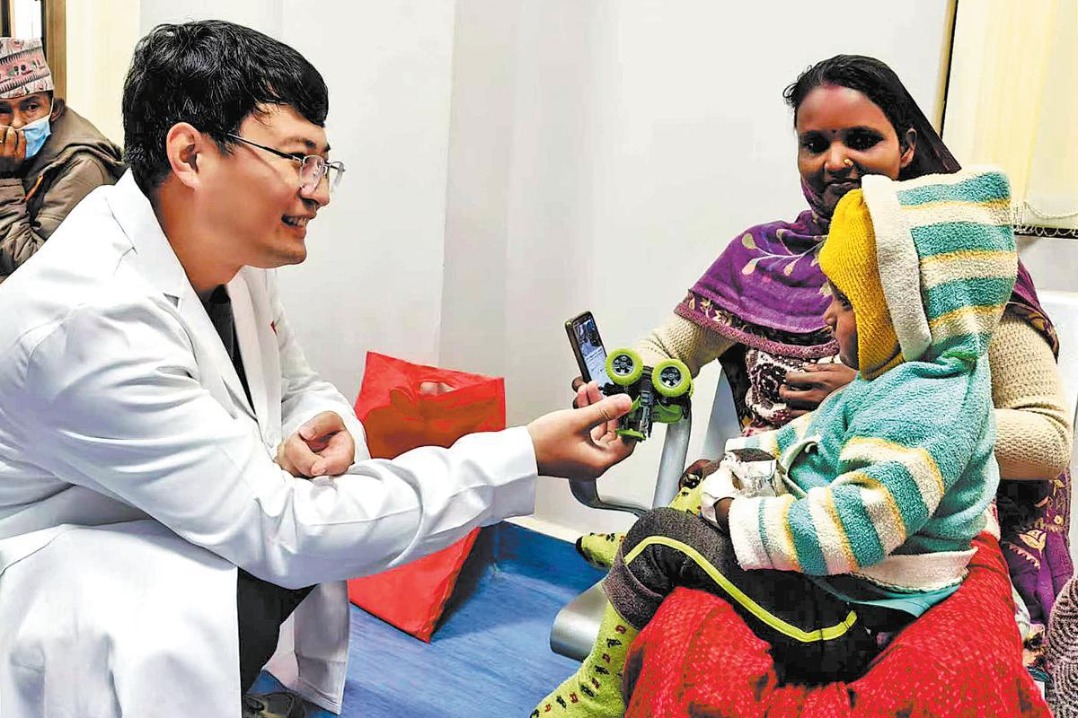
Significant progress has been made in developing a system of medical and healthcare services. A basic medical services network covering both urban and rural areas has been put in place, with 980,000 medical and health institutions at all levels, 11 million health workers, and seven million beds at medical institutions. The state has increased its efforts to foster more medical professionals. A standardization training system for resident doctors is being established, and outstanding figures such as Nobel Prize laureate in Physiology or Medicine Tu Youyou have made significant contributions to society. As more social resources flow into the medical sector, private hospitals now account for over 57 percent of all hospitals, making medical services more diverse. China's medical and health emergency rescue capability is among the world's best. It stood the severe test of the Ebola epidemic, blocking all infectious sources from outside its territory and achieved zero infection while Chinese medical teams went on assistance missions in Africa.
After many years of hard work, a new stage has been reached in China's medical and health services. This has not only made the Chinese people healthier, but has also created a model suited to the country's prevailing conditions that is able to ensure people's right to health. This model has the following features: