
I had an opportunity to fill in as a guest lecturer at a university while my friend took a short trip overseas.
I sensed that the junior students majoring in media studies were not really interested in what I was about to say as soon as they filed into the classroom. Some of them were even several minutes late.
The class was in mass media ethics. In my lecture, I tried to demonstrate my point by examples from both China and other countries, with power point illustrations. Despite the fact that few of the students had ever heard of the stories I was telling them, they were simply bored.
So I quickly finished my lecture, gave them a break and set aside the next hour for class discussion in six small groups. Few actually spoke, while quite a few were reading other textbooks, or simply taking the time for a nap.
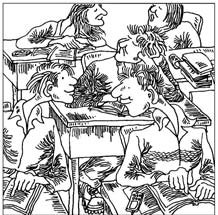
I admit that I am not an experienced lecturer. However, I have taught some classes in the past few years, including a one-credit course on Chinese culture in the era of globalization at the University of Iowa last spring. The students were much more responsive than this class.
So I started to ask questions. The answers were not surprising: On their first day at university, every teacher, professor or lecturer talks about ethics. By their junior year, they have already learned the simple basics of truth-telling by heart. It does not matter how to achieve it and what are the difficulties, because few of them have had an opportunity to work for a newspaper or television station as interns for hands-on experience.
As my students explained, you know how important basic ethics are only when you actually start working in a newsroom.
Quite a few found they did not like media studies in their freshman or second year, but they had little leeway to change majors. In China, almost all students get stuck in majors they chose before the National College Entrance Exams. That is in contrast to universities in most Western countries, where students do not have to pin down their majors until they are about to enter the junior year. Some liberal arts colleges claim they offer hundreds of courses for students to select as freshmen.
The students told me they had little opportunities to explore what they really liked to learn in the first two years of university. What they do now is to hang on, complete the basic requirement so as to graduate. In short, they have already lost interest.
I have no reason to complain but sympathize with these students. I do not know how many students in other colleges and universities share their opinion and experience, but I do believe that today's universities should create more opportunities for students to explore a broader range of areas before settling on what they really hope to pursue.
Many senior professors are nostalgic about the students of old, but they have to reckon with the fact that the students they taught 30 years ago had been deprived of knowledge and books for many years. Naturally, they had the insatiable appetite for more when they had the opportunity.
In the era of the Internet today, young people born after the 1980s have come into contact with so much more information that they believe they have scratched the surface of almost everything. They get committed to their majors only when they are able to dig deeper to find their niche or interests.
The old routine and curricula set-up, without giving students a wider variety of choices along with careful guidance, will only do disservice to college education.
E-mail: lixing@chinadaily.com.cn
(China Daily 10/11/2007 page10)