More often than not, when a reform can be done through local efforts, it becomes a glowing success. When a reform needs to wait for a uniform plan, something implemented from top to bottom by a centralized government agency, it takes almost forever to report progress. Nothing better illustrates the top-down difficulty than the age-old household registration system with its rigid separation of rural and urban citizens.  Without changing their household registration cards, or hukou, rural workers cannot fully settle down in a city and enjoy the benefits of card-carrying residents no matter how long they have worked there. Without changing their household registration cards, or hukou, rural workers cannot fully settle down in a city and enjoy the benefits of card-carrying residents no matter how long they have worked there.
But a consensus for change does not automatically generate change. The key is to change the old household registration requirement with standards that are feasible both for centralized supervision and nationwide application. Given the spontaneity of rural workers' movement patterns plus the enormous size of the rural population still to come to cities, the cost of implementing approaches to managing this urbanization is almost prohibitive. What's involved is not just the technology to trace millions of people's whereabouts but also the financial resources that should follow them. Small wonder that all that people can do about the old system right now is talk. In the last week of March, the Ministry of Public Security reportedly called for a national conference to discuss the possibility of doing away with the existing household registration practice. After that, a survey published by China Youth Daily found that more than 90 percent of some 11,000 respondents agreed that China must revamp its residential administration. However, a couple of weeks later, hardly any concrete moves were announced by any government agencies. Expert opinions surfaced cautioning against going too fast in dismantling the existing system without building a new one. Ideally, the new system will include far more than just the red official seals with which people can move from the countryside to the cities or just new laws to ensure freedom of movement. If not matched by various social programs, the only kind of freedom that those red official seals can allow for is the freedom to create urban slums. It is unrealistic to expect the public security administration, which controls the red seals on citizens' internal movement papers, to lead the reform of the household registration system. It is even more unrealistic to blame it for being slow and conservative in bringing about real change.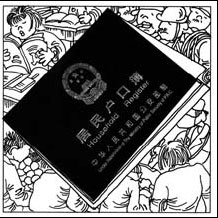 If more rural townships had been able to provide useful public service, to be less corrupt and more helpful to local industries and services, there would not be so many people yearning to move to the cities. If there had been more equality in the availability of urban education and healthcare and if they covered all workers and their families, it would be much easier for migrant laborers to just settle down where they are without registering for city residence. If the cities had been creative in planning projects to put in place both jobs and public conveniences, they would be more open to migrant workers, able to provide them with as many opportunities as for their existing residents. If the technological solution had been ready for the government to keep updating the data on the 1.3 billion citizens, enabling them to get social security benefits wherever they go, the household registration system in place for half a century would naturally become useless. Conditions are far from ripe, unfortunately, for quickly turning all these ifs into realities. E-mail: younuo@chinadaily.com.cn (China Daily 04/16/2007 page4)
|