Nuclear Meltdown
Robot in Japanese reactors detects high radiation
(Agencies)
Updated: 2011-04-18 13:30
 |
Large Medium Small |
|
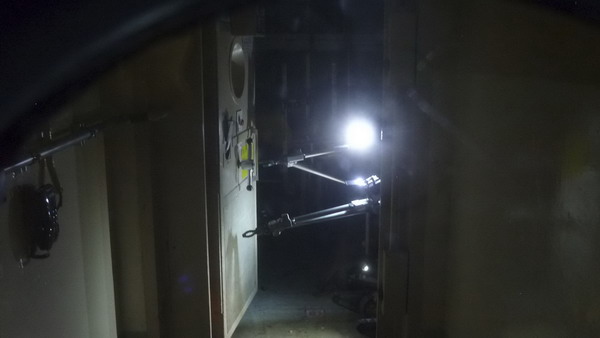 remote-controlled robot called "Packbot", which has capabilities including manoeuvring through buildings, taking images, and measuring radiation levels, opens a door at Tokyo Electric Power (TEPCO) Co's crippled Fukushima Daiichi Nuclear Power Plant No.3 reactor building in Fukushima, northern Japan April 17, 2011, in this handout photo released by TEPCO. Japan's Tokyo Electric Power said on Sunday it hoped to achieve a "cold shutdown" of its crippled Fukushima Daiichi nuclear plant in six to nine months, setting a timeframe for bringing the world's worst nuclear crisis in 25 years under control. [Photo/Agencies]
|
|
||||


A US-made robot that looks like a drafting lamp on treads haltingly entered the two buildings Sunday and took readings for temperature, pressure and radioactivity. More data must be collected and radioactivity must be further reduced before workers are allowed inside, said Hidehiko Nishiyama of Japan's Nuclear and Industrial Safety Agency.
"It's a harsh environment for humans to work inside," Nishiyama said.
It is still possible, he said, to achieve plant operator Tokyo Electric Power Co's goal of achieving a cold shutdown of the plant within six to nine months as laid out in a timetable the company announced Sunday.
"I do believe we must be creative to come up with ways to achieve our goals," Nishiyama said. "I still think the plan ... is as appropriate as we can get at the moment."
TEPCO official Takeshi Makigami said the robots must pave the way for workers to be able to re-enter the building. "What robots can do is limited, so eventually, people must enter the buildings," Makigami said. The robot was set to investigate Unit 2 later Monday.
As work continues inside the plant to reduce radiation levels and stem leaks into the sea, the Defense Ministry said it would send about 2,500 soldiers to join the hundreds of police, outfitted with protective suits, who are searching for bodies in tsunami debris around the plant.
Around 1,000 bodies are thought to be buried in the muddy piles of broken houses, cars and fishing boats. As of Sunday, searchers had located 66 bodies and recovered 63, police said.
The combined earthquake and tsunami have left more than 27,000 people dead or missing.
The robots being used inside the plant, called Packbots, are made by Bedford, Massachussetts company iRobot. Traveling on miniature tank-like treads, the devices opened closed doors and explored the insides of the reactor buildings, coming back with radioactivity readings of up to 49 millisieverts per hour inside Unit 1 and up to 57 millisieverts per hour inside Unit 3.
The legal limit for nuclear workers was more than doubled since the crisis began to 250 millisieverts.
The US Environmental Protection Agency recommends an evacuation after an incident releases 10 millisieverts of radiation, and workers in the US nuclear industry are allowed an upper limit of 50 millisieverts per year. Doctors say radiation sickness sets in at 1,000 millisieverts and includes nausea and vomiting.
| 分享按鈕 |