|
|
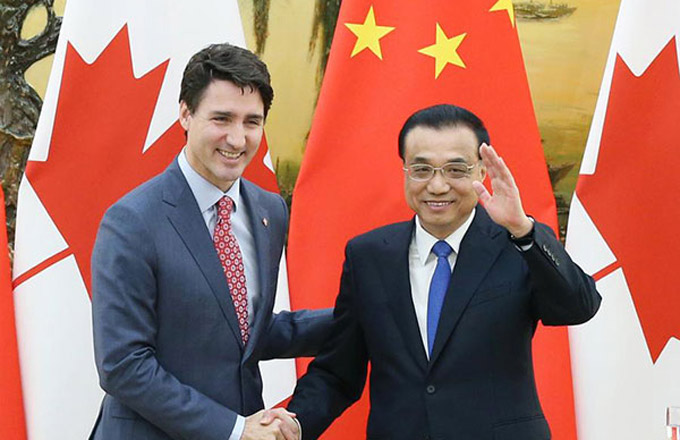
File photo of China's vice foreign minister Fu Ying. [Photo/Xinhua] |
The South China Sea issue has become one of the major irritants in the China-U.S. relations in recent years, over which the public opinion in the two countries is very critical of each other. There are even frictions in the sea between the two navies.
The South China Sea seems like an outlet for the rivalry and confrontation that are building up of late between China and the US. As a result, the two sides seem to be reassessing each other's intentions on a strategic level.
The latest rhetoric is about "militarizing the South China Sea", and on the part of the U.S., announcements to carry out "freedom of navigation operational assertions".
Hawkish voices are growing louder in both sides of the Pacific. Such frictions surrounding the South China Sea are leading to further strategic mistrust and hostility.
The American scholar David M. Lampton was straightforward when he observed worriedly in reference to the existing situation, "A tipping point in the U.S.-China relations is upon us". It is obvious that the South China Sea issue is a major catalyst for the troubled China-U.S. relations, if not the key contributing factor.
Opinions diverge in both countries on what has led to the current situation in the South China Sea. In China, it is widely believed that it is the U.S.'s Asia-Pacific rebalance strategy, its taking sides on disputes in the South China Sea, and its direct intervention that have escalated the tensions and made the issue more complicated.
In the U.S., accusations are strident of China's defiance of international law, coercion of smaller neighbors by force and attempted denial of access to the U.S., in its bid to gradually take control of the South China Sea using a salami-slicing strategy and to eventually turn it into a Chinese lake.
It is obvious from the incidents and events that have unfolded in the South China Sea over the years that all disputes are centered on sovereignty and rights over the Nansha Islands and their surrounding waters.
In fact, such disputes were not uncommon in third world countries in modern history, including during the Cold War era. But the discovery of abundant oil reserves in the Nansha waters in the late 1960s and the introduction of international arrangements concerning the EEZs or the continental shelf, such as the Convention on the Continental Shelf and the United Nations Convention on the Law of the Sea, provided fresh incentives for other claimants to covet and grab China's Nansha Islands.
The disputes then spilled from those islands and reefs to wider maritime areas, but without spinning out of control. A good proof was the "golden era" of the China-ASEAN relations from 1991 to the end of 2010, during which bilateral cooperation flourished and trade ballooned nearly 37 times, from no more than 8 billion to $300 billion. During this period, China's GDP rose rapidly, and most Southeast Asian economies expanded more than five-fold.
Tensions started to build up in 2009 and have escalated since 2012. How have things festered against a backdrop of peace of development, and following a sustained period of regional cooperation?
It is obvious that no single event or cause could have escalated and changed the situation in the region. So it is worth examining the incidents and behavior that have happened, the reactions they triggered, and the consequences incurred, in the leading up to the current state of affairs.
This paper provides an overview of the chain of events contributing to the escalation of tensions in the South China Sea, as well as the context in which they occurred and potential connections they have.
It is hoped this paper will help those concerned about the disputes see the bigger picture and get to the heart of why things have happened that way.
It also serves as a warning against further deepening of misunderstanding and spiraling of tensions for all countries concerned.

Copyright 1995 - . All rights reserved. The content (including but not limited to text, photo, multimedia information, etc) published in this site belongs to China Daily Information Co (CDIC). Without written authorization from CDIC, such content shall not be republished or used in any form. Note: Browsers with 1024*768 or higher resolution are suggested for this site.
License for publishing multimedia online 0108263 Registration Number: 130349