|
|
A killing spree in a small town in Hebei province in 1937 sparked a popular uprising against the Japanese occupation that quickly spread across northern China, as Zheng Jinran reports from Shijiazhuang.
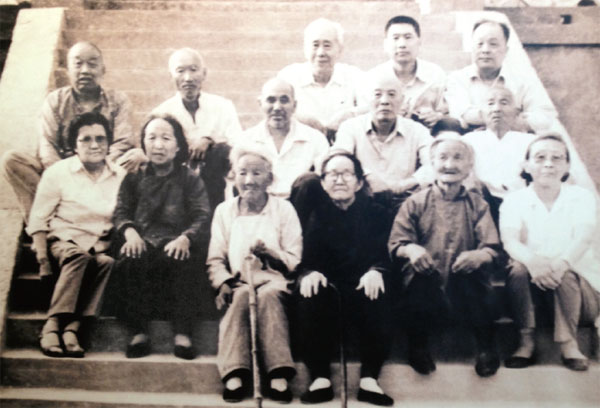
As the only living survivor of a notorious wartime massacre in China, Fan Yuexiang, is always willing to tell people about her desperate experiences during four days of slaughter in Meihua, a town in Shijiazhuang, Hebei province.
|
|
According to documents from the Meihua government, the slaughter occurred between Oct 12 and 15, 1937, just three months after the Lugouqiao Incident, also known as the Marco Polo Bridge Incident. Many historians regard the incident, during which Chinese and Japanese troops fought on the streets of Beijing, as the beginning of Japan's invasion of China and the flashpoint that started the War of Resistance against Japanese Aggression (1937-45).
Following the incident, the Japanese quickly invaded the central part of Hebei, which surrounds Beijing, and approached Meihua on Oct 11.
On the same night, Lyu Zhengcao led a team of Kuomintang, or Nationalist, soldiers to fight the Japanese at Meihua, which was chosen because of its geographical advantages and the high walls that surrounded it. More than 800 Japanese soldiers were killed or wounded during the offensive, the first time that they had suffered heavy losses, according to Lyu's memoir, which was published in 1988.
After the battle, Lyu decided to lead his team south and join with other Chinese troops to repel the advancing Japanese reinforcements. Before he left Meihua, Lyu warned the residents to flee the town to avoid possible revenge attacks by the Japanese.
Fan recalled how her father, a wealthy businessman, refused to leave because he did not believe the Japanese troops would kill civilians. Many other residents stayed too - some because they had decided the danger wasn't too great, but others simply hadn't heard Lyu's warning, according to local government documents.
Early on the morning of Oct 12, about 5,000 Japanese soldiers entered the town and began slaughtering the residents, most of whom were still asleep, to prevent them joining the Chinese troops.
"I saw them take my father away when he went out to check the situation, and I saw them shoot some residents," Fan said. Her mother took Fan, then just 7, to a nearby tavern, where they hid out for three days without food or water.
Fan said she would never forget the rivers "painted red with blood" or the sight of the bodies piled in the streets, and around ponds and other parts of the village. "It was like hell," she recalled.
Her 14-year-old brother was trapped in a yard with dozens of other residents. The Japanese troops mounted the walls and began shooting, using the civilians for target practice, but Fan's brother survived by escaping through a door as the troops took a break, she said.
Some of Fan's other relatives were not so fortunate - one of her aunts was raped before being killed - and the family was broken after the massacre. All their wealth was gone and everything was ruined, she said.
The Japanese shot 45 residents and tossed their bodies into a well in the eastern part of the town, before beheading 63 people at the edge of a nearby pond, according to Gao Lei, who works at the Meihua Massacre Memorial Hall, which opened in 1958 on a site close to the scene of the killings, but was moved and rebuilt in Shijiazhuang in 1998.
The death toll was 1,547, roughly 60 percent of Meihua's population at the time, Gao said. However, that figure doesn't include people from outside the town who were killed, so the true figure is likely to be higher.

Copyright 1995 - . All rights reserved. The content (including but not limited to text, photo, multimedia information, etc) published in this site belongs to China Daily Information Co (CDIC). Without written authorization from CDIC, such content shall not be republished or used in any form. Note: Browsers with 1024*768 or higher resolution are suggested for this site.
License for publishing multimedia online 0108263 Registration Number: 130349