|
|
|
Jiangxi province displays its technological achievements near the Chinese Pavilion for the Expo Milano 2015. Photos provided to China Daily |
It's four in the morning and Ji Jingqing, general manager of Jiangxi-based Fuliang Tea Corp, is already up. Together with 50 hired farmers, he begins checking whether worms have laid eggs on the leaves of their tea trees on a million-square-meter tea plantation.
Ji's plantation is a typical example of the province's modern agricultural model, which emphasizes recycling and waste management. The model was initiated by Jiangxi province many years ago, the history of which is currently on display at the Chinese Pavilion for the Expo Milano 2015.
Hu Hanping, the provincial director of agriculture, said the region's model of agriculture mainly features

recycling most of the waste produced in agricultural processing and strictly controlling the use of fertilizers and pesticides.
At Ji's plantation, he uses natural fertilizers such as ash produced from the burning of plants and excrement collected from nearby villages and cattle farms.
"The tea trees here consume at least 800 metric tons of natural fertilizers annually," said Ji, equal to the total amount of natural waste from about two to three villages.
To lower his production costs and minimize the amount of waste produced, Ji does not sell his lower-quality tea leaves, instead using them as natural fertilizers for the plantation. He said he is currently developing a new kind of tea tree that produces both fruits and tea leaves.
He said produce grown in this fashion yields limited quantities and generally are tailored to high-end markets. Ji's plantation produces about 600 tons of tea a year and mostly ships it to Italy and other parts of Europe.
Jiangxi is also known for its rice. It currently produces 42 to 43 billion tons of rice annually for the country.
"Jiangxi has been supplying rice to other provinces since 1949," Hu said. "The process has never been interrupted since 1949, even in the years with bad harvests across the nation."
Jiangxi province has rich water resources, including Poyang Lake, the largest freshwater lake in the nation. Additionally, both the Yangtze River and Ganjiang River flow through the region. It also has a forest coverage rate of 61 percent, the nation's highest.
These rich water and forest resources make it possible for rice farmers in the province to combine fish farming and rice planting.
Hu said, at the advice of agricultural experts, farmers now generally raise ducks and fish in the rice fields where they can eat part of the stalks after the harvest; in turn, their excrement fertilizes the rice fields. There are also more free-flowing plankton in the muddy rice fields thanks to the mixed environment of animals and plants that are natural sources of food for ducks and fish.
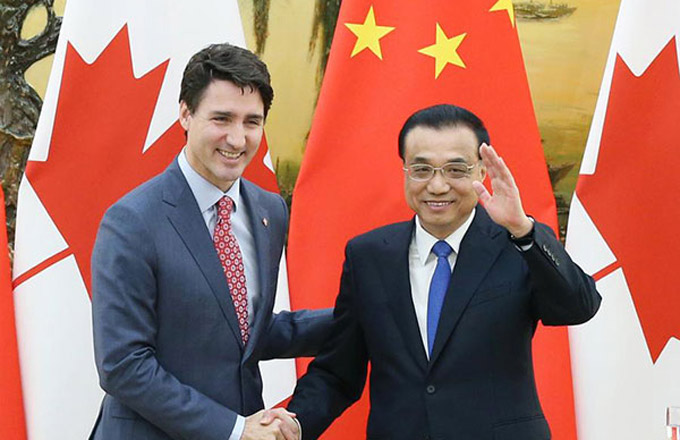
Using recycling extensively within the agriculture model is a product of Premier Li Keqiang's recent promise in Paris to further cut down on China's carbon emissions. "Jiangxi annually produces 2.5 million tons of fish and other seafood," Hu said, "the majority is produced (in an environmentally safe) way so you can imagine how much carbon emissions are saved."
Jiangxi farmers also cut down on their carbon emissions in dealing with their agricultural waste. After the rice is harvested each year, every farming family faces the daunting task of disposing of multiple tons of rice stalk. In the past, the stalk was usually burned, leading to air pollution and smog.
Though the idea of collecting the rice stalks and turning them into gas fuel is nothing new, it requires hard work and considerable investment to build the facilities and purchase the necessary devices for the gas conversion, said Wu Xiaohong, CEO of Goddream, an agricultural complex that grows tea leaves and fruits and incorporates them into a tourism experience in Jiangxi.

Copyright 1995 - . All rights reserved. The content (including but not limited to text, photo, multimedia information, etc) published in this site belongs to China Daily Information Co (CDIC). Without written authorization from CDIC, such content shall not be republished or used in any form. Note: Browsers with 1024*768 or higher resolution are suggested for this site.
License for publishing multimedia online 0108263 Registration Number: 130349