China-Japan medical exchange builds trust in tense times


When relations between China and Japan become strained, educational and professional exchanges can also be adversely affected. But a program for training Chinese doctors and nurses in Japan has survived the twists and turns of diplomatic relations between the two nations over the past 25 years.
The Nippon Foundation and the Chinese National Health and Family Planning Commission have renewed a five-year contract, starting from 2014, to send 30 Chinese doctors and nurses every year to Japan's medical institutions for intensive training, according to the Nippon Foundation.
The Japan-China Sasakawa Medical Fellowship is the brainchild of a tripartite agreement between the Chinese Ministry of Health, the Japan-China Medical Association and the Sasakawa Memorial Health Foundation. It was established to provide Chinese health professionals with the chance to attend Japanese medical universities to learn the latest in medical technology, and the new contract means a commitment to providing the same experience to 30 people each year for another five years.
“Even during difficult periods in bilateral relations, the program was maintained for the sake of the public health and well-being of the two countries,” said Isamu Adachi, chief director of the Japan-China Medical Association in Tokyo.
“This is the biggest scholarship in the medical area, providing person-to-person exchanges between the two countries,” Adachi said.
The Chinese grantees are required to return to China to put their new knowledge to good use, thus avoiding the “brain-drain” that so many countries have experienced as a result of similar scholarship programs.
The program has trained 2,128 Chinese doctors and nurses,with an input of 8.5 billion yen ($88 million) from the Sasakawa Memorial Health Foundation by 2011, according to the Nippon Foundation.
Chinese health professionals returning from Japan have played a big part in China's medical establishment since returning home. Two of them have become members of the Chinese Academy of Sciences, while many visit China's poverty-stricken and disaster areas to offer free clinics.
The exchange project is funded partly by the Sasakawa Japan-China Friendship Fund, which was founded in Tokyo in 1989 by the Nippon Foundation, with the aim of “maintaining the enduring peace between the two countries and promoting mutual development.” The fund, with assets of 10.5 billion yen ($109 million), is the biggest pool of money for non-governmental exchanges between China and Japan.
The continuation of people-to-people contacts between the two neighbors may help thaw relations, which have become increasingly frosty since Japan nationalized China's Diaoyu Islands in September 2012.
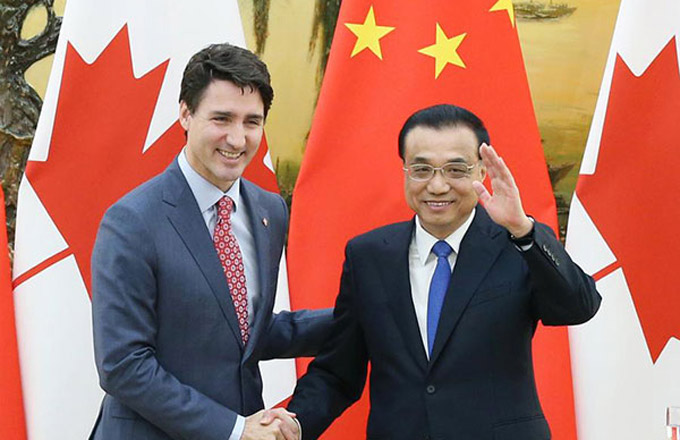
Meeting with Hiromasa Ikeda, vice-president of Japan's Soka Gakkai Buddhist organization in Beijing last year, Li Keqiang, who was vice-premier at that time, said the foundation of the friendship between the two countries lies in non-governmental sectors and called for more exchange and cooperation programs between young people of the two countries.
This year China and Japan are supposed to observe the 35th anniversary of the Treaty of Peace and Friendship, which they signed in August 1978.
Last year marked the 40th anniversary of the restoration of diplomatic ties between China and Japan. A number of events and exchange programs celebrating the anniversary were cancelled or postponed due to escalating tensions. The bilateral relations have recently deteriorated to a low not seen since World War II.
In 1975, the first six government-financed exchange students from China traveled to Japan to study in Soka University. Thirty-eight years later, a total of 100,000 Chinese students are studying in Japan, and 15,000 Japanese students are pursuing their studies in China.
When China-Japan relations become strained, many place their hopes on non-governmental exchanges to restore perspective and develop trust. This is the basis on which China and Japan need to build their future relations.