Defense and foreign affairs officials from Japan and the United States began consultations on revising their defense cooperation guidelines during talks in Tokyo on Thursday.
The two sides are likely to focus on how to beef up their cooperation in monitoring and surveillance activities in view of China's increasing maritime presence in the region.
 |
|
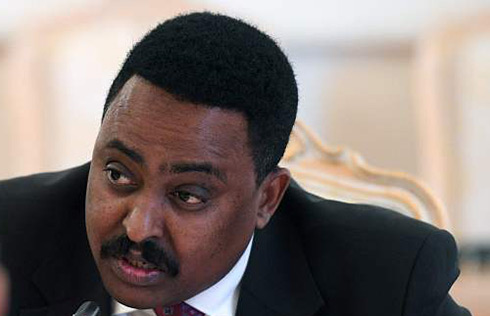
US Assistant Secretary of State Kurt Campbell arrives at the Foreign Ministry to meet Japan's Foreign Minister Fumio Kishida in Tokyo on Thursday. Toru Hanai / Reuters |
Kurt Campbell, assistant US secretary of state for East Asian and Pacific affairs, asked Japan's Self-Defense Forces to play a bigger role. He said the US is interested in "concrete areas where the United States and Japan can work more effectively together", according to Japan's Kyodo News Agency.
Japan wants to proceed with the debate proposed by Prime Minister Shinzo Abe on changing the interpretation of the Japanese constitution concerning the nation's right to collective self-defense.
If Japan reviews the constitutional interpretation, the Japan-US guidelines on security cooperation will change a great deal, according to the Japanese newspaper Mainichi Shimbun.
The Japanese government wants to sound out Washington on whether the new guidelines should expand the activities of its Self-Defense Forces, such as having them repel potential armed attacks on US vessels during joint exercises and other cooperative activities. This will be possible if Japan is allowed to exercise its right to collective self-defense.
During their talks on Thursday, the Japanese and US officials touched on issues such as the joint training of Japan's Self-Defense Forces and US troops in the country's southwest islands, the Mainichi Shimbun reported.
The two countries are expected to discuss revising the guidelines. It is believed that the discussions will take at least a year, about the same time it took to draw up the latest version of the guidelines in 1997.
Some officials in Japan's foreign and defense ministries have said that the role of the Self-Defense Forces should be enlarged in warning and surveillance activities to counter China's recent increase in marine activities, particularly in the East China Sea, the Yomiuri Shimbun said.
Japanese Defense Minister Itsunori Onodera said Japan would react according to the established rules of the Self-Defense Forces and international standards, when asked whether Japan would fire warning shots at Chinese aircraft on Wednesday.
Although his answer did not mention the Diaoyu Islands, Asahi Shimbun interpreted Onodera's words as meaning that Japanese jets would fire tracer bullets to warn Chinese planes.
China News Service on Thursday reported that the US has warned Japan not to fire tracer bullets at Chinese planes flying near the Diaoyu Islands, citing Japanese news sources.
It said the US warning was possibly issued to a Japanese official who visited Washington earlier this month.
Firing a tracer bullet is a kind of provocation, Beijing-based military commentator Peng Guangqian said in an interview with People's Daily Online.
Fan Jishe, a US studies expert at the Chinese Academy of Social Sciences, said the US was sending mixed signals in handling the islands row between China and Japan by warning Japan not to fire tracer bullets while seeking to revise guidelines on defense cooperation with the country.
Whenever a dispute tends to escalate, the US takes some measures to pacify its allies to maintain its credibility. At the same time, the US also tries to prevent the misuse of its relationship with its allies, Fan said.
"After all, the US doesn't encourage Japan to make aggressive moves toward China and enrage China, as this will upset the balance in the region," Fan said.
Campbell will deliver the latest instructions from Washington to Japan, and the Japanese government will take them seriously because it highly values its relationship with the US, said Fan.
"However, Japan's continuous provocations can be considered dangerous, especially as relevant countries lack an effective mechanism to manage the crisis," said Fan.
Contact the writers at caihong@chinadaily.com.cn and chengguangjin@chinadaily.com.cn
Pu Zhendong contributed to this story.

Copyright 1995 - . All rights reserved. The content (including but not limited to text, photo, multimedia information, etc) published in this site belongs to China Daily Information Co (CDIC). Without written authorization from CDIC, such content shall not be republished or used in any form. Note: Browsers with 1024*768 or higher resolution are suggested for this site.
License for publishing multimedia online 0108263 Registration Number: 130349