Comments()
  Print
Print  Mail
Mail  Large Medium Small
BEIJING - The next round of United Nations (UN) climate talks is scheduled to begin next week in Doha, Qatar, and broadening consensus on the thorny issue is shaping up to be an arduous task for nations and parties involved.
Delegates from nearly 200 nations will try to extend the Kyoto Protocol, the existing plan for curbing greenhouse gas emissions by developed nations, the first round of which runs to the end of the year.
Extending the protocol is an imperative and daunting task, as big differences remain between parties and countries.
China has expressed hope that the conference will produce "comprehensive and balanced" results. On Wednesday, the nation's top climate change negotiator Xie Zhenhua said, "This means it will not only take care of the common interests of all human beings but also address the different realities and needs of different countries."
Developed countries, in particular, should fulfill their promises to reduce emissions, as they had a headstart in sparking global warming and they enjoy more resources in funding and technology to combat climate change.
Developing countries should also make contributions to curbing emissions, but their development rights should be respected. Their emerging economic growth will unavoidably discharge pollutants, but the amount of pollutants can be controlled through scientific means.
China's economy became the world's second largest at the same time that pollution became a major issue in the country. This is a painful truth that the country has itself realized and taken concrete measures to address.
During the 2006-2010 period, the aggregate energy consumption per unit of gross domestic product (GDP) dropped 19.1 percent from that of 2005, which is equivalent to a reduction of 1.46 billion tonnes of carbon dioxide (CO2) emissions. This means China has accomplished its energy conservation goals listed in the 11th Five-Year Plan (2006-2010).
By 2015, the nation aims to reduce energy consumption per unit of GDP by 16 percent, cut CO2 emissions per unit of GDP by 17 percent and raise the proportion of non-fossil fuels in the overall primary energy mix to 11.4 percent.
The upcoming Doha conference is key for maintaining the basic legal framework of the Kyoto Protocol. A detailed agenda needs to be fixed in order to make definite arrangements for the implementation and enforcement of the second commitment period of the Kyoto Protocol and to ensure that the second commitment period is implemented on January 1, 2013.
China's rapid economic development and its population base have made the country a big producer of greenhouse gases, but its per capita and historical emissions of greenhouse gases are far below those of developed nations. This is why "the common but differentiated responsibilities" theory that China adheres to in international climate talks makes sense.

 Chocolate maker's art displayed in Brussels
 Thanksgiving parade brings cheer to storm-hit NYC
 Top leader of DPRK visits Ministry of State Security
 Christmas lights sparkle in Paris
 Clown 'doctors' use laughter to aid patients
 Luxury Packaging Design Salon opens in Paris
 France ends last combat mission in Afghanistan
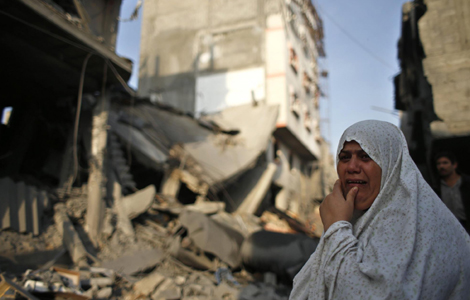 Attacks pound Gaza amid truce pressure
Copyright 1995 - 2010 . All rights reserved. The content (including but not limited to text, photo, multimedia information, etc) published in this site belongs to China Daily Information Co (CDIC). Without written authorization from CDIC, such content shall not be republished or used in any form. Note: Browsers with 1024*768 or higher resolution are suggested for this site.
License for publishing multimedia online 0108263 Registration Number: 20100000002731