DENVER - Humankind's journey into the stars got a big boost last week as the result of the first annual International Space Station (ISS) conference in Denver, where NASA and its associates told the global scientific community it wants more involvement at the station.
"We had tremendous feedback from the conference, not just from the scientists but from the investment community," said Duane Ratliff, Director of Operations and NASA Liaison for the Center for the Advancement of Science in Space (CASIS).
One year ago, CASIS was hired by NASA to solicit, analyze and implement proposals from scientists and researchers around the world who are interested in microgravity. With an annual budget of 15 million U.S. dollars and only 3 million dollars earmarked toward research, inquiries from American investors have CASIS officials buzzing with excitement.
"We're talking to various investors," said Bobby Block, CASIS Director of Marketing and Communications. "We're making headway with capital funds groups and corporations interested in projects they might be able to get involved with, some looking at a return on their investment level, some the commercial potential, some from a marketing perspective.
High above the clouds, some 220 miles above Earth, the largest space station ever created by humankind - the size of a football field - has been fully operational and in orbit since 2000. NASA controls about half the station, and the other half is now open to scientific research like never before. CASIS is being swamped by new proposals.
"We're extremely busy," Block said. "Over the last 40 years in space, a number of technologies have been developed that have benefited people on Earth, from drugs, products, and technology development. All unsolicited proposals are being considered."
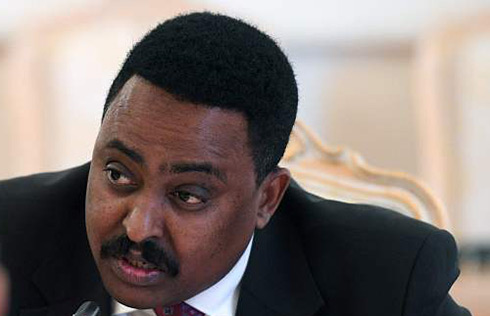
In Denver, NASA's Chief Scientist Waleed Abdalati told ISS conference attendees that NASA wants experiments. More than 100 science and research-related businesses delivered presentations at the conference, jointly hosted by NASA, CASIS and the Virginia- based American Astronautical Society (AAS).
Jen Huang, a Senior Environmental Engineer for Boston-based Ambrian Innovation, a 10-member company started by MIT Ph.D. Matthew Silver, is focusing on trying to transform wastewater into methane and hydrogen gasses while in space: "It becomes an energy source," Huang noted. Huang, a recent Ph.D. graduate from Purdue University, hails from China's Guangxi province.
Another Chinese native, Hong Kong's Kam-Ching Leung, a senior researcher at the University of Nebraska, is designing controllers for astronauts to use to better control their environments and maximize their work efficiency while in space. He hopes to have it up and running in two years.
CASIS used the conference to announce its push to attract researchers toward protein crystallography in microgravity. The space environment produces larger, more organized crystals that allow more focused drug development, including a possible cure for Muscular Dystrophy, according to Dr. Timothy Yeatman, a CASIS scientist.
Paul Reichert, a research fellow and scientist at New Jersey' s Merck Research Laboratories, told attendees that interferon microgravity experiments could move interferon research past its current stage of development.
"The goal is to produce small, crystalline molecule binders that can make a drug bindable and thereby make a new therapeutic," Reichert said.
With 350 million people worldwide carrying the Hepatitis B virus, and 170 million Hepatitis C, "Crystalline Biologics," optimally formed in space, recently have brought encouraging progress in the management of both infections, according to Reichert.
"From DNA to Genomics to Stem cell research, each has hit walls because we've always been doing it on the ground," said Deepak Agrawal, CASIS Director of Science and Technology. "Now we have an opportunity to do it in space."
The ISS is scheduled to run until 2020, and possibly beyond, and CASIS, AAS and NASA will be busy. Changes and new experiments will be the norm, say ISS officials. NASA announced recently it is planning to increase the ISS crew size to seven astronauts by next year.
"We're talent agents, we're booking agents, we're trying to find the really good experiments," CASIS's Block said. "We' re also financial agents, linking projects to financiers.
"Eventually we're going to be travel agents as well, once they have a commercial crew component. The new ships being proposed have 7-or-8 seats available, extra seats that could be filled with researchers. The future will be interesting," Block said.
Copyright 1995 - . All rights reserved. The content (including but not limited to text, photo, multimedia information, etc) published in this site belongs to China Daily Information Co (CDIC). Without written authorization from CDIC, such content shall not be republished or used in any form. Note: Browsers with 1024*768 or higher resolution are suggested for this site.
License for publishing multimedia online 0108263 Registration Number: 130349