Global Biz
Russia bans grain exports amid severe drought
(Agencies)
Updated: 2010-08-06 11:20
 |
Large Medium Small |
MOSCOW?- Russia has banned grain exports for the rest of the year after a severe drought and wildfires destroyed 20 percent of its wheat crop. The price of wheat, which has already jumped 70 percent on world markets this summer, rallied further on the news.
Among the world's largest exporters of grain, Russia said the ban will run from August 15 through December 31 and could even be extended into next year if necessary.
|
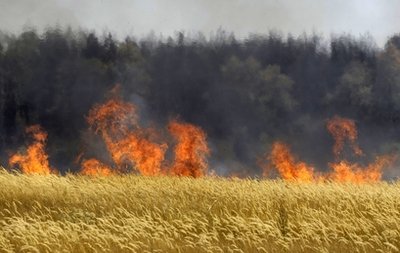 FILE - In this Saturday, July 31, 2010, file photo a field of unidentified cereals burning near the town of Voronezh some 500 km (294 miles) south of Moscow, after weeks of searing heat and practically no rain. [Agencies] |
The higher wheat price, which was up another 8.3 percent on the Chicago Board of Trade on Thursday, may mean that Americans and Europeans pay slightly more for bread. But the bigger burden will fall on people in the Middle East, Africa and parts of Asia, analysts say?-- because commodity prices make up a larger part of their residents' food bills.


Prime Minister Vladimir Putin announced the ban?-- which in addition to wheat and wheat flour, covers barley, rye and corn?-- at a Cabinet meeting Thursday, saying it was necessary even though Russia has sufficient reserves.
"We need to prevent a rise in domestic food prices, we need to preserve the number of cattle and build up reserves for next year," he said during the televised meeting. "As the saying goes: reserves don't make your pocket heavy."
The ban was imposed despite a claim two days earlier by a deputy agriculture minister, Alexander Belyayev, that Russia would continue to export because national reserves were sufficient to meet domestic demand and allow for exports.
Putin said Russia would decide after the harvest whether to extend the ban into 2011.
Regardless of the ban, Russian farmers have little incentive to export?-- grain prices have been rising even faster in Russia than on world markets.
Most of the damage to Russia's wheat crop has been caused by the drought, one of the worst in decades as much of the country suffers through the hottest summer since record-keeping began 130 years ago. But wildfires raging through western Russia have spread into farmland and there are fears that more fields will be lost.
On Monday, before the ban was announced, the Russian Grain Union said it expected wheat exports to decline to 15 million tons this year, down from 21.4 million tons in 2009. The SovEcon consultancy predicted 2010 exports to be only 12 million tons and other analysts expected even less.
State farms have been marginalized since the fall of the Soviet Union and most of Russian grain production comes from big, often multinational companies. After years of stagnation, Russian agriculture has been on the upswing as Russian firms and foreign investment funds have started to buy up land and upgrade production.
High wheat prices will hurt most in the Middle East, Africa and parts of east Asia?-- or anywhere where governments subsidize the cost of food, analysts say.
Also, because the price of products like bread in developed nations includes other costs besides grains?-- such as packaging and marketing?-- consumers in those countries are unlikely to notice a sharp price difference any time soon.