Global Biz
Watchdog: US bailouts created more risk in system
(Agencies)
Updated: 2010-01-31 15:34
 |
Large Medium Small |
|
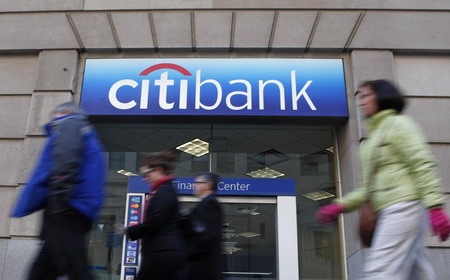 Pedestrians walk past a Citibank branch in Washington on January 19, 2010. [Agencies] |
WASHINGTON: The government's response to the financial meltdown has made it more likely the United States will face a deeper crisis in the future, an independent watchdog at the Treasury Department warned.
The problems that led to the last crisis have not yet been addressed, and in some cases have grown worse, says Neil Barofsky, the special inspector general for the Troubled Asset Relief Program, or TARP. The quarterly report to Congress was released Sunday.
"Even if TARP saved our financial system from driving off a cliff back in 2008, absent meaningful reform, we are still driving on the same winding mountain road, but this time in a faster car," Barofsky wrote.


Barofsky also said his office is investigating 77 cases of possible criminal and civil fraud, including crimes of tax evasion, insider trading, mortgage lending and payment collection, false statements and public corruption.
One case concerns apparent self-dealing by one of the private fund managers Treasury picked to buy bad assets from banks at discounted prices. A portfolio manager at the firm apparently sold a bond out of a private fund, then repurchased it at a higher price for a government-backed fund. A rating agency had just downgraded the bond, so it likely was worth less, not more, when the government fund bought it. The company is not being named pending the outcome of Barofsky's investigation.
Barofsky renewed a call for Treasury to enact clearer walls so that such apparent conflicts are less likely.
Treasury said it welcomed Barofsky's oversight but resisted the call to erect new barriers against conflicts of interest. The new rules "would be detrimental to the program," Treasury spokeswoman Meg Reilly said in a statement. The existing compliance rules "are a rigorous and effective method of protecting taxpayers," she said.
Much of Barofsky's report focused on the government's growing role in the housing market, which he said has increased the risk of another housing bubble.
Over the past year, the federal government has spent hundreds of billions propping up the housing market. About 90 percent of home loans are backed by government controlled entities, mainly Fannie Mae, Freddie Mac and the Federal Housing Administration.
The Federal Reserve is spending $1.25 trillion to hold down mortgage rates, and millions of homeowners have refinanced at lower rates.
"The government has stepped in where the private players have gone away," Barofsky said in an interview. "If we take government resources and replace that market without addressing the serious (underlying) concerns, there really is a risk of" artificially pushing up home prices in the coming years.
The report warned that these supports mean the government "has done more than simply support the mortgage market, in many ways it has become the mortgage market, with the taxpayer shouldering the risk that had once been borne by the private investor."