WORLD> Asia-Pacific

|
WORLD> Asia-Pacific
|
|
Illiteracy undermines Afghan army
(China Daily)
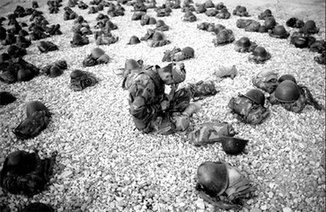
Updated: 2009-09-15 10:59 KABUL: Afghan army recruit Shahidullah Ahmadi can't read - and neither can nine out of 10 soldiers in the Afghan National Army.
"I face difficulties. If someone calls me and tells me to go somewhere, I can't read the street signs," Ahmadi, 27, a member of a logistics battalion, said while walking through downtown Kabul. "In our basic training, we learned a lot. Some of my colleagues who can read and write can take notes, but I've forgotten a lot of things, the types of things that might be able to save my life."
Carl Levin, the leading Senate Democrat on military issues, said Friday that he wants heightened training of Afghan armed forces before sending more American combat troops. Levin urged the Obama administration to expand Afghan forces to 240,000 troops and Afghan police to 160,000 officers by 2013. Current plans call for boosting the army from 92,000 soldiers to 134,000 by late 2011. US officials say the combined army and police forces need to increase to about 400,000 by 2014. "It's absolutely essential that over time Afghanistan assumes responsibility for its own security, and combat troops draw dawn," said Richard Holbrooke, the US special envoy for the region. "The current force levels of police and army are clearly going to have to be increased."
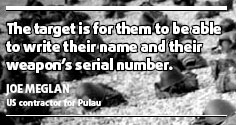
Violence in Afghanistan has already soared to record levels, requiring more troops to secure wide stretches of countryside. US and NATO troops can clear areas of Taliban fighters, but they need Afghan soldiers to make sure the militants don't return. The rapid expansion of the army, however, has already raised questions about whether Afghanistan, one of the world's poorest countries, can sustain a force of that size, as well as maintain discipline and ethnic balance in the ranks. It is likely that the cost of training, equipping and sustaining Afghan forces at a level big enough to maintain security will primarily fall on US taxpayers for years to come. Challenge unlike Iraq In Iraq, the US disbanded Saddam Hussein's army in 2003, but six years later has still not managed to create a force capable of operating without American logistical, technical, intelligence and other support. And in Iraq, the US was able to tap resources unavailable in Afghanistan, including a pool of retired military officers and one of the Arab world's most literate populations. Polls show that the army is the most trusted Afghan institution, a testament to the relative success it has had, especially compared with the police, who are widely derided as corrupt. But about 90 percent of those deciding to join the army are illiterate, according to US military officers involved in the training. That's higher than the 75 percent national illiteracy rate, because military recruits come from rural areas where few know how to read. The lack of basic reading skills slows down progress in an already short 10-week training course. It means soldiers cannot use maps properly or understand the army's code of conduct. It also increases the difficulty of building a solid core of noncommissioned officers - sergeants who are the backbone of every successful army, responsible for conveying a commander's written orders to the troops. Most Taliban guerrillas also can't read and write, but they don't need to as much. While the Afghan army must deploy anywhere government control is challenged, the Taliban strike on their own timetable, move among friendly, generally ethnic Pashtun communities and operate in areas of the country where they grew up, making maps and compasses unnecessary. |