WORLD> Global General

|
WORLD> Global General
|
|
Antarctica is warming, not cooling: study
(Agencies)
Updated: 2009-01-22 09:47 ROTHERA BASE, Antarctica – Antarctica is getting warmer rather than cooling as widely believed, according to a study that fits the icy continent into a trend of global warming.
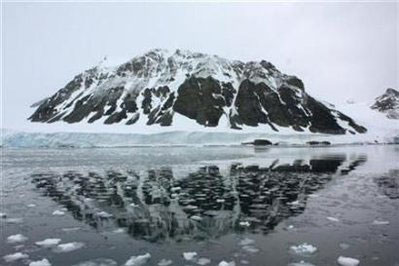
A review by US scientists of satellite and weather records for Antarctica, which contains 90 percent of the world's ice and would raise world sea levels if it thaws, showed that freezing temperatures had risen by about 0.5 Celsius (0.8 Fahrenheit) since the 1950s. "The thing you hear all the time is that Antarctica is cooling and that's not the case," said Eric Steig of the University of Washington in Seattle, lead author of the study in Thursday's edition of the journal Nature. The average temperature rise was "very comparable to the global average," he told a telephone news briefing. Skeptics about man-made global warming have in the past used reports of a cooling of Antarctica as evidence to back their view that warming is a myth. Cooling at places such as the South Pole and an expansion of winter sea ice around Antarctica had masked the overall warming over a continent bigger than the United States where average year-round temperatures are about -50 Celsius (-58.00F). The scientists wrote that the Antarctic warming was "difficult to explain" without linking it to manmade emissions of greenhouse gases, mainly from burning fossil fuels. Until now, scientists have generally reckoned that warming has been restricted to the Antarctic Peninsula beneath South America, where Britain's Rothera research station is sited. Temperatures at Rothera on Wednesday were 2.6 C (36.68F). WEST ANTARCTICA "The area of warming is much larger than the region of the Antarctic Peninsula," they wrote, adding that it extended across the whole of West Antarctica to the south. Rising temperatures in the west were partly offset by an autumn cooling in East Antarctica. "The continent-wide near surface average is positive," the study said. Antarctica's ice contains enough frozen water to raise world sea levels by 57 meters (187 ft), so even a tiny amount of melting could threaten Pacific island states or coastal cities from Beijing to London. West Antarctica "will eventually melt if warming like this continues," said Drew Shindell, of the NASA Goddard Institute for Space Studies, who was one of the authors. A 3 Celsius (5.4 F) rise could trigger a wide melt of West Antarctica, he said. Greenland is also vulnerable. Together, Greenland and West Antarctica hold enough ice to raise sea levels by 14 meters. "Even losing a fraction of both would cause a few meters this century, with disastrous consequences," said Barry Brook, director of climate change research at the University of Adelaide in Australia. Ten ice sheets on the Antarctic Peninsula have receded or collapsed since the 1990s. The Wilkins sheet is poised to break up, held in place by a sliver of ice 500 meters (1,640 ft) wide compared to 100 km in the 1950s. Other scientists said that the study did not fully account for shifts such as a thinning of ice sheets in West Antarctica. "This warming is not enough to explain these changes," said David Vaughan, a glaciologist for the British Antarctic Survey at Rothera, by an iceberg-strewn bay. He said the thinning was probably linked to shifts in the oceans. The Nature study compared temperatures measured by satellites in the past 25 years with 50-year records from 42 Antarctic weather stations, mostly on the coast. Scientists then deduced temperatures back 50 years. |