WORLD> Global General

|
WORLD> Global General
|
|
Climate change pushing lemmings over the edge: study
(Agencies)
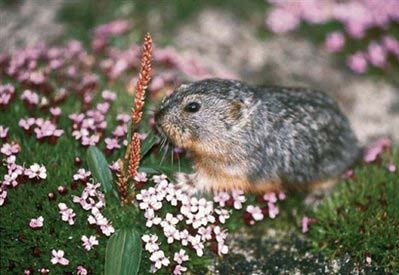
Updated: 2008-11-07 11:18 PARIS – Once famous for their numbers, Norwegian lemmings are disappearing, say scientists, who point an accusing finger at global warming. The hamster-like rodents burst forth in massive numbers from their sub-Arctic homes every three to five years in a frantic search for food.
The mad dash sometimes causes them to race over clifftops and plummet into the sea, thus giving rise to the theory -- now discounted -- of mass suicide. Since 1994, these periodic population explosions have stopped, prompting researchers to ask why. In a study published on Thursday, investigators say the blame lies not with too many predators or a fall in food supply, but changes in weather patterns. They pored over lemming population data over a 27-year period from one site in Norway and found a clear link to warmer weather and sudden temperature changes that once were very rare but are now quite common. Lemmings do not burrow but instead live beneath a roof of fluffy snow, in a narrow gap created when warmth from the earth melts a thin layer of snow on the ground. This space provides warmth and lets the animals nibble on moss beyond the reach of predators. But, say the authors, global warming has shortened the period in which the lemmings can hole up in their wintry haven. Worse, sudden rises and abrupt falls in temperature produce the "wrong" kind of snow. Fast-track melting and refreezing creates a kind of snow that covers the moss with a layer of impenetrable ice. Just as bad, this snow no longer insulates the habitat against the cold. The Norwegian lemming (Lemmus lemmus) is one of some 20 lemming species found in sub-Arctic regions, stretching from Canada to Scandinavia and Siberia. The lemming decline has knock-on consequences across the ecosystem, pushing desperate predators -- mainly foxes and snowy owls -- to hunt and decimate other species, adds the paper. The study, led by Nils Stenseth of the University of Oslo, appears in Nature, the British-based weekly science journal. In a commentary, Tim Coulson and Aurelio Malo of Imperial College London say lemmings have declined dramatically in less than four decades. "In northern Norway in 1970, lemmings were so common that snowploughs were used to clear the vast numbers of squashed animals from roads," they said. "This research provides a striking example of how climate change can modify the working of the natural world -- raising the question of what the consequences such change might have for us." |