Intelligence official: Expect less privacy
Updated: 2007-11-12 07:08
WASHINGTON -- As Congress debates new rules for government eavesdropping, a top intelligence official says it is time that people in the United States changed their definition of privacy.
|
|
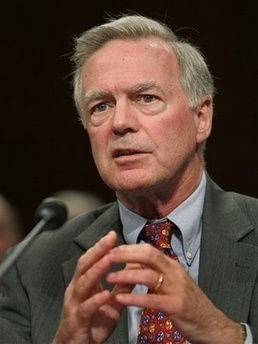
Privacy no longer can mean anonymity, says Donald Kerr, the principal deputy director of national intelligence. Instead, it should mean that government and businesses properly safeguard people's private communications and financial information.
Kerr's comments come as Congress is taking a second look at the Foreign Intelligence Surveillance Act.
Lawmakers hastily changed the 1978 law last summer to allow the government to eavesdrop inside the United States without court permission, so long as one end of the conversation was reasonably believed to be located outside the US.
The original law required a court order for any surveillance conducted on US soil, to protect Americans' privacy. The White House argued that the law was obstructing intelligence gathering because, as technology has changed, a growing amount of foreign communications passes through US-based channels.
The most contentious issue in the new legislation is whether to shield telecommunications companies from civil lawsuits for allegedly giving the government access to people's private e-mails and phone calls without a FISA court order between 2001 and 2007.
Some lawmakers, including members of the Senate Judiciary Committee, appear reluctant to grant immunity. Suits might be the only way to determine how far the government has burrowed into people's privacy without court permission.
The committee is expected to decide this week whether its version of the bill will protect telecommunications companies. About 40 wiretapping suits are pending.
The central witness in a California lawsuit against AT&T says the government is vacuuming up billions of e-mails and phone calls as they pass through an AT&T switching station in San Francisco.
Mark Klein, a retired AT&T technician, helped connect a device in 2003 that he says diverted and copied onto a government supercomputer every call, e-mail, and Internet site access on AT&T lines.
The Electronic Frontier Foundation, which filed the class-action suit, claims there are as many as 20 such sites in the US.
The White House has promised to veto any bill that does not grant immunity from suits such as this one.
Congressional leaders hope to finish the bill by Thanksgiving. It would replace the FISA update enacted in August that privacy groups and civil libertarians say allows the government to read Americans' e-mails and listen to their phone calls without court oversight.
Kerr said at an October intelligence conference in San Antonio that he finds concerns that the government may be listening in odd when people are "perfectly willing for a green-card holder at an (Internet service provider) who may or may have not have been an illegal entrant to the United States to handle their data."
He noted that government employees face up to five years in prison and $100,000 in fines if convicted of misusing private information.
Millions of people in this country -- particularly young people -- already have surrendered anonymity to social networking sites such as MySpace and Facebook, and to Internet commerce. These sites reveal to the public, government and corporations what was once closely guarded information, like personal statistics and credit card numbers.
"Those two generations younger than we are have a very different idea of what is essential privacy, what they would wish to protect about their lives and affairs. And so, it's not for us to inflict one size fits all," said Kerr, 68. "Protecting anonymity isn't a fight that can be won. Anyone that's typed in their name on Google understands that."
"Our job now is to engage in a productive debate, which focuses on privacy as a component of appropriate levels of security and public safety," Kerr said. "I think all of us have to really take stock of what we already are willing to give up, in terms of anonymity, but (also) what safeguards we want in place to be sure that giving that doesn't empty our bank account or do something equally bad elsewhere."
Kurt Opsahl, a senior staff lawyer with the Electronic Frontier Foundation, an advocacy group that defends online free speech, privacy and intellectual property rights, said Kerr's argument ignores both privacy laws and American history.
"Anonymity has been important since the Federalist Papers were written under pseudonyms," Opsahl said. "The government has tremendous power: the police power, the ability to arrest, to detain, to take away rights. Tying together that someone has spoken out on an issue with their identity is a far more dangerous thing if it is the government that is trying to tie it together."
Opsahl also said Kerr ignores the distinction between sacrificing protection from an intrusive government and voluntarily disclosing information in exchange for a service.
"There is something fundamentally different from the government having information about you than private parties," he said. "We shouldn't have to give people the choice between taking advantage of modern communication tools and sacrificing their privacy."
"It's just another 'trust us, we're the government,'" he said.
|
|
|
||
|
||
|
|
|
|