Warming pushes wineries into clash with nature
Updated: 2013-04-21 07:49
By Felicity Barringer(The New York Times)
|
|||||||


|
Climate change has allowed vineyards, including those of the Cedar Creek Winery, to flourish in once-chilly regions like British Columbia. Stuart Isett for The New York Times |
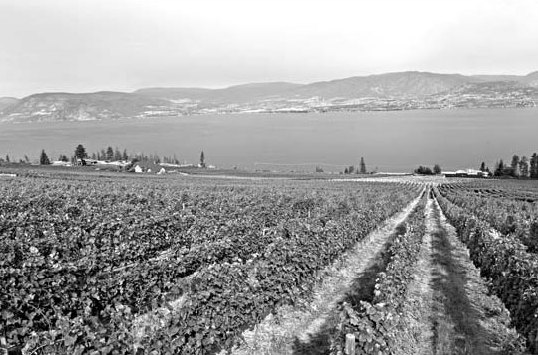
For more than a decade, wine experts have discussed the impact of climate change on grapes. Now scientists are raising a new question: When grapes are transported to new areas, assuming climate change has made their former habitat unsuitable, what will the crop's arrival do to the animals and plants already in residence?
Will there be a conflict between prosecco and pandas in China? Will the contentious wolf hunts near Yellowstone National Park be complicated by new vineyards that crowd out everything else - wolves, elk and hunters?
"One of the adaptation strategies for grape growers will be to move into areas that have a suitable climate," said Rebecca Shaw, a scientist at the Environmental Defense Fund and an author of a paper in the Proceedings of the National Academy of Sciences, said such moves have "the potential to threaten the survival of wildlife."
Or, in the words of the new study, "Vineyards have long-lasting effects on habitat quality and may significantly impact freshwater resources."
In addition to introducing sterilizing chemicals and fertilizer, mature vineyards "have low habitat value" for native species "and are visited more often by nonnative species."
Dr. Shaw believes that the movement of agriculture of all types into land that was once cold and inhospitable should be guided to some extent by its impact on existing ecosystems.
The wine industry has undergone more than 15 years of climate-driven change, marked by newly rich vintages in once-chilly regions and the establishment of vineyards like Burrowing Owl Estate Winery in British Columbia in the Canadian west, or and Yaxley Estate in Tasmania, the island in southeastern Australia.

The paper's authors predict that under most climate models, as much as 47 percent of land suitable for wine grapes will be lost in areas of Chile with a Mediterranean-like climate. In western North America - mostly in California - 59 percent of wine country will be severely stressed, and 74 percent of such land in Australia will no longer be compatible with viticulture.
The equivalent figure for Mediterranean areas of Europe is 85 percent of currently suitable lands becoming unfriendly to vineyards by 2050.
But it is the spread of wine country into wilder places that has conservationists most worried for the native animals and plants that may be displaced.
Lee Hannah, a scientist at the Arlington, Virginia-based Conservation International, predicts that "Western North America has the greatest area of increasing ecological footprint" suitable for wine grapes, especially in the Rocky Mountains near the border between Canada and the United States. Much of that area has been coveted by conservationists who want to create a Yukon-to-Yellowstone corridor for unimpeded migration of wildlife, like pronghorn.
Robert Pincus, an environmental scientist at the University of Colorado, noted that a decade ago, Austrian winemakers were talking about moving their crop to higher altitudes where land had been undisturbed. "The tension is, do you want your Gruner Veltliner, or do you want some wild lands left in Europe?" he said.
He added: "Chile and California are going to have it harder - this is hard to argue with, this is robust."
The New York Times
(China Daily 04/21/2013 page10)