|
|
Chinese President Xi Jinping (Center R) meets with the delegates attending the signing ceremony for the Articles of Agreement of the Asian Infrastructure Investment Bank (AIIB) at the Great Hall of the People in Beijing June 29, 2015. [Photo/Agencies] |
The founding members of the Asian Infrastructure Investment Bank (AIIB) recently signed the Articles of Agreement in Beijing. The signing of the articles, and the bank’s subsequent start of operation by the end of this year, is highly significant for economic development in the Asia-Pacific, as well as for China’s role in the international economic system.
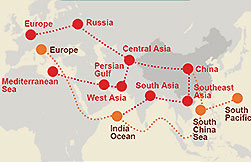
The bank aims to be a nimble institution that would help remedy Asia’s massive infrastructure deficit. It also demonstrates China’s willingness to use its capital and will power to tackle this problem within a rules-based framework. This is in keeping with a pattern in China’s foreign policy, by which China is seeking a more active role in shaping global economic governance through large-scale proposals such as the One Belt, One Road initiative.
Why is such a bank needed? The Asian Development Bank has estimated that the Asia Pacific would need to invest a total of $8 trillion in physical infrastructure between 2010 and 2020 in order to maintain economic growth. These abstract-sounding figures have a real impact on daily economic life in many Asian countries. The traffic-clogged roads of many Asian capitals lead to massive difficulties for people getting to work. Over-burdened port facilities can weigh down the development of a vibrant export economy. The dearth of highways or railroads hampers intra-country connectivity, resulting in regional developmental inequalities.
These pressing needs explain why so many countries have signed up to the AIIB, which has $100 billion in founding capital to help tackle these problems. These range from prosperous Western states like Germany and the UK to small developing countries like Cambodia and Laos. The bank would not be able to single-handedly solve all the infrastructure problems of the region, but the funds that it provides will make a significant dent in the US$8 trillion sum.
The AIIB can benefit from being a “latecomer” to the family of international development institutions, learning from their experiences and adopting innovative ideas. Given that the bank is still in its formative stages, China and its other members have ample room to shape its development, and can focus on improving the efficiency of its bureaucracy. One early sign of this is the proposal that the AIIB’s board will be non-resident, giving its permanent staff more autonomy in its work.
Furthermore, the AIIB’s voting structure will be based on members’ economic weight. China is the driving force behind the AIIB’s founding and, by virtue of its large stake, will initially wield much influence in its governance. However, the bank will not necessarily be China-dominated, as China’s stake in it would be reduced if other large economies join. China must therefore cooperate with its other stakeholders within the framework of the institution’s rules in ensuring that the bank conforms to the highest standards.
As the AIIB develops, it will need to grapple with the complex infrastructure needs of the Asia-Pacific region, and much hard work lies ahead. By focusing on reducing red tape, the AIIB can act as a nimble, efficient vehicle for growth and development in Asia. Also,a successful AIIB would let China show that it can both shape and operate within rules-based international organizations, China’s finesse at navigating the international economic system.
The author is a research analyst at RSIS China Program, Nanyang Technology University. The opinions expressed are the author's own.
Related Stories
Copyright 1995 - . All rights reserved. The content (including but not limited to text, photo, multimedia information, etc) published in this site belongs to China Daily Information Co (CDIC). Without written authorization from CDIC, such content shall not be republished or used in any form. Note: Browsers with 1024*768 or higher resolution are suggested for this site.
License for publishing multimedia online 0108263 Registration Number: 130349