Partnerships galore for new energy vehicles
( China Daily )
Foreign brands form JVs with domestic auto companies to exploit opportunities
Volkswagen AG, which inked a deal with SAIC Motor in 1984 to build one of China's very first joint ventures for cars, repeated history in 2017.
The German automobile company, which now sells around 4 million cars a year in China, joined hands in June 2017 with Anhui Jianghuai Automobile Co to develop and produce electric cars, with the first model expected to roll off the assembly line this year.
The joint venture heralds a bigger wave of similar partnerships as new energy vehicles are now widely seen as the future.
|
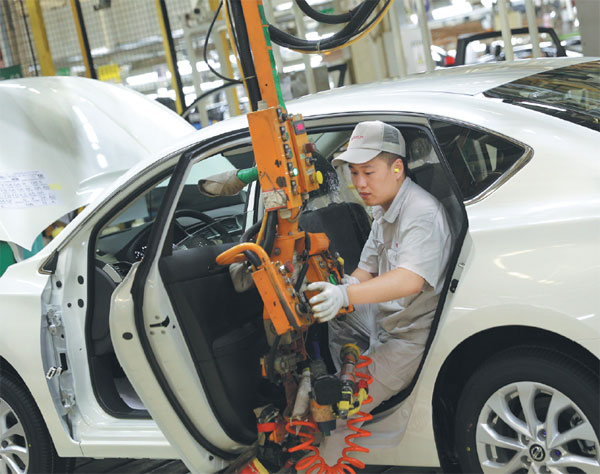
An employee works on the production line of Dongfeng Nissan Passenger Vehicle Co in Guangzhou, capital of Guangdong province. He Jiajie / For China Daily |
The move has made Volkswagen the first international brand to have three carmaking partnerships in China, but it has an even greater meaning for China's fast-changing automotive landscape.
"The JV broke the decades-old convention that one international carmaker is allowed to have no more than two partnerships in one segment," wrote Liu Baohua, editor-in-chief of Auto Business Review magazine, in a review of auto industry trends in 2017.
Volkswagen and Jianghuai inked the deal on June 1 and the National Development and Reform Commission, the country's top economic planner, and the Ministry of Commerce confirmed the joint venture's legality on June 28, saying that electric carmakers are exceptions to the rule.
The revision came two months after China set a goal to build a globally competitive automotive industry within 10 years, with new energy vehicles and smart cars taking the lead worldwide.
In the guideline released in April, annual sales of electric, plug-in hybrids and fuel cell cars in the nation are expected to reach 2 million by 2020. They may account for 20 percent of new car sales by 2025.
The authorities started contemplating in 2016 a policy that demands carmakers produce a certain number of new energy cars, or they would be fined. The policy was introduced in September 2017.
Analysts argued that the immediate goal of Volkswagen's new partnership is to meet the government's demand, as it is stipulated in the deal that Volkswagen will enjoy priority if it needs to buy credits from the joint venture.
So are the goals of other international brands that have followed suit. Among them are Ford Motor Co, which signed a memorandum of understanding with Zotye Automobile Co in August 2017 to build a 50:50 partnership that will develop, produce and sell a range of affordable electric cars in China under a new brand.
The joint venture did its part in changing China's automotive history: it's the first time that an international brand partnered with a private carmaker.
In the same month, the Renault-Nissan Alliance announced a deal with its old partner Dongfeng Motor Group to develop and sell electric vehicles in China.
The new joint venture will produce electric cars at a Dongfeng facility in Hubei province, with the first model, a compact SUV, starting production in 2019.
Four months later, Renault built another joint venture, this time with Brilliance China Automotive Holdings, to produce commercial vehicles, and part of their goal is to "achieve ... an acceleration of electrifying powertrains as part of the partnership", according to Reuters.
"The logic is clear," Yale Zhang, managing director of Shanghai-based consulting firm Automotive Foresight, told China Daily in an earlier interview.
"As those international carmakers cannot come up with affordable cars immediately, they create joint ventures in China to produce lower-quality and lower-priced ones to earn the required credits."
The carmakers have more ambitious plans besides the short-term goals, especially when the new energy car sector is speeding up in the country.
Volkswagen has long made public its ambitious target: to sell 400,000 new energy vehicles a year in 2020, a fifth of the goal China has set, and 1.5 million units by 2025.
It will invest more than 10 billion euros ($10.22 billion) in China to promote e-mobility from now to 2025, by which time it will have about 40 locally produced new energy car models in China.
Volkswagen CEO Matthias Mueller said, "Just as we have played a key role in shaping mobility together with our partners in China over the past 30 years or more, we want to play our part in shaping the mobility of the future: electric, fully networked and in line with the needs of our customers."
Even before partnering with Zotye, Ford announced that at least 70 percent of Ford-branded vehicles sold in China will offer electrified powertrain options by 2025.
Daimler AG expects the Chinese market will have a substantial share in the global sales of Mercedes-Benz electric vehicles in the next few years.
"Therefore, local production will be key to the success of our electric car portfolio, and crucial to flexibly serving local demand for electric vehicles," said Hubertus Troska, a board member at Daimler AG.
He made the remarks when Daimler signed a framework agreement in July with BAIC Motor Corp to produce Mercedes-Benz-branded electric cars via their joint venture Beijing Benz Automotive.
"With our planned localization of electric cars and batteries with Chinese cells, we are dedicated to strengthening the region as an innovative hub for the automotive industry," Troska said.
And it is something that the Chinese authorities would like to see. In a document released in June 2017, the NDRC said that "carmakers are encouraged to make the most of international technologies, capital and human resources to raise the level of China's new energy vehicle sector".
China has been the world's largest market for such cars since 2015, with at least 1.72 million units on its roads by the end of 2017, according to the China Electric Car Charging Technology and Industry Alliance.
Statistics from the China Association of Automobile Manufacturers show 777,000 new energy cars were sold in 2017, a 53.3 percent surge year-on-year. The association expected sales would exceed at least 1 million this year.
lifusheng@chinadaily.com.cn
(China Daily 01/30/2018 page15)
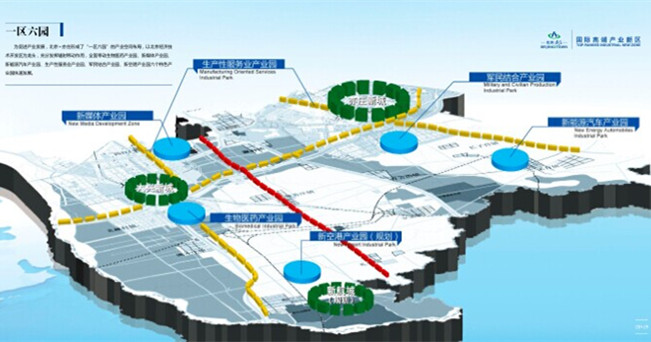 The Area with Six Parks
 Global Top 500