Host diplomacy for a new world order
Since the 18th National Congress of the Communist Party of China in November 2012, China has adopted an active approach to diplomacy both globally and domestically. While President Xi Jinping has left his mark and voice in almost every corner of the world thanks to his many foreign visits in the past five years, China has hosted close to 10 signature events of global or regional importance, with consistent focus on China-related and multilateral issues, since 2014.
The concept of "host diplomacy" was put forward by Foreign Minister Wang Yi in early 2014 while talking about China hosting the Conference on Interaction and Confidence Building in Asia (CICA) summit and the Asia-Pacific Economic Cooperation meeting in the same year. Host diplomacy can be defined as diplomatic events hosted or initiated by a country that has the ability to set and execute agendas, which other participants find attractive and are willing to support.
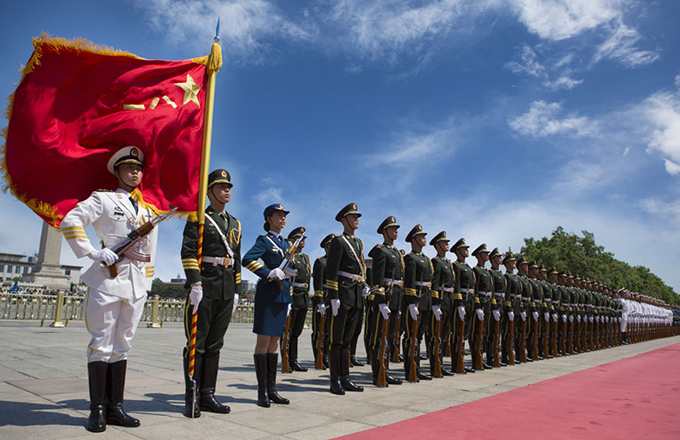
China's host diplomacy began with the hosting of the fourth CICA summit in Shanghai on May 20-21, 2014, which focused on security. On Nov 10-12 the same year, Beijing hosted the APEC Economic Leaders' Meeting with a focus on Asian economy. China's host diplomacy intensified in 2015 when it hosted four international events-China-Latin America and the Caribbean Summit, which focused on deepening Sino-Latin American cooperation; Boao Forum for Asia, where Xi articulated the concept of "a community of shared destiny"; the military parade to mark the 70th anniversary of the victory in the Chinese People's War of Resistance Against Japanese Aggression (1931-45); and the Fourth China-Central-Eastern Europe Leadership Summit (16+1) with a focus on the Belt and Road Initiative.
By the time the G20 Leaders Meeting was held in Hangzhou, East China's Zhejiang province, in September last year, China's host diplomacy had matured. Many consider the Hangzhou meeting to be the most significant event the People's Republic of China has hosted. And China's active approach to host diplomacy enabled it to successfully hold the Belt and Road Forum for International Cooperation in May this year.
These events provided China with platforms to propound its approach to world affairs. The platforms also helped Beijing develop and strengthen an international mechanism for deepening cooperation between China and other countries, especially its strategic partners. Beijing's approach to host diplomacy is infused with Xi's concepts of the Chinese Dream and a "community of shared destiny" which China is determined to realize. For example, to realize the Asia-Pacific "community of shared destiny" Xi presented a new framework for Asian security at the 2014 CICA summit, which comprises "common security, comprehensive security, cooperation security and sustainable security".
Xi's ideas on global governance, such as common security, peace, cooperation, and a community of shared destiny, and his concept about the new engines of globalization such as peace and collaboration, openness and inclusion, mutual trust and mutual benefit, and interconnected innovation for sustainable development, are all aimed at erasing "the deficit of peace, the deficit of development, and the deficit of governance" in the world. By making efforts to remove such deficits, China has taken the first step toward building a world of peace, prosperity and openness, promoting interconnected innovation, and charting new courses to global civilization, which Xi said will signal a new era for humanity.
Beijing's host diplomacy is global diplomacy at its best. It will help China to not only achieve its two centennial goals of building a moderately well-off society and accelerating socialist modernization, but also to realize the rejuvenation of Chinese nation and a world community of shared destiny. Perhaps, after the 19th CPC National Congress, China's host diplomacy will play an even greater role in building a more prosperous China and a more prosperous world.
The author is an adjunct professor at the School of Journalism and Communication and a fellow at the National Academy for Development and Strategy, Renmin University of China.