Opportunities for Germany-China-Africa cooperation under the G20
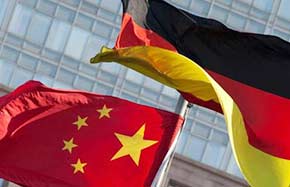
Germany has made cooperation with Africa a core element of its G20 Presidency. The German government advocates for a G20 Africa Partnership and has put in place the G20 Compact with Africa which aims to promote private investment, sustainable infrastructure and job creation in African countries. Germany’s Minister of Finance describes the Compact with Africa as a “l(fā)ong-term, demand driven process” in which “African countries will determine what they want to do to improve conditions for private investment, with whom they want to cooperate, and in what form”. Last year, during its G20 Presidency, China also made Africa a prominent part of the agenda with an unprecedented number of African leaders participating in the G20 Summit in Hangzhou and commitments on supporting industrialization and the proliferation of renewable energy in African countries.
Trilateral cooperation would provide an ideal opportunity for Germany and China, as the current and previous G20 Presidencies, to jointly demonstrate their commitments under the G20 to increase support for African countries. This form of cooperation complements and brings together the traditional North-South and South-South cooperation models. In line with the Compact with Africa, such cooperation needs to be guided by the African Union’s Agenda 2063 and African countries’ national development plans in order to be successful.
Both Germany and China have a long history in development cooperation with African countries, dating back all the way to the 1950s in China’s case. Both countries have their own expertise in trilateral cooperation with partners from developed and developing countries, but have yet to undertake a joint trilateral project with an African partner. The launch of the Sino-German Center for Sustainable Development in Beijing in May is a promising step in this direction as the center plans to support sustainable infrastructure development in African countries. This can, indeed, be an area in which African countries can benefit from joint cooperation between Germany and China. China has a comparative advantage in the provision of cost-effective infrastructure development, while the sustainability of such projects can be ensured by making use of Germany’s expertise in project management, social and environmental impact assessments and quality assurance.
Germany and China should also foster trilateral cooperation with African countries on industrialization and renewable energy. The joint establishment of special economic zones (SEZs) in African countries would be a good starting point. SEZs were a key component of China’s economic development and are also starting to play an important role for industrialization in African countries such as Ethiopia. A trilateral SEZ project should utilize China’s profound experience in financing, developing and managing SEZs, while Germany should contribute its expertise in preparing and delivering tailored technical vocational education and training programmes for different sectors. Germany's understanding of social and environmental standards and international marketing insights would also help ensure that SEZs are attractive for investors and suitable for global supply chains.
There is also a huge potential for effective trilateral cooperation between Germany, China and African countries on the proliferation of renewable energy in Africa. The African Union’s recently launched Africa Renewable Energy Initiative (AREI) provides a possible entry point as both China and Germany have individually pledged their support for the initiative. Both countries are global leaders in renewable energy policy and technology and have considerable experience working with African countries bilaterally in these areas. A trilateral project should focus on AREI’s so far overlooked, but crucial component of the establishment of the Africa Renewable Energy Institute, to serve as the initiative’s backbone for research and training. Germany and China could build on the experiences from the establishment and operation of similar institutes in China, such as the China-EU Institute for Clean and Renewable Energy, and engage these institutes and their networks to build new partnerships.
Alexander Demissie and Moritz Weigel, Co-founders of Germany-based China Africa Advisory; International consultants for the UN, UNDP & UNFCCC.