How the Belt & Road could become a "Health Corridor"
As a doctor and medical student at Shandong University, I would like to propose some key features and recommendations for this "Health Corridor":
According to the National Bureau of Statistics of China, there are more than 52,000 medical students studying in China making up 13.8 percent of the total number of university students and Pakistani students rank No 4 with overall 19000 students studying in different fields. In order to enhance medical education, exchange programs and medical university campuses could be established along the CPEC. More cooperation between universities and online medical education can be promoted.
With the China Pakistan Economic Corridor (CPEC) in place, experts from Pakistan and China can bring revolutionary changes to the health sector. China has vast healthcare facilities with 8 million health workers, including 3 million practicing doctors, 800,000 surgeons, 6 millions nurses and 27,215 hospitals. Doctor and medical staff exchange programs can be established to train doctors and medical staff in Pakistan. In Pakistan, there are more than 175,000 registered doctors and a majority of these doctors need medical training and lack the advanced medical equipments. The Pakistan Medical & Dental Council, University of Health Sciences and College of Physicians and Surgeons of Pakistan can cooperate with institutes to start medical and surgical training programs.
China has 46 surgical robots, plus advanced laparoscopic surgery machines. Pakistani doctors and surgeons could learn advanced medical training and surgical skills training specially in the field of robotic and laparoscopic surgery. More hospitals could be established along the CPEC so that Pakistani medical graduates from China could do internships and work in these hospitals. Pakistan can learn a lot from the healthcare system of China.
State of the art medical training centers and hospitals can be established along the CPEC to enhance opportunities for doctors in Pakistan, especially for Pakistani medical graduates from Chinese medical universities. Of the estimated 10,000 Pakistani medical graduates from China, the majority of them have received the degrees of Bachelor of Medicine & Bachelor of surgery (MBBS) and also a good number among them have learned Chinese Traditional medicine. Student and faculty exchange programs and a collaborative approach can be helpful to address the health issues and will be useful for capacity building in the institutions of both countries.
As a pioneer in innovation, China's expenditure on research and development activities (R&D) reached 1.4 trillion yuan in 2015, up 9.2 percent from the year before 2014, accounting for 2 percent of GDP. State-of-the-art research laboratories and innovative medical equipment would be very helpful for R& D in Pakistan where we have the world's seventh largest pool of scientists.
Advanced remote training with tele-medicine and tele-surgery programs could be established in the medical technology cooperation. The use of information technology in the health sector will reduce the load on tertiary care hospitals. Once the program is launched successfully, rural health care units can be linked to major hospitals, so that people in rural areas could get quality treatment without traveling to major cities.
Pakistan and China could develop cooperation in the pharmaceutical industry and pharmaceutical technology. Raw materials could be extracted in cooperation with Chinese companies which is sometimes costly. The chemical industry in Pakistan is not well developed and most of the chemicals are imported. The CPEC and B&R Inititiave could help develop this sector.
Traditional Chinese medicine is a vast area to be explored. Pakistan is an agricultural country with plenty of unique herbs. Amalgamating Pakistani and Chinese herbal medicines and techniques could revolutionize the area of herbal curative system and remedy treatments, as well as capturing a handsome share of the huge international market for herbal medicines.
The herbal and plant medicine industry is a billion-dollar industry and the world is gradually moving towards organic and herbal medicines. Therefore, the industry provides Pakistan with an opportunity to market its miraculous herbal medicines around the world. China is a pioneer in the world of herbal treatments based on 2,500 years of research, while Pakistan in its Himalayan range is enriched with naturally growing herbs. They are of high value in pharmaceutical industries and their proper utilization could lead to socio-economic development of individuals and the country. Almost 30,000 herbal drugs, cosmetic and health care production companies are operating in Pakistan. There is a need to set up a specialized herbal research institution to develop the industry and educate the health regulators in the country.
Pakistan and China could create a link between the herbal research centers, teaching institutes, universities, researchers, academics and experts that will ultimately aid the exchange of information required for the capacity building of Pakistan in the herbal sector. The exchange of knowledge and information would be followed by the setting up of a joint department of herbal and traditional medicine through which the public will be able to access advanced herbal treatment.
In the years to come, the Belt and Road Initiative will prove to be a game changer in the region and will enhance the connectivity and transformation. This will bring the people of China and Pakistan closer and strengthen the ties between the two brother countries. Impressed by the vision of my mentor Professor Niu Jun, I am glad to be part of the CPEC and I am looking forward to helping make the CPEC "Health Corridor" a reality.
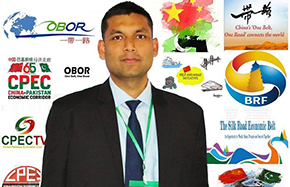
Dr Muhammad Shahbaz is a PhD Student at Shandong University School of Medicine, CSC (China Scholarship Council) recipient.
- First private bank in China's rust belt starts operation
- Xi, world leaders reach Belt and Road pacts
- European Investment Bank pledges support for Belt and Road plan
- Belt and Road a new platform for China, Japan: Xi
- Belt and Road documentary films promoted in Guangdong
- Belt and Road Initiative boosts Africa's infrastructural connectivity
- Malaysia's CIMB to aid Belt and Road financing