Australia, China can change the 'age' of Trump
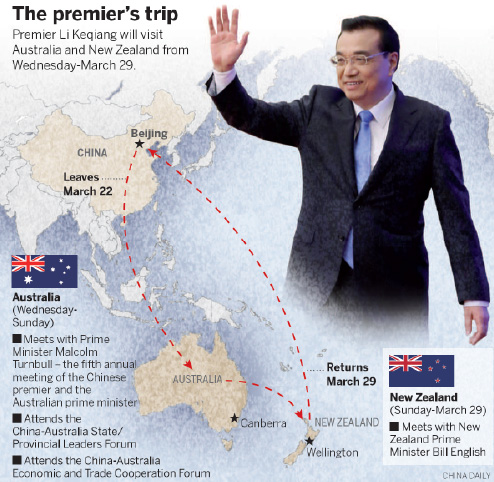
The visit of Premier Li Keqiang to Australia starting on Wednesday is a time to reflect on the importance of the Sino-Australian economic relationship to the region and the world and how that may play out in the "age" of US President Donald Trump.
China is now Australia's top trading partner, taking over from Japan which had held that position for more than 40 years. China and Australia have a free trade agreement, support each other in institutions like the World Trade Organization, Asia-Pacific Economic Cooperation and the Asian Infrastructure Investment Bank, and are generally strong partners on the world stage.
Over the weekend, the G20's financial ministers failed to make a commitment against rising protectionism because of the United States' reluctance, arousing concerns about the Trump administration's stance on free trade.
Trump has said he is not against trade but just against "bad deals", and abandoned the Trans-Pacific Partnership agreement. He has also spoken against China, calling it a "currency manipulator", threatened to hike tariffs against Chinese imports and warned that the US could withdraw from some multilateral institutions.
However, the tariff-hike threat could also be counterproductive and I expect-before anything like that happens-we'll see a trade policy by tweet, using the bully pulpit to cajole US companies to stay at home, and surf the pick-up in employment steered through by US Federal Reserve chair Janet Yellen.
It is important to remember the golden rule of US trade policy-which is made by the Congress not by the White House. So the Trump administration will see the limitations to executive orders in trade, as it already has in the case of immigration.
So what can Australia and China do against this great disruption? In some ways, China will be a beneficiary; it can promote regional trade arrangements such as the Regional Comprehensive Economic Partnership and play more of a regional leadership role. On Australia's part, unlike the Trump administration, it can be seen as a reliable trading partner in the Asia-Pacific region.
Similarly, Australia's credentials as a tourist and higher education destination will improve if it can attract more and more international students, who can get quality education and work experience and possibly a job. Such higher credentials will put Australian institutions at a premium in the age of Trump. And both Australia and China have a lot to gain.
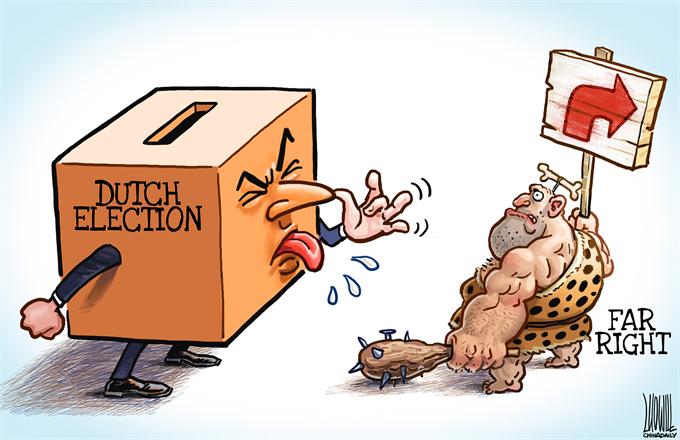
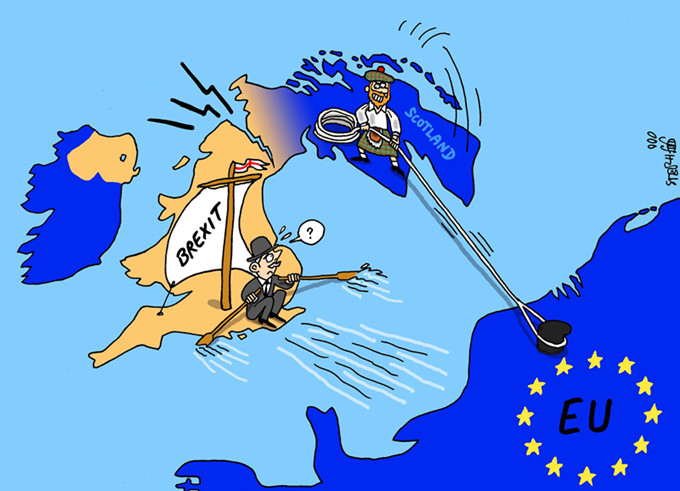
But the election of Trump as US president has exposed some fault lines-which snagged Democrat presidential candidate Hillary Clinton, as it did the "remainers" in Britain's referendum vote on leaving the European Union and other pro-globalization supporters. There is inequality in the world, and many voters are blaming trade for that. So the case for open trade and social protection has to be made anew.
In Australia, research at the University of New South Wales shows that exporters pay higher wages, provide better health and safety benefits and equal employment opportunity, and open trade does not necessarily widen inequality. On the world scale, overall open trade has been associated with growing global prosperity and the reduction of absolute poverty-from 40 percent in 1981 to less than 10 percent today.
Open trade has been one of the world's greatest anti-poverty programs-especially in the Asia-Pacific-with China being a classic case in point. In the age of Trump, both China and Australia can cooperate and play a bigger role in promoting the case for globalization.
The author is the JW Nevile Fellow in economics at the University of New South Wales, Sydney, Australia.