Sustainability focus of 2022 Winter Olympics
 |
| CAI MENG/CHINA DAILY |
When the International Olympic Committee awarded Beijing the rights to host the 2022 Winter Olympic Games, jointly with Zhangjiakou in North China's Hebei province, the initial reaction of the international community was lukewarm.
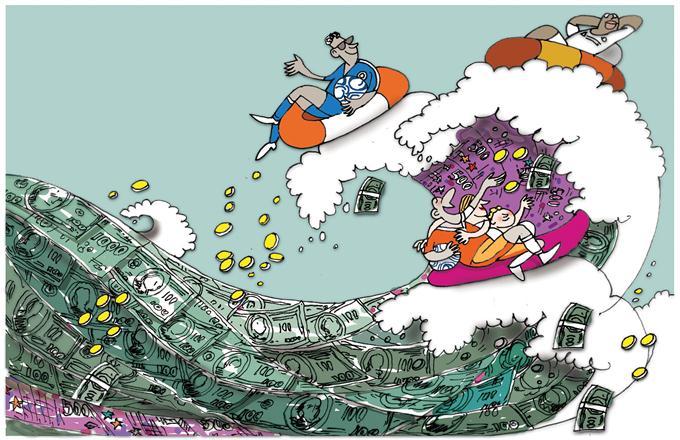
Over the past two decades, the cost overruns of hosting the Olympic Games have skyrocketed.
While Barcelona 1992 ($9.7 billion) and Athens 2004 ($3 billion) contributed to the debts of Spain and Greece, London 2012 ($15 billion) intensified the United Kingdom's economic distress before the Brexit referendum and Sochi 2014 ($22 billion) added to Russia's economic challenges amid the sanctions imposed by the United States and the European Union. And for the Rio de Janeiro 2016 Olympics, the costs soared to $10 billion amid Brazil's economic, political and security challenges.
Thinking big is no longer the Olympic goal. Rather, the point is to think smart. No wonder the 2018 Winter Games will be hosted by Pyeongchang, a small mountain town in the Republic of Korea and the smallest venue for the Winter Games since Lillehammer in Norway in 1994.
If Olympic cost overruns are a rule, how can the Beijing 2022 Winter Olympics be a success?
Cost control is the first precondition. Unlike most hosts, China has a good track record. For the Summer Games, only few hosts-most impressively Beijing in 2008-h(huán)ave managed to keep the cost overrun to a reasonable level. But for the 2022 Winter Games, the aim is much higher: the official budget is barely $3.1 billion.
The second precondition is damage control. In 2014, the IOC introduced the Olympic Agenda 2020, which promotes sustainability and cost control, in order to transform the Olympics into a "plug-and-play" event with minimal economic and environmental damage. For instance, Beijing 2022 is likely to use six venues that hosted the 2008 Summer Games to minimize the cost of construction.
Third, sustainability must be pervasive. The six new competition venues will be built using renewable technologies with energy-saving and environmentally-friendly materials, while electricity for lighting, venue operations and transportation will come from solar and wind power.
Fourth, to promote sports economy, China needs world-class athletes as well as ordinary people. China is rolling out a national campaign to encourage 300 million people to participate in winter sports by 2022. Moreover, the venues will be distributed in three zones to maximize opportunities for post-Games use, fostering the development of winter sports in and around Beijing.
Finally, local tourism needs sustained investment. While current investment focuses on the 2022 Winter Olympics, life will continue after the games. So to avoid waste, local governments and property developers should also focus on local tourism, infrastructure and environmental protection.
While the first modern Olympics was held in 1896, it took 72 years for an emerging economy to host an Olympics (Mexico in 1968). But the torch is shifting from advanced to emerging economies (for the Winter Games, at least), as after Russia in 2014 and the ROK in 2018, China will host the Winter Olympics in 2022. This also reflects the shift of economic power from West to emerging Asia.
Gala-fatigue is difficult to avoid in an increasingly international megacity like Beijing. Yet much of the cost controversy could be avoided if the Winter Games can be organized with cost consciousness, damage control, promotion of sports economy and sustained tourism, and infrastructure investment.
The Beijing Olympics was China's "coming-out party". But in 2008, China's GDP per capita was less than $7,900 and the size of its economy was 31 percent of the US economy and 7 percent of global economy.
In 2022, living standards in China could be more than 2.5 times higher, while its economy's size will be more than 80 percent of the US economy and about 20 percent of the global economy. That means a China with steadier growth but higher living standards, greater innovation and consumption will host the 2022 Winter Games. And that will be China's second coming-out party.
The author is the founder of Difference Group and has served at India, China, and America Institute (USA), Shanghai Institutes for International Studies (China) and the EU Centre (Singapore).