Those investing overseas must consider risks
 |
|
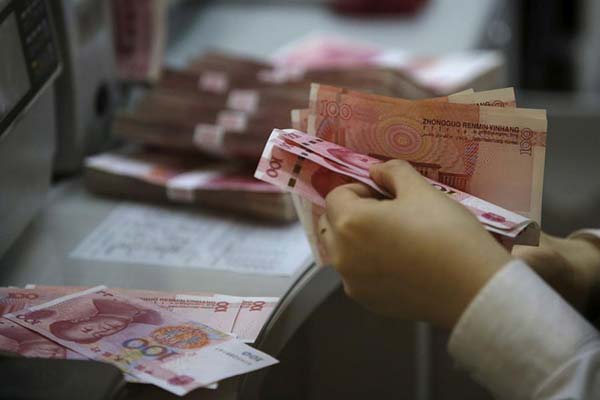
A clerk of the Industrial and Commercial Bank of China counts Chinese one hundred Yuan at its branch in Beijing, April 13, 2016.[Photo/Agencies] |
China has transformed from a capital importing country to a capital exporting one. This is an important characteristic of the new normal of the Chinese economy.
The latest statistics show China's current foreign exchange reserve is $3.05 trillion; nearly $1 trillion lower than its peak in June 2014. Investing abroad has been a growing trend for both enterprises and individuals.
Chinese enterprises have never been so passionate about investing in foreign capital markets, and they have become one of the largest sources of global investment. Individual investors have shown a similar desire for going out. Investments are made in overseas assets and children studying abroad, some wealthy individuals have also sought to move their fortunes overseas in a bid to evade the yuan's depreciation.
At first, wealthy Chinese buy homes. Later, they buy foreign insurance products, and invest in hedge funds or foreign stock markets.
The money from Chinese investors creates business opportunities for other economies. To some extent, the surge of house priced in the United States, United Kingdom, Canada and Australia is related to the inflows of Chinese investors. Home buyers from the Chinese mainland have not only boosted these countries' property markets, they have also created jobs and promoted local economic growth.
People from the mainland also buy life insurance and investment dividend-returning insurance, especially in the Hong Kong Special Administrative Region, which has undoubtedly given impetus to the development of the offshore financial market in Hong Kong.
Currently, people can directly open accounts abroad and invest in overseas stock markets, as well as financial products for Qualified Domestic Institutional Investors. Along with the opening-up of China's capital market, individual Chinese nationals are becoming an important customer source for the wealth management industry in some economies. In this process, investors are increasing their input in overseas stock markets and funds, which undoubtedly fosters the development of financial markets in the countries concerned.
In the future, the exchange rate fluctuation and the decline of return on investments at home will make more Chinese nationals want to invest abroad.
A survey of Chinese families by the Financial Times last year shows that 56.8 percent of the sampled said they would increase their overseas assets in the next two years, and investing abroad is no longer exclusive to the very rich. More and more Chinese families with a disposable income of between 600,000 yuan ($87,000) and 6 million yuan are investing overseas.
There are certainly some uncertainties and risks behind the investments. For example, the fluctuations in foreign exchange rates, housing prices, tax policy changes, etc. Some foreign insurance is not protected by Chinese laws. And foreign stock markets are by no means safe harbors.
But the momentum of Chinese residents investing abroad will continue this year. And their capital will inject continuous vitality into overseas housing, insurance and stock markets, foster local economic growth and create jobs.
Yet, Brexit, Donald Trump's stepping into power as US president, and the forthcoming elections in France and Germany will increase the uncertainties in these markets, and Chinese investors will have to pay even greater attention to their risk assessments this year than before.
They will need to ensure they are fully informed so they can control potential risks and make rational investment decisions.
The author is a partner in the Yongshi Fund Management Company.