Review and prospects of China's diplomacy
IV. The Belt and Road Initiative made steady progress; diplomatic activities with neighboring countries achieved positive results.
Last year saw the steady and comprehensive progress of the Belt and Road Initiative proposed by Chinese President Xi Jinping. With the establishment of the Asian Infrastructure Investment Bank (AIIB), the Silk Road Fund and various economic cooperative programs, the initiative has gradually come into being.
At the G20 Hangzhou Summit in September last year, China provided the world with a new model of global governance, and the Belt and Road Initiative provided a promotional platform for the model. The five overseas trips to 14 countries President Xi made last year were a boon to the development of the initiative.
Moreover, much progress has been made in China's diplomatic activities with neighboring countries. The G20 Hangzhou Summit offered a platform for China to participate in global governance and enhance its ties with neighbors. President Xi's visit to Cambodia, Myanmar leader Aung San Suu Kyi's choice of China as the first country to visit outside the ASEAN region and Sri Lanka's resumption of the Colombo Port City project are just a few of the results China achieved last year.
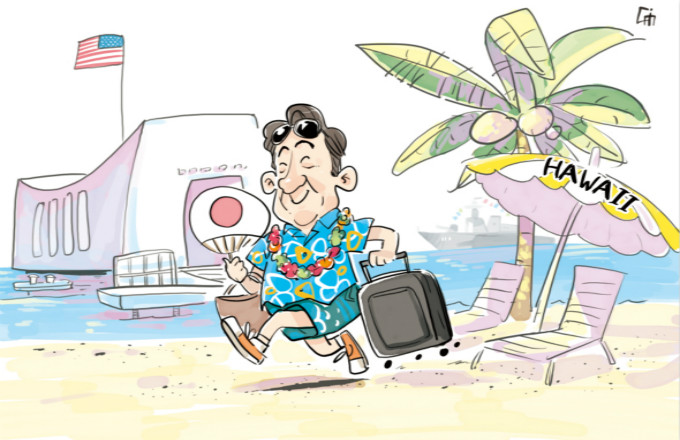
China consistently pursues a foreign policy of building friendship and partnership with its neighbors. It also keeps a consistent and clear position when major issues like regional security, national interests and territorial sovereignty are concerned. Therefore, China has insisted on the promotion of the denuclearization of the Korean Peninsula, on opposition to the deployment of the U.S. THAAD system in South Korea, on the dismissal of the illegal claims on the South China Sea islands by the Philippines and on a firm reaction to all of Japan's trouble-making activities. All the achievements China has made in the diplomatic field should be attributed to its regional policy of amity, sincerity, mutual benefit and inclusiveness, its firm stance on important issues and its skillful approaches in diplomatic activities.
V. China upheld free trade while anti-globalization gained increasing popularity.
Anti-globalization is nothing new, but a concomitant of globalization. It stems from the economic recession that followed in the wake of the global financial crisis. In recent years, the United States and Japan have witnessed sluggish growth, Europe has been stuck in recession, and the refugee crisis remains unresolved in the Middle East - all these issues have given rise to trade protectionism and a trend of anti-globalization.
In late 2016, Japan announced it would not recognize China's market economy status, the European Union said it would continue with the alternative country approach in trade and American President-elect Donald Trump threatened to impose 45 percent tariff on Chinese goods. This was one of the most severe anti-globalization moves in 2016.
Since the 1980s, China has been committed to reform and opening-up, integrating itself into the international community and engaging in global governance. It has changed its role from a major beneficiary to an unwavering promoter of globalization. During the G20 Hangzhou Summit in September 2016, China contributed its plans for building an innovative, invigorated, interconnected and inclusive world economy, which was one of the greatest contributions made to globalization. Of course, the contribution cannot come without the country's own economic development. In Deng Xiaoping's words, development is key.
Prospects
A major country should have a befitting presence and take on its due responsibilities. Peace and development will still be the main theme in the world in 2017, but chaos and disorder will linger as well. China will be playing the stabilizing role in a complicated and capricious international arena, creating a peaceful environment for its own development as well as contributing to the peace and development of the world.
First, China should properly handle relations with major countries, ensuring the continuation of sound and stable development in China-U.S. and China-Russia ties. The key to China-U.S. relations is to manage disagreements before committing to pragmatic cooperation. The two countries can only have long-term stable cooperation and achieve mutual benefit and win-win results when they respect each other and take into consideration the issues concerning the other's core interests and major concerns, for instance the Taiwan issue. The current China-Russian strategic partnership is sound and stable. While enhancing cooperation with Russia, China should closely watch new developments in U.S.-Russia and Japan-Russia ties in 2017.
Second, China should cement the diplomatic achievements made after the South China Sea arbitration in 2016 and strive for the long-time stability of its southern waters. The improvements in China-Philippines relations can and should be used as a demonstration of China's commitment to the principle of "shelving disputes and engaging in joint exploitation," as well as its pledge to playing by the book.
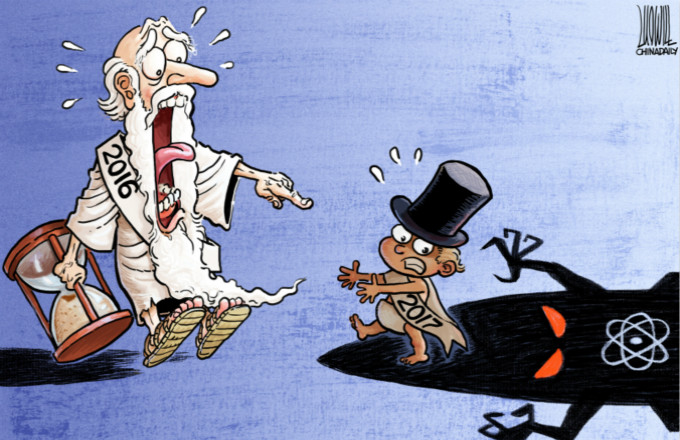
Third, China should keep a close eye on the Korean Peninsula and invest in the relations with its neighbors. The situation on the Korean Peninsula is becoming more intense and unpredictable, as North Korea continues to carry out nuclear tests and South Korea intends to deploy the THAAD system while in the midst of a transition in leadership following the impeachment of its scandal-ridden president. The peninsula is a key for China's foreign relations, and the country must uphold the principle of denuclearization on the peninsula.
Fourth, while promoting bilateral relations with Southeast Asian countries, China should pay attention to its relations with Singapore, which is moving closer to the United States. China should also forge closer economic ties and other forms of cooperation with Central Asian countries through the Shanghai Cooperation Organization and the Belt and Road Initiative.
Fifth, the Belt and Road Initiative should be promoted, and economic cooperation should facilitate diplomacy. The Belt and Road is not only a platform for economic cooperation but also for foreign relations. The year 2017 marks the fourth year of the introduction of the Belt and Road Initiative, and the initial achievements have been made and won the recognition and support of an increasing number of countries. This proves that innovations in deepening international cooperation must go along with major diplomatic moves so as to benefit each other.
Sixth, China should actively participate in global governance and have greater presence in the international community. It should implement the agreements achieved in the G20 Hangzhou Summit, make good use of a number of multilateral cooperation mechanisms - including the World Economic Forum and Shanghai Cooperation Organization - as well as of the opportunity to host the Belt and Road international forum and the 9th BRICS summit, in order to contribute Chinese solutions to global governance while engaging with the international community.
The world will not be a peaceful one in 2017, but Chinese diplomacy will be more than remarkable. Let me quote a line from the great ancient poet Li Bai as a wish for the new year: "A time will come to ride the wind and cleave the waves, I'll set my cloudlike sail to cross the sea which raves."
The author Wang Xiaohui is editor-in-chief of China.org.cn.