Market needs gradual drop in realty prices
 |
| MA XUEJING/CHINA DAILY |
There is no need to cite statistics to show housing prices in China's big cities have been too high for ordinary people to afford. Just ask people around you if they are financially strong enough to purchase a new apartment in Beijing or Shenzhen, and most of them will shake their heads suggesting "no" and might even stare at you as if to ask in response, "why do you ask such odd questions?"
The country's top leaders are aware of this reality. And that's why during the recently concluded Central Economic Work Conference they issued a warning, "homes are for residential use, not speculation".
According to a statement released after the conference, China will take highly targeted measures to achieve the goal of "stable and healthy development of the real estate market". For example, monetary policy will be properly managed, monetary flows into speculative housing purchases restricted, land for construction in cities with very high housing prices increased, and the rental market encouraged to expand to meet the housing demand of people who don't own an apartment.
If these policies are seriously implemented, policymakers may be able to achieve their professed goal of "putting real estate bubbles under control and preventing drastic fluctuations of home prices".
The public, however, might not be fully convinced about the effectiveness of these policies, because many people have got disillusioned over the past decade by the continued rise in housing prices despite policymakers' repeated pledge that it would be stopped. And if after several months of lull, housing prices in big cities start rising sharply again sometime next year, public grievance would grow and few would continue to believe in the promises of the government.
Therefore, the real estate regulation this time is not just a mere economic task, but a must-do political exercise that has much bearing on public confidence in future policymaking of the government.
In the eyes of policymakers, the battle to control housing prices is one that cannot be lost. The housing fever has caused serious problems that could trigger a snowballing effect. Housing prices in tier-1 cities, such as Beijing, Shanghai and Shenzhen, have become unaffordable as the ratio of housing prices to household disposable income has increased from about 15 times last year to 18 to 20 times, Yifan Hu and Thomas Deng, chief investment officers for China at UBS Wealth Management, wrote in an article published in Barron's magazine in October. As a result, China's tier-1 cities' affordability is close to Hong Kong and more expensive than London (15 times), which is the highest among major global cities.
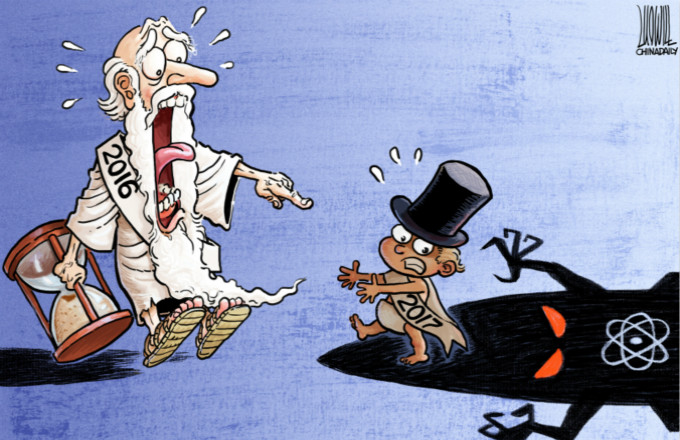
If housing prices continue to rise at a fast pace, then the bubble in the property market may burst, and China will have to tackle not only a real estate implosion, but also the eruption of a wider financial crisis. As top Chinese leaders participating in the Central Economic Work Conference said, the country must "put more priority on prevention of financial risks" and "make efforts to prevent and control asset bubbles" to ensure no systematic financial risks occur.
Policymakers, however, are in a dilemma, because if housing prices drop sharply as a result of regulatory measures, they could trigger major financial problems, as they would seriously affect the balance sheets of Chinese banks and threaten financial stability, which will hamper policymakers' efforts to maintain economic stability.
The most desirable scenario would be real estate prices fluctuating within a certain range so that policymakers get enough time to gradually plug the loopholes in the financial system to make the country more adaptable to economic slowdown and financial turmoil caused by problems such as the local government debt.
The author is a senior writer with China Daily.