Beijing should play bigger role in global rule making
This December marks the 15th anniversary of China's accession to the World Trade Organization. In the past 15 years, China could have played a bigger role in promoting global governance had the world's institutional structures allowed it optimum participation in the global rule-making process. That will be China's main objective in the future.
Fifteen years ago, some people in China questioned the rationality of "wearing the chains" of the WTO. The opponents gradually realized that China could not win the trust of foreign corporations and governments if it did not become a WTO member, and trust is quite important in international economy and trade.
By pledging to abide by WTO rules, China has increased its foreign trade on average by 22 percent a year during these years, while becoming a major destination for foreign investment. China has also benefited by abiding by international rules, and it will continue to participate in making global rules, as well as executing them. Therefore, contrary to what some people assume, there is no reason for China to reject the current rules and world order.
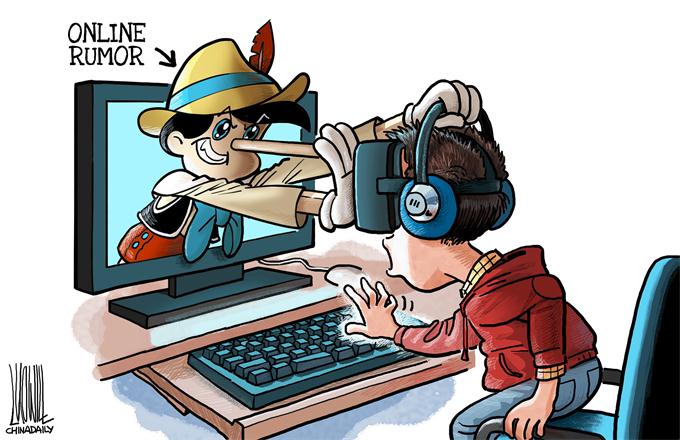
But global rules are always changing in response to the changing circumstances. For example, recent years have seen the emergence of a series of new rules in the relatively new fields of e-commerce, internet and global climate change.
China is willing to do such "additions" without "subtracting" the existing rules, because it cannot pick which rules to follow and which to ignore to suit its own interests and development stage.
In practice, however, many global economic organizations have only conventions and cases, not rules. At the G20 Leaders Summit in Hangzhou, East China's Zhejiang province, in early September, China advocated that guiding principles for investment be worked out, and its efforts were recognized by the international community.
Only the collective effort of the world can transform conventions into detailed rules. China will play a leading role in this process, as it is the world's largest investor and a major investment destination.
Some international organizations still do not have rules in some emerging fields of trade. But the Trans-Pacific Partnership Agreement is a constructive one-regrettably the US Congress did not pass it-and shows many other countries are doing the "addition". China supports such efforts and holds an open attitude toward them, hoping other countries also have the same attitude toward China's efforts in this regard.
International institutional structures such as the World Bank and Asian Development Bank cannot meet all the countries' demands for infrastructure construction funds. So China took the lead to establish the Asian Infrastructure Investment Bank and the BRICS New Development Bank, but to supplement their functions, not to replace them.
Besides, China opposes the politicization of economic and trade conflicts. Anti-dumping cases in global trade are not bad things, because they can expose the problems and help to find the solutions within a framework of rules. Hence, countries should not politicize them.
China will cooperate with the United States-as well as oppose it when needed-in making new global rules and improving global governance. The largest developing country and the largest developed country represent the interests of countries in different development stages. It is natural for them to play key roles on existing as well as new fronts such as internet governance and the fight against climate change.
No matter who is elected the next US president, the fundamentals of Sino-US relations will have to continue. China and the US have many common interests, so they need to cooperate in making new rules and fostering global governance.
The author is chairman of Center of China & Globalization, a think tank in Beijing.