|
|
An aerial view of the Xilin Gol Grassland in Inner Mongolia. |
When I first left Inner Mongolia to work in Shenzhen 15 years ago, the locals would ask me rather interesting questions: Do Inner Mongolians all live in yurts? Did you ride a horse to school…I believe a lot of Inner Mongolians born in the 1970s share the same experience with me. For the outsiders, Inner Mongolia is a place synonymous with grassland.
On this vast land of Inner Mongolia, 1.183 million square kilometers in size, there scattered, from east to west, are the Hulun Buir Grassland, Horqin Grassland, Xilin Gol Grassland, Wulanchabu Grassland, Ordos Grassland and Alashan Grassland.
Inner Mongolia has 8.8 million square meters of grasslands, accounting for 22 percent of the national total. I grew up here, but never quite understood the grassland. Yao Meng from the Grassland Office, Farming and Animal Husbandry Department of Inner Mongolia, explains the changes this vast expanse has undergone since the 1960s.
 |
|
Farmers planting crops at the Otindag Sandy Land in Inner Mongolia. |
The vegetation coverage of the region’s grasslands averaged 50 percent in the 1960s when the grasslands ecology was at its peak. By 2008, the herding population and the livestock increased by 5.1 and 2.2 times respectively. However, decades of overstocking, immigration, climate change, coal mining and herbs exploitation have finally taken their toll on the grasslands. The vegetation diversity and ecosystems were seriously damaged, and the conflicts between herdsmen and animals, grass and livestock, became all the more intense. As a result, the average vegetation coverage dropped to only 30 percent.
In grazing areas, houses would be buried after a sandstorm. Looking ahead, one could see nothing but bare land. Hohhot, capital of Inner Mongolia, was frequently hit by sandstorms around the year 2000. Data showed that 21 sandstorms hit the city just one year, the maximum. Yao recalled the first time he drove across the Kubuqi Desert in 2004, he could barely see any vegetation along the road.
 |
|
In 2011-2015, 20.2 billion yuan has been used to protect the grasslands in Inner Mongolia. |
Grassland is the biggest ecological barrier of our country. Protecting the grasslands is protecting our own home. Since 2000, a series of national campaigns, including the Beijing-Tianjin sandstorm control project, grassland restoration project, grassland protection reward mechanism, have been launched. Subsidy and incentive funds, a total of 20.2 billion yuan, have been granted to herdsmen. The central government has spared no efforts when it comes to grassland protection. After over 10 years, the average vegetation coverage returned to 43.6 percent in 2014. The grasslands in Ordos increased by over 8,000 square kilometers from 2000 to 2010.
In 2012, Yao revisited the Kubuqi Desert. This time he saw lush salix psammophila and sand sagebrush instead of bare sand. In 2014, only two sandstorms hit the city Hohhot.
 |
|
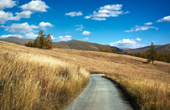
A vast grassland in front of the Daqing Mountain in Hohhot. Photography by Tonglaga |
The story about the grasslands never ends. At the grass-root Gacha and Sumu county, many veterans dedicated their blood and sweat, and even lives, to the grasslands. Yili Group has spent the last 26 years on sand control, turning the Kubuqi Desert green and bringing financial benefits to local herdsmen. M Grass has tamed wild plants to enhance the ecological healing power of grassland. And Hohhot, after three years of efforts, has restored the lively Daqing Mountain depicted in the Chile Le Song. In dialogue with nature, they have the deepest understanding of the hardships and happiness within!
In 1978, Mongolian artist Dedema performed Grassland My Beautiful Home for the first time at the 10th Canton Fair. His rich and mellow voice painted a beautiful picture of the grasslands, of Inner Mongolia. Now every time I hear a grassland-themed song, I cannot help but well up a little. How I wish the night view at the grasslands stay as beautiful as one of the lines in the song: A bright moon high up in the sky; a horse rider follows the light, reluctant to make his way home.


Copyright 1995 - . All rights reserved. The content (including but not limited to text, photo, multimedia information, etc) published in this site belongs to China Daily Information Co (CDIC). Without written authorization from CDIC, such content shall not be republished or used in any form. Note: Browsers with 1024*768 or higher resolution are suggested for this site.
License for publishing multimedia online 0108263 Registration Number: 130349