Making a nation's dream come true
Few Westerners doubt the rise of China as a political, economic and military power, yet when it comes to "culture" they tend to ask: What exactly is there to learn from China?
China is land of creativity with a rich heritage. It has the potential to be a world leader in almost every field. To realize this potential, it has to realize the "Chinese dream", says the country's leadership. But before analyzing this "dream" let's remind ourselves that President Xi Jinping didn't actually say "Chinese Dream". He said zhongguo meng.
Let me explain this crucial detail by entertaining you with the example of an event that could have happened only in China.
A recent China Central Television "Special" entitled "Chinese dream" and telecast nationwide hosted five leading "China experts" to explain the Chinese dream and China's place in the world without even mentioning a single Chinese word or terminology. The speakers were either foreign nationals or Western-educated Chinese. Do you see the irony? China is trying to import its own history from the West, and it comes Chinese-free. It's like the Americans calling the American Dream "Le Rve Amricain" and inviting some Frenchmen to explain it to them.
A few days ago, I asked a senior editor of Peking University's news department why it doesn't include Chinese words in its English news. She didn't have an answer, because the idea of using Chinese words in other languages (more so in English) has apparently never occurred to Peking University journalists.
Promoting Chinese concepts in the rest of the world is not very difficult - stop translating key Chinese terminologies (at best, give the appropriate or closest meaning and continue with the Chinese terminology). If kung fu, wushu, rujia, shengren, junzi can be understood and accepted by the outside, why not zhongguo meng? Once you translate a Chinese term you give away the definition of thought. Only if classrooms in foreign countries start teaching about zhongguo meng (and not "Chinese dream") will Chinese culture become truly popular across the world.
Otherwise, whenever Western readers come across the term "Chinese Dream", they will try to understand it through their concept of the American Dream. As Slovene philosopher Slavoj Zizek's has warned: "You must not dream dreams which are not yours."
Moreover, there is a difference between a "national dream" and "many individuals' dream". The Chinese dream is a national dream? Dynasties, emperors, Confucianism, Buddhism, Taoism and Communism are unique to China's experience. So the dream China is chasing is different from the one that the West has: The Chinese want to be a strong, rejuvenated wenming (a spiritual civilization). There is little individualism in this dream, at least not yet.
One of the reasons for that is the low salary that people across China get. Many people who don't have the right guanxi (connection) feel wunai (helpless). This inhibits their creativity and drive for self-actualization.
Premier Li Keqiang wants to double the average individual income in China, enabling people to consume more, pursue their hobbies and set personal goals in life. Perhaps that will help release people's true creative potential.
Many Chinese try to imitate Americans in many ways. This again has to do with language. A good percentage of Chinese who study English often forget that it is foreign language and so are its expressions. If China really wants to be a cultural power, it has to promote the inclusion of Chinese terms into foreign languages. In this regard, Japan has fared better than China, because it has exported countless words to Western languages like samurai, Bushido, shogun, kamikaze, karate, sumo and Zen.
There seems to be a tendency among Western writers to give a permanent definition to zhongguo meng. But it's not so much about definition; it's more about universality. Everyone has dreams. But only those who can fulfill their dreams in China can actually understand what the "Chinese Dream" is.
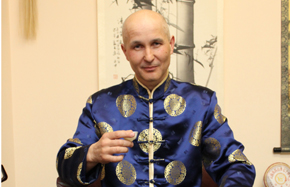
The author is a research fellow at The Institute for Advanced Humanistic Studies at Peking University.
(China Daily 08/12/2013 page9)